
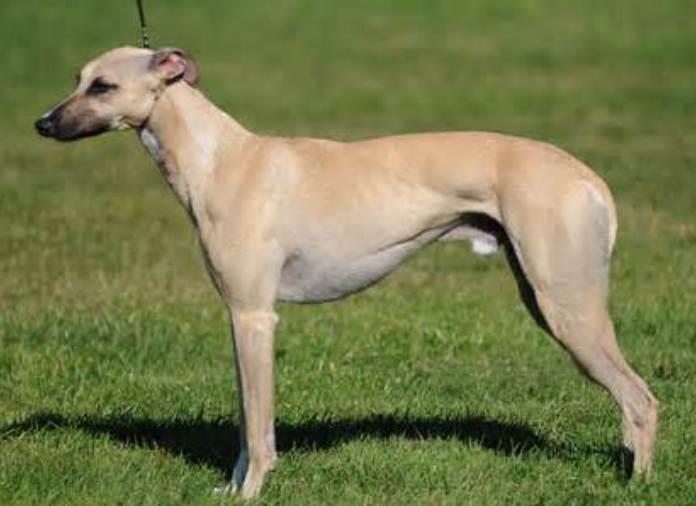
People usually search for Whippet information when they’re weighing up the breed—often after meeting one at the park, spotting a rescue listing, or realising they want a dog that can sprint like lightning yet live quietly indoors. The practical questions come quickly: how big do they get, how much exercise is “enough”, and what do you actually need to watch for at the vet.
Whippets are built for short, explosive speed, then long, still hours on the sofa. Their fine coat and thin skin shape almost every care decision: warmth, safe running spaces, gentle handling, and sensible weight control.
Whippet at a glance
- Size: Medium, leggy and light-framed
- Height (breed standard guide): Dogs 47–51 cm; bitches 44–47 cm1
- Coat: Fine, short, close
- Colours: Any colour or mixture of colours; merle is unacceptable in the standard1
- Temperament: Typically gentle and quiet indoors; affectionate with their people
- Exercise style: A daily walk plus chances to sprint safely (they’re sprinters, not endurance runners)
- Typical lifespan: Often around 12–15 years (varies with genetics, care, and luck)
What a Whippet is really like to live with
A Whippet is a sighthound: a dog shaped by sight, speed, and a body that trades bulk for efficiency. In the house, many are calm and unobtrusive, happiest pressed against a warm human or folded into the smallest patch of sun. Outside, the switch can flip fast—movement in the distance can trigger a chase response before you’ve finished saying their name.2
Temperament and behaviour
Most Whippets are gentle, people-oriented dogs. They tend to be polite with visitors and are not usually big barkers, but they can be sensitive to harsh handling or noisy, chaotic training. Short sessions, soft voices, and rewards work better than repetition and pressure.2
Children, other dogs, and smaller pets
Whippets often do well with respectful children and with other dogs, especially when they’ve been calmly socialised from an early age. With smaller animals, caution matters. A Whippet may chase small pets that run, particularly outdoors, because that fast-moving “prey picture” is exactly what they’re built to notice.2
Good management usually looks like:
- supervised introductions in a calm space
- a secure, well-fitted harness and lead in unfenced areas
- separate zones at home if you have pocket pets (rabbits, guinea pigs) or timid cats
History: from working-class sport to modern companion
The Whippet developed in England, closely tied to hunting small game and to informal racing. The breed’s nickname, “the poor man’s racehorse”, reflects that working-class tradition: a fast dog, cheap to keep compared with horses, and thrilling over short distances.2
Today, that history shows up in their favourite activities—short sprints, lure coursing, and any game that mimics a fast chase—followed by an almost exaggerated ability to rest.
Exercise needs (and why “secure” matters more than “long”)
Whippets need daily movement, but they don’t require endless kilometres. Think steady walks for sniffing and settling, plus brief chances to really open up their stride in a safe place. Many do best with a pattern: gentle daily exercise, and a few times a week a proper sprint in a fully enclosed area.
Practical rules that keep Whippets out of trouble:
- Use a fenced area for off-lead running. If something small moves, recall can vanish behind instinct.2
- Warm up before full speed. A few minutes of walking before sprinting reduces the “straight out of the car, straight into chaos” risk.
- Be mindful of thin skin. Rough scrub, wire, and sharp sticks can turn a joyful sprint into a vet visit.
Training and socialisation
Whippets learn quickly, but many shut down with heavy-handed methods. Keep training light, clear, and brief. A calm recall and lead manners are not optional for a sighthound; they’re what lets your dog safely enjoy the world you’re offering.
If your Whippet struggles when left alone
Some Whippets cope poorly with sudden changes in routine or long stretches alone. The aim is to teach “alone” as a normal, safe state, not an event. Build it slowly and use food enrichment and short practice absences, increasing time only while your dog stays relaxed.3
Health notes and what to watch for
Whippets are often robust dogs, but their shape and genetics create a few predictable themes: thin skin, little insulation, and a handful of inherited conditions that reputable breeders screen for.
Commonly discussed issues in Whippets
- Eye conditions (including inherited diseases such as progressive retinal atrophy in some lines). Ask what eye testing has been done for the parents.2
- Heart conditions can occur in the breed. Your vet may recommend regular checks as your dog ages, especially if a murmur is heard.2
- Skin injuries (cuts, grazes, split pads) due to fine coat and delicate skin—more “field hazard” than “allergy”.
Cold weather care
A Whippet’s coat is short and offers very little protection in cold conditions. In winter, many need a warm coat outdoors, and a draft-free sleeping spot indoors—especially older dogs and lean young adults who burn energy fast.4
Grooming and maintenance
Grooming is simple: a weekly brush or wipe-down, occasional baths, and regular nail trims. The real maintenance is protective rather than cosmetic—checking for small cuts after runs, keeping bedding warm, and maintaining a healthy, lean body condition.
Diet and keeping a Whippet lean (without underfeeding)
Whippets are meant to look athletic. Many owners accidentally overfeed because a Whippet’s tucked-up waist can look “too thin” compared with stockier breeds. Body condition scoring is a steadier guide than the number on the scales: you should be able to feel ribs easily with only a slight fat cover, see a waist from above, and notice an abdominal tuck from the side.5, 6
Simple feeding habits that help:
- measure meals (at least most of the time)
- treats count—use part of the daily ration for training
- adjust food when activity changes (injury rest, winter, ageing)
Choosing a Whippet: quick checks that matter
- Ask about health screening for eyes and heart in the breeding line (and request proof, not just reassurance).
- Meet at least one parent if possible, and notice temperament: calm handling, steady curiosity, easy recovery after surprise.
- Plan for containment: fencing, a safe running option, and a lead setup you trust.
- Plan for warmth: coats, bedding, and a quiet indoor sleeping place.4
Final thoughts
A Whippet is a study in contrasts: a soft, quiet house companion with the body of a sprinter and a gaze that notices everything that moves. Give them warmth, a safe place to run, and kind, consistent training, and they tend to settle into home life with remarkable ease.
References
- Dogs Australia (ANKC) – Whippet breed standard
- VCA Animal Hospitals – Whippet (behaviour, care, health overview)
- RSPCA Australia Knowledgebase – What can I do if my dog is anxious when I’m not at home?
- VCA Animal Hospitals – Whippet breed information (exercise and cold-weather note)
- Merck Veterinary Manual – Parameters used to assess body condition score
- WSAVA – Global Nutrition Guidelines
- The Kennel Club (UK) – Whippet breed standard
- United Kennel Club (UKC) – Whippet breed standard (height range and coat)
- RSPCA Australia – Preparing your pet for time alone (gradual alone-time training)

Veterinary Advisor, Veterinarian London Area, United Kingdom