
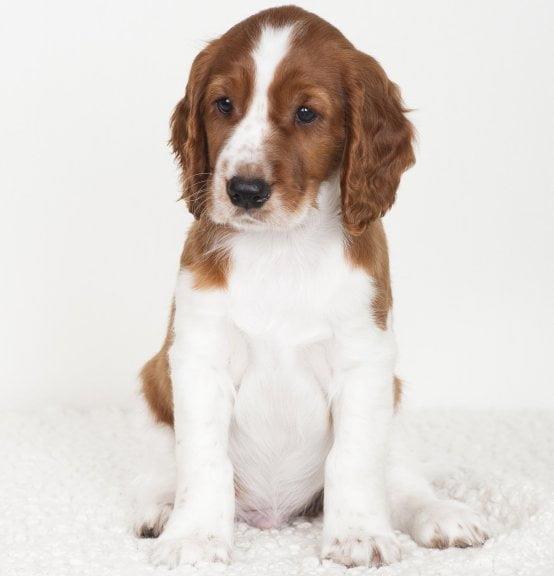
People usually look up the Welsh Springer Spaniel when they’re weighing up a new dog: will it suit family life, how much exercise is “enough”, and what health problems are worth planning for. With a breed like this—busy, scent-led, and built for days outdoors—the wrong match can mean ongoing frustration, boredom behaviours, and preventable health issues.
Below is a clear picture of what a Welsh Springer Spaniel is like to live with: size and temperament, the sort of training that works, the daily movement they genuinely need, and the health checks that matter most when buying or raising one in Australia.
Welsh Springer Spaniel at a glance
- Size: Medium
- Height: About 48 cm (dogs) and 46 cm (bitches) at the withers1, 2
- Weight: Commonly around 16–20 kg (some individuals fall outside this)5
- Coat: Straight/flat, silky, dense; designed to handle weather and undergrowth1, 2
- Colour: Rich red and white only1, 2
- Typical lifespan: Around 12–15 years5, 6
Temperament: what they’re like day to day
A Welsh Springer Spaniel tends to move through the world nose-first—alert, busy, and ready to follow a scent line that you didn’t even notice was there. They’re usually affectionate with their own people and often happiest when they’re included in the household’s orbit rather than left to entertain themselves in the yard.8
Many are friendly with visitors once they’ve had a moment to assess the scene, though some can be a little reserved at first. They’re not meant to be timid, but they do best when early social experiences are steady and positive rather than overwhelming.2
Family life, kids, and other animals
With sensible supervision, Welshies generally do well in families. They’re lively and can be boisterous when excited, so calm introductions and teaching children how to handle and give space pays off. As with any breed, dogs and very young children shouldn’t be left unsupervised together.8
With other dogs, they’re often social. With smaller pets, their flushing-and-chasing instincts can switch on, especially outdoors—so management and training matter more than assumptions about “niceness”.
Training: bright, willing, and distractible
Welsh Springer Spaniels are typically keen learners, but their attention can be pulled sideways by smells, movement, and the promise of a more interesting story in the grass. Training goes best when it’s short, consistent, and built around rewards—food, play, praise—rather than corrections that simply add noise to an already stimulating world.8
Early socialisation (and what it should look like)
Early socialisation is less about “meeting everyone” and more about building calm familiarity: different surfaces, gentle handling, car rides, groomer-style touch, friendly dogs, and people of different ages—done gradually, with plenty of breaks.
Exercise and enrichment: not just a daily walk
This is a sporting gundog, bred to work through cover and keep going. Many Welsh Springer Spaniels need more than an hour a day to feel settled, and some thrive closer to two hours when they’re young and fit—especially if that time includes sniffing, training, and free movement (in safe areas), not just marching on lead.7
Activities they usually enjoy
- Long, varied walks with time to sniff
- Retrieving games (with rules so it doesn’t become frantic)
- Scent work and “find it” games in the yard
- Obedience, agility, and other dog sports
- Swimming, where safe—many take to water readily thanks to their coat and build
Health and lifespan: what to watch for
Most Welsh Springer Spaniels are sturdy dogs, but there are a few conditions worth knowing about early—because prevention, screening, and fast treatment can change the outcome.6, 9
Commonly discussed concerns
- Hip dysplasia: A developmental joint condition that can lead to arthritis and pain; weight management and appropriate exercise matter, and screening is important for breeding dogs.6, 9
- Eye disease (including glaucoma risk): Some lines have known issues; eye testing and gonioscopy are used in formal schemes to manage inherited risk.9, 10
- Ear inflammation/infections: Long, drop ears can trap moisture and debris; routine ear checks help catch problems early.
Health checks to ask about (especially when buying)
If you’re buying a puppy, ask what screening the breeder has done on the parents. In the UK, the Kennel Club’s Health Standard for Welsh Springer Spaniels includes hip dysplasia scoring and eye testing (including gonioscopy). Even if you’re in Australia, these schemes are useful signposts for what “good practice” looks like.10
Grooming and maintenance
The coat is built for weather and bracken: straight or flat, dense, and feathered enough to pick up burrs if you let it. A few brush-outs each week usually keeps it clean and airy, with more attention after beach trips, muddy paddocks, or long grass. The Kennel Club and Dogs Australia standards describe the coat as silky and flat/straight, never wiry or wavy—so harsh clipping isn’t usually the goal; tidy feet and feathering is more typical.1, 2
Ears deserve a quick check after swims and bushwalks. If there’s redness, odour, head-shaking, or repeated scratching, it’s a vet visit, not a home experiment.
Diet and weight: the quiet lever for long-term health
Feed for the dog in front of you: age, activity, and body condition. This breed can be enthusiastic about food, and extra kilos put real pressure on hips and elbows over time. Your vet can help you set a realistic target weight and adjust portions as your dog’s exercise changes across seasons.
Is a Welsh Springer Spaniel a good match?
A Welsh Springer Spaniel fits best with people who like movement, don’t mind a dog that notices everything, and are happy to spend time outdoors—rain included. In return, you tend to get a compact, athletic companion with a soft mouth, a steady working rhythm, and a strong preference for being close to the people it lives with.
References
- Dogs Australia (ANKC) breed standard: Welsh Springer Spaniel
- The Kennel Club (UK) breed standard: Spaniel (Welsh Springer)
- The Kennel Club (UK): Welsh Springer Spaniel (breed overview)
- Welsh Springer Spaniels Australia: breed standard notes (size history and context)
- Purina UK: Welsh Springer Spaniel (height, weight, lifespan)
- PetMD: Welsh Springer Spaniel (health and care; lifespan, size)
- The Kennel Club (UK): Welsh Springer Spaniel breed characteristics (exercise needs)
- Welsh Springer Spaniel Club of America: FAQ (temperament and general guidance)
- The Welsh Springer Spaniel Club (UK): Health and welfare (breed health work; glaucoma/epilepsy/hip focus)
- The Kennel Club (UK): Health Standard (Spaniel – Welsh Springer testing recommendations)

Veterinary Advisor, Veterinarian London Area, United Kingdom