
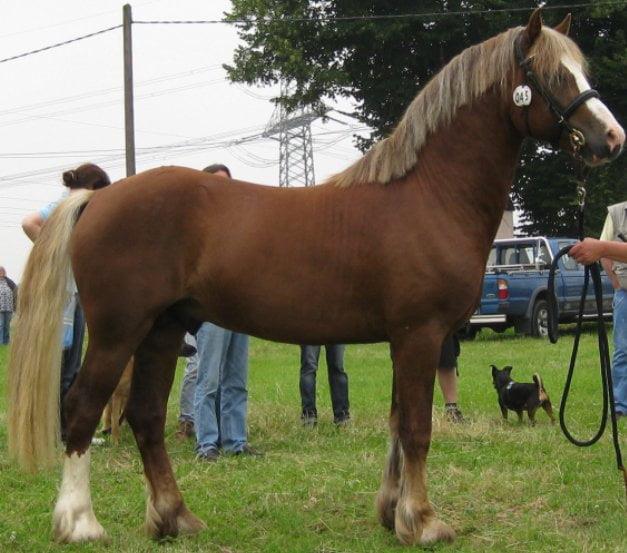
Most people search for the Welsh Pony when they’re choosing a safe, capable mount for a child, comparing pony sizes, or trying to work out what “Section A/B/C/D” actually means in day-to-day terms. The details matter: height limits affect saddle fit, rider suitability, show eligibility, and—quietly but importantly—welfare.
The Welsh is not one pony, but a family of types shaped by Wales’s hills and weather, then refined through stud books and shows. Below is a clear, practical look at the Welsh Pony and Cob: how the sections are defined, what they’re like to live with, and what good care looks like in an Australian context.
Welsh Pony quick facts
- Origin: Wales (United Kingdom)
- Types (sections): Welsh Mountain Pony (A), Welsh Pony (B), Welsh Pony of Cob Type (C), Welsh Cob (D)1
- Height (typical ranges): varies by section; some have strict limits and others do not1
- Colours: many solid colours; some colour patterns are not accepted under the UK society rules6
- Temperament (general): often described as intelligent, active, trainable; individuals vary with breeding, handling, and management
- Common uses: children’s riding, driving, showing, pony club, and (in the larger sections) broader ridden and harness work
- Lifespan: often into the 20s or longer with good care (varies by individual)
History and origin
Welsh ponies and cobs developed in Wales, where lean grazing, wet winters, and rough ground favoured compact animals with strong feet and an efficient way of moving. Over centuries, different local types were shaped into a formal stud-book system, with the Welsh Pony & Cob Society (UK) established in 1901 and a stud book produced from the early 1900s.2, 3
Modern Welsh types are best thought of as a related group rather than a single “one size fits all” pony. The sections describe height and type, not just “small versus large”.1
Welsh Pony sections (A, B, C, D) explained
The Welsh Pony & Cob Society divides the breed into sections. If you’re buying, selling, registering, or showing, this is the first filter to understand.1
Section A: Welsh Mountain Pony
Section A is the classic “mountain” type: compact, hardy, and usually the smallest of the Welsh sections. Under many breed standards it has a strict maximum height (often stated as 12.2hh in some registries), though rules can vary slightly by country and society.4
Section B: Welsh Pony
Section B is the riding pony type—still pony-sized, but often lighter and more “riding-pony” in outline than a Section A. In practice, many families look here for children who’ve outgrown a very small pony but still need something manageable.
Section C: Welsh Pony of Cob Type
Section C is a pony with more substance and strength through the body—often a handy, athletic all-rounder for children and smaller adults, and popular in harness work as well. It sits in the middle ground between the lighter riding pony and the full cob type.
Section D: Welsh Cob
Section D is the cob. Under the UK society’s description, Section D height should exceed 13.2 hands, with no upper limit.6
Characteristics and physical appearance
Across the sections, Welsh animals tend to share a recognisable “pony character”: alert head, good bone, and a balanced, economical stride that copes well with varied footing. They’re commonly seen in solid colours such as bay, chestnut, black and grey; the UK society notes that some patterned colours are not accepted for the Welsh Cob section description (and this approach is often mirrored across Welsh breed rules).6
Heights and weights can’t be captured accurately in a single line, because Section A ponies and Section D cobs can be separated by a great deal of size and mass. If you’re matching a pony to a rider, use the section and the individual animal’s build—not a generic “Welsh Pony height” number.
Welsh ponies in riding, driving, and competition
Welsh ponies and cobs are often chosen because they can do more than one job well. Smaller sections commonly suit children’s ridden work and driving; larger sections are frequently used for stronger ridden work and harness. In Australia, the breed is supported by an official society with shows, events, and an online stud book, which helps keep breeding and registration records consistent.7, 8
Training and daily care (with Australian welfare basics)
A Welsh pony that looks neat in the show ring is usually living a fairly ordinary, well-managed life behind the scenes: regular feed, regular movement, regular checks. Good care isn’t complicated, but it is steady.
Feeding and water
Australian horse welfare guidance emphasises access to appropriate feed and clean water, with diets based primarily on roughage (pasture/hay/chaff) and careful use of grain feeds.9, 10
- Roughage first: pasture and/or good-quality hay is the foundation for most ponies and cobs.9
- Grain with care: cereal grains can be useful for some workloads, but high-grain diets can create health and handling issues—especially in horses worked infrequently.10
- Water: always provide clean water; needs rise in hot weather and with work.9, 10
Movement, shelter, and social contact
Horses are built to move and graze for long stretches, with regular exercise and the ability to stretch, turn, and lie down forming part of basic welfare expectations. Protection from weather, daily inspections, and appropriate social contact are also repeatedly highlighted in Australian guidance.5, 9
Feet, teeth, parasites, and routine checks
Routine inspections matter because problems often start quietly. Welfare codes in Australia specifically call out regular checks for attention to feet, teeth and parasite control, with prompt treatment of illness and injury.5
- Hooves: pick out feet and watch for changes in stance, stride, or heat in the hoof.
- Farrier schedule: the exact interval varies, but regular farrier care is essential for comfort and soundness.
- Dental checks: many horses need at least annual dental assessment, with timing adjusted to age and individual needs.
Welsh pony societies and registration (UK and Australia)
The Welsh Pony & Cob Society (UK) is the original society for Welsh breeds and was founded in 1901. It maintains a stud book and supports the breed worldwide through affiliated “daughter” organisations.2, 3
In Australia, the Welsh Pony & Cob Society of Australia describes itself as the official society (approved by the UK society) and offers an online stud book plus shows and other breed activities nationwide.7, 8
Famous Welsh ponies in history and pop culture
Welsh ponies and cobs appear in plenty of stories, but many specific “famous Welsh pony” claims online are hard to verify and are often muddled with other breeds or individual horses’ uncertain breeding. If you’re chasing a particular horse from film, war service, or a book, treat the breed label as a starting point and look for primary records (stud book, military record, production notes) before repeating the claim.
Future of the Welsh Pony
The future of the Welsh sections largely rests on careful breeding, transparent registration, and practical welfare. Stud books and breed societies don’t just keep paperwork; they preserve type, record lineage, and help owners make informed decisions when buying and breeding.2, 7
References
- Wikipedia — Welsh Pony and Cob (overview of sections and history; cross-check key details with society standards)
- Welsh Pony & Cob Society (UK) — About the Society
- Welsh Pony & Cob Society (UK) — History
- Welsh Pony & Cob Society of America — Section A Welsh Ponies (height and type overview)
- Agriculture Victoria — Code of Practice for the Welfare of Horses (Revision 1)
- Welsh Pony & Cob Society (UK) — Welsh Section D (Welsh Cob) breed description
- Welsh Pony & Cob Society of Australia — The Society
- Welsh Pony & Cob Society of Australia — Membership (includes official-society and stud book notes)
- Agriculture Victoria — Basic horse care
- NSW DPI — Animal Welfare Code of Practice No 3 (Horses in riding centres and boarding stables)

Veterinary Advisor, Veterinarian London Area, United Kingdom