
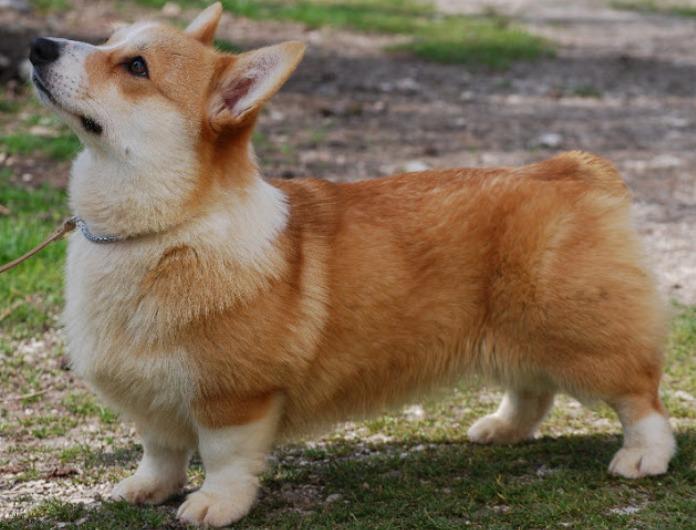
People usually search “Welsh Corgi” when they’re trying to work out what life is actually like with one: how big they get, how much exercise they need, what health problems to watch for, and whether a Corgi will fit a household with kids, neighbours, and limited time.
The details matter. Corgis are small enough to suit many homes, but they’re still working herding dogs at heart—quick, vocal, and surprisingly strong for their size. The sections below stick to what’s known about the two recognised Welsh Corgi breeds (Pembroke and Cardigan), what they were bred to do, and what that tends to look like in an Australian home.1, 2
Quick facts (Pembroke Welsh Corgi)
- Size: Low-set, compact; ideal height about 25–30 cm at the shoulder1
- Weight: Typically 9–12 kg (bitches usually lighter than dogs)3
- Coat: Medium length, straight, with dense undercoat; weather-resistant double coat3
- Colours: Red, sable, fawn, black and tan, with or without white markings3
- Temperament (in the standard): Outgoing and friendly; should not be nervous or aggressive1
Quick facts (Cardigan Welsh Corgi)
- Size: Ideal height about 30 cm at the shoulder (overall balance is emphasised)4
- Tail: Long “fox brush” tail carried low (a key difference from many Pembrokes)2, 4
- Temperament (in the standard): Alert, intelligent, steady; not shy or aggressive2
- Colours: Includes blue merle and brindle among accepted colours (along with red and sable), typically with or without white markings2
Welsh Corgi: two breeds, not one
“Welsh Corgi” is an umbrella label in everyday conversation, but there are two separate breeds: the Pembroke Welsh Corgi and the Cardigan Welsh Corgi. They share the same general silhouette—long body, short legs, upright ears—because both were shaped by herding work and a low centre of gravity that helped them duck under kicking cattle.1, 2
They are not the same dog in different sizes. The Cardigan is typically heavier-boned, with a long tail and a wider range of accepted colours (including blue merle). The Pembroke is usually more compact, and the breed standards describe different details in structure and carriage.1, 2
History and original job
Both Corgi breeds are classed in the UK as pastoral (herding) dogs. That history tends to show up as quick reactions, strong interest in movement, and an instinct to keep a group together—sometimes by circling, staring, or nipping at heels if that behaviour isn’t redirected early.1, 2
Physical characteristics you’ll notice at home
A Corgi’s build is not decorative. The low, sturdy body and short legs were functional, and they still influence day-to-day care.
Coat and shedding
Both breeds have a double coat designed to cope with weather. In practical terms, that often means steady shedding year-round, with heavier “blow-outs” seasonally. Regular brushing helps keep skin healthy and reduces mats in the thicker areas, especially around the chest and behind the legs.3, 4
Backs, stairs, and jumping
Corgis are low-set and long-bodied. That doesn’t mean they’re fragile, but it does mean you should be sensible about repeated jumping down from heights and racing up and down stairs—particularly if a dog is overweight or already stiff. If you’re worried about mobility, ask your vet for a plan that suits the individual dog rather than relying on breed folklore.7, 8
Temperament: bright, watchful, sometimes bossy
The breed standards describe Pembrokes as “outgoing and friendly” and Cardigans as “steady” and “not shy or aggressive”. Real dogs vary, but most Corgis share a recognisable pattern: they notice everything, they learn fast, and they can rehearse habits (good or bad) with impressive efficiency.1, 2
In a calm household, that often looks like a dog who is affectionate and engaged, following the day’s movements like a small, alert shadow. In a busy household, it can look like barking at the door, trying to control running children, or getting pushy around food and toys—behaviours that usually improve with early training, boundaries, and enough exercise.6
Training and exercise needs
Corgis tend to enjoy training because it gives their brains something to do. They usually respond best to reward-based methods—food, toys, praise, and short sessions that end before boredom arrives. Harsh corrections often create noise and tension rather than learning.6
How much exercise is “enough”?
There isn’t a single number that suits every Corgi, but most do well with daily walks plus short bursts of play and problem-solving. They’re built for endurance more than speed: steady movement, sniffing, and training games often work better than frantic ball-throwing on hard ground.1, 2
Early socialisation and manners
Well-run puppy classes, calm exposure to everyday sights and sounds, and structured practice around visitors can make a big difference to barking and over-excitement later. Cardigans in particular are often described by owners as more reserved with strangers than Pembrokes, though individuals vary.2, 6
Health concerns to know about
No breed is “problem free”. For Corgis, the issues worth understanding early are often the ones you can influence: body weight, fitness, and buying from a breeder who health-tests and is transparent about family history.
Weight gain and obesity
Corgis can gain weight easily, and extra kilograms matter on a low-set frame. Your vet team can help you set a realistic target weight and feeding plan, and it’s worth treating body condition checks as routine rather than a crisis response. The World Small Animal Veterinary Association (WSAVA) recommends regular nutritional assessment as part of standard veterinary care.9
Hip dysplasia
Hip dysplasia is a developmental condition seen across many breeds. It can range from mild changes with few signs to painful arthritis over time. Screening is typically done with veterinary radiographs and formal scoring schemes, and responsible breeders can often show you evidence of testing in the parents.8
Intervertebral disc disease (IVDD) and back pain
IVDD is a condition where discs in the spine degenerate or herniate, which can cause pain and, in severe cases, weakness or paralysis. It’s seen more often in certain body types and can affect a range of breeds. Early veterinary assessment matters if you notice reluctance to jump, yelping when handled, trembling, or sudden weakness in the back legs.7
Pembroke vs Cardigan: choosing between them
If you’re choosing between the two, start with what you can see and live with every day.
- Tail: Cardigans have a long brush tail; Pembrokes may have a natural bobtail or a tail carried in line with the topline (docking is not part of day-to-day pet selection in Australia and can be restricted; focus on the dog in front of you).1, 2, 3, 4
- Colour range: Cardigans allow a broader palette (including blue merle and brindle); Pembrokes are limited to red, sable, fawn, and black and tan, with or without white markings.1, 2
- Overall feel: Pembrokes are often described as more openly sociable; Cardigans often come across as steadier and more watchful. These are tendencies, not guarantees, and early training matters more than stereotypes.1, 2, 6
Choosing and adopting a Welsh Corgi (Australia)
A well-bred, well-raised Corgi is typically confident, curious, and physically sound. A poorly bred or poorly raised one can arrive anxious, reactive, or medically complicated—sometimes all at once. Take your time.
Quick checks before you commit
- Meet the dog where it was raised, and avoid buying “sight unseen”.5, 6
- Ask to see the parents where possible, and look for calm, clean housing and normal, relaxed behaviour.5, 6
- Ask what health screening has been done (hips, eyes, and any breed-relevant tests), and whether the breeder can show documentation rather than verbal assurances.8
- Be cautious of sellers who want to meet in a car park or public place. (In Victoria, selling pets in public places without a permit is illegal and is treated as a red flag.)5
Final thoughts
A Welsh Corgi can be a steady, funny little presence in the house—bright eyes, busy feet, always ready to join the next activity. They suit people who like training, enjoy daily movement, and don’t mind a dog with opinions.
Choose the breed (and the individual dog) with your real routine in mind: noise tolerance, time for exercise, willingness to manage weight, and the patience to teach calm behaviour from the start. Do that, and a Corgi usually settles in like it has always belonged there.1, 2
References
- The Kennel Club (UK) — Welsh Corgi (Pembroke) breed standard
- The Kennel Club (UK) — Welsh Corgi (Cardigan) breed standard
- Welsh Corgi Club of NSW — Pembroke Corgi breed standard
- Dogs NSW (Dogs Australia member body) — Welsh Corgi (Cardigan) breed standard
- Agriculture Victoria (Animal Welfare Victoria) — Where can I get a dog?
- RSPCA Australia — How do I avoid supporting puppy farms?
- Merck Veterinary Manual — Intervertebral Disk Disease (IVDD) in dogs
- Orthopedic Foundation for Animals (OFA) — Hip dysplasia overview
- World Small Animal Veterinary Association (WSAVA) — Global Nutrition Committee (nutritional assessment guidance and resources)

Veterinary Advisor, Veterinarian London Area, United Kingdom