
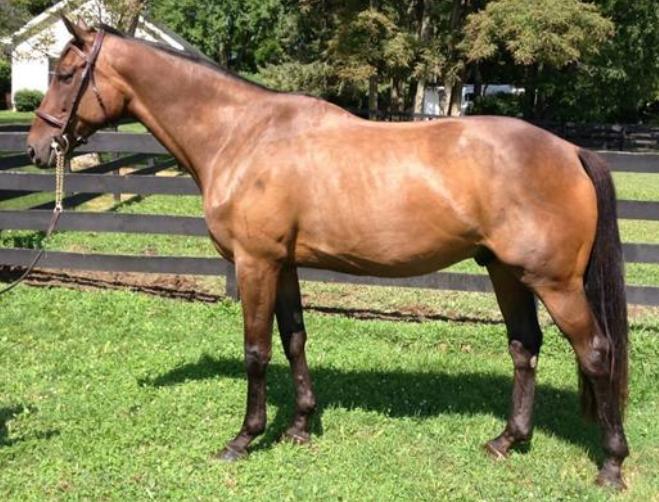
People usually look up the Wielkopolski (often written Wielkopolski, “Great Poland”) when they’re trying to identify a horse, check whether “Polish Warmblood” means a specific breed, or work out what sort of riding partner they’re likely to get. Names get tangled quickly—especially once imported horses are marketed under broader labels—so the details matter.
The Wielkopolski is a Polish warmblood type shaped for practical riding and sport: steady enough for everyday work, athletic enough for the arena. Below is a clear, fact-checked snapshot of where the breed comes from, what it tends to look and move like, and what to expect in training and care.
Typical height: about 15.1–16.2 hands (around 155–165 cm), with some individuals a little taller1, 2
Typical weight: commonly around 500–650 kg (varies with type and condition)1
Colours: usually solid colours (commonly bay, chestnut, black, grey)1
Type: warmblood riding and driving horse; bred in lighter sport and heavier utility lines1, 2
Common uses: show jumping, eventing, dressage; also harness and general riding1, 2
What “Wielkopolski” means (and why the name is often muddled)
“Wielkopolski” refers to Great Poland (Wielkopolska), a region in west-central Poland around Poznań, long associated with horse breeding.1 You’ll also see the breed described as a Polish warmblood, and older sources may use historical labels tied to the local populations used to form it.
That overlap is where confusion starts. “Polish Warmblood” can be used loosely in English to describe several Polish sport-horse types, not always the specific Wielkopolski breed. When accuracy matters, look for identification papers and studbook details rather than sales descriptions.
History and origin
The modern Wielkopolski was formalised in Poland in the early 1960s, built from local horse populations—particularly those known as Poznań-type and Mazury/Masurian-type—then refined with blood from breeds such as Thoroughbred, Arabian and others used in European warmblood breeding.1, 2
In plain terms: it’s not an “ancient warhorse breed from the 1400s”. It’s a modern, organised warmblood developed to produce capable riding and driving horses for a changing Poland—farm, transport, and sport all leaving their fingerprints on the type.1
Physical characteristics and appearance
Most Wielkopolskis present as medium-framed warmbloods: a tidy, straight-profile head; a strong neck; sloping shoulder; deep chest; compact, muscular body; and hindquarters built to push rather than just carry.1 They’re generally solid-coloured, with bay, chestnut, black and grey commonly seen.1
The breed is often described as “hardy”, and there are typically two broad breeding directions: a lighter sport type and a heavier all-round/harness type.1 That’s why heights, weights and “feel” under saddle can vary more than the tidy breed summaries suggest.
Temperament and trainability
Well-bred Wielkopolskis are widely characterised as even-tempered and practical: comfortable to sit on, straightforward in routine work, and willing enough to progress when the training is consistent.1, 2 Like any warmblood population, individuals can still range from quiet to sharp—especially where Thoroughbred influence is stronger—so assess the horse in front of you, not just the label.
Breeding and genetics (in broad strokes)
The Wielkopolski developed from local Polish horse types blended and improved with common warmblood “ingredient” breeds, particularly Thoroughbred and Arabian, alongside other European influences used to refine movement, stamina and rideability.1, 2
When people list Hanoverian or Trakehner in the background, it’s usually describing the bloodlines historically used in the region and in the foundation populations, rather than implying every Wielkopolski is a simple three-breed mix.1, 2
Uses and disciplines
The breed’s centre of gravity sits in the classic Olympic disciplines: show jumping, eventing and dressage, with many also suitable for general riding and some for harness work.1 The build tends to suit horses asked to do a bit of everything—enough bone and substance for soundness, with enough elasticity to train up.
Training and care: what matters day to day
Training approach
Think steady mileage rather than constant pressure. Many Wielkopolskis do best with calm repetition: clear aids, short sessions that finish before fatigue blurs the lesson, and regular hacking to keep the body loose. If the horse is from a heavier line, allow time to develop strength and balance before demanding big collection or sharp turns.
Feeding basics (Australian context)
For most horses, good pasture and/or quality hay is the foundation. Grain or concentrates are best used as targeted fuel for horses in harder work, growing horses, or lactating mares—not as a default.7 NSW DPI also notes the value of feeding little and often and making ration changes gradually.7, 8
- Base diet: pasture where available, plus good-quality hay (dust-free, no mould).7, 8
- Add concentrates only if needed: match to workload and body condition, and reduce on rest days where appropriate.7, 8
- Water and salt: ensure constant access to clean water and an appropriate salt source, especially in hot weather or during work that causes sweating.7, 8
Soundness and health notes
There’s no widely recognised “signature disease” unique to the Wielkopolski, but that’s not the same as being trouble-free. Soundness still comes down to conformation, workload management, farriery, surfaces, and the boring fundamentals: teeth, parasite control, and sensible conditioning.
“Famous” Wielkopolski horses and riders: a caution
Online lists of famous Wielkopolski horses and riders are often unreliable, with names that don’t match public competition records. If you’re researching a particular horse’s results or breeding, use primary sources (studbook papers, federation databases, and verified competition records) rather than copy-pasted claims.
Final notes
The Wielkopolski is best understood as a modern Polish warmblood shaped by regional breeding goals: a horse built to work, then to compete—often both in the same lifetime. If you’re considering one, the label is only the start. Look at the individual: its build, its way of going, its temperament on an ordinary day, and the quality of its handling and training.
References
- Wielkopolski (horse breed) — overview, history, characteristics (Wikipedia)
- Wielkopolski — origin, type, approximate height and use (The Equinest)
- Polish Horse Breeders Association (PZHK) — official organisation contact (PZHK)
- Polish Half-bred (Polish Noble Half-bred) — relationship to Polish warmblood breeding programmes (Wikipedia)
- Wielkopolski — regional origin and studbook note (Chevaux du Monde)
- Caring for horses — feeding basics, water needs (NSW Department of Primary Industries)
- Feeding the working horse — supplements, salt, gradual changes (NSW DPI archive)
- Drought and Supplementary Feed Calculator — notes on complexity and adjusting rations (NSW DPI)

Veterinary Advisor, Veterinarian London Area, United Kingdom