
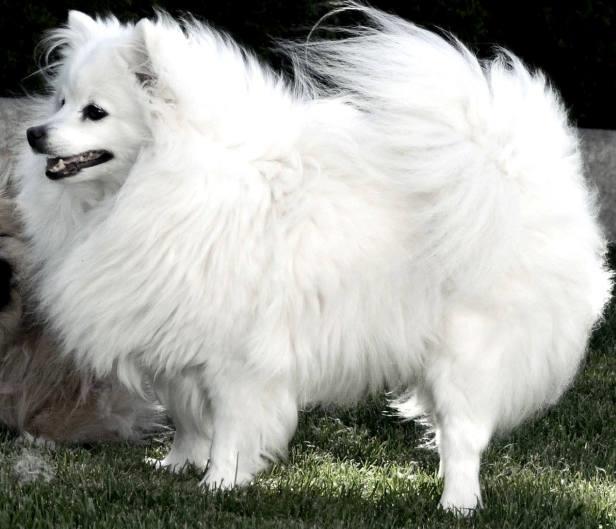
People usually look up the Volpino Italiano when they’re weighing up a small spitz for life in a house or flat: alert enough to notice every new sound, affectionate enough to follow you from room to room, and coated in a cloud of white or red that sheds, tangles, and collects burrs if you let it.
The details matter. Size limits affect travel crates and rentals. Coat type changes your weekly routine. And the breed’s watchful nature can become constant barking without steady training. Here’s a grounded look at what the Volpino Italiano is like to live with, what the official standards actually say, and where owners tend to get caught out.
Quick profile
- Type: European spitz; guard and companion dog1
- Height (at withers): males 27–30 cm; females 25–28 cm2
- Coat: dense, very long, straight, standing off (double-coated appearance; needs frequent brushing)2
- Colours (per standard): solid white or solid red; champagne accepted but not desirable (other colours are faults/disqualifying under the standard)2
- Temperament snapshot: lively, alert, attached to home and family; naturally vigilant (often vocal)2
- Lifespan: commonly in the mid-teens (individual variation is wide; health care and weight control matter)
What the Volpino Italiano is (and isn’t)
The Volpino Italiano is a small Italian spitz, built compact and square, with an upstanding coat that makes the body look larger than it is. In motion, they tend to move briskly, head up, ears forward, tail curled over the back—always reading the edges of the scene.
They’re sometimes described as “Italian Spitz”, and they do share ancestry with other European spitz types. The official FCI breed standard describes the Volpino as a descendant of ancient European spitz dogs and notes their long history in Italy as both companions and watchful little guardians.2
They are not the same as a Pomeranian, even if the silhouette is similar. If you want a quieter “ornamental” lapdog, a Volpino’s vigilance may feel like too much dog in a small frame.
History and origins
In the breed’s own standard, the Volpino is described as having been bred in Italy “since immemorial times”, valued in both noble households and ordinary homes for its vigilance and instinct of guard.2
That same standard links the breed to the wider European spitz lineage present since at least the Bronze Age.2
Physical characteristics
Size
The FCI standard gives height ranges rather than a fixed weight. Adults sit roughly around ankle-to-calf height: males 27–30 cm, females 25–28 cm at the withers.2
Coat
The coat is a defining feature: dense, very long, exceptionally straight, and standing off the body rather than falling flat. The neck forms an abundant collar, and there are fringes on the hindquarters, with a heavily plumed tail.2
In real life, this means burrs, tangles, and compacted undercoat if brushing slips for even a week or two—especially behind the ears, in the “trousers”, and under the collar line.
Colour
Under the FCI standard, the breed is solid white or solid red. Champagne is accepted but not desirable, and pale orange shading on the ears is tolerated but considered an imperfection. Colours outside these are treated as disqualifying faults in the standard.2
Temperament and day-to-day behaviour
Volpini are typically lively and alert, closely attached to their home base and people. The breed standard emphasises vigilance—useful for a watchdog, less convenient if you live in an apartment with thin walls.2
Expect a dog that:
- Notices movement and sound quickly (door knocks, footsteps, birds at the window).
- Uses its voice as a default alarm system, unless you train a calm alternative early.
- Sticks close once bonded, but can still be independent in decision-making (especially outdoors on a scent or a visual trigger).
A steady routine helps: short bursts of play, sniffing walks, and simple training sessions that teach “quiet”, “place”, and relaxed greetings.
Training and exercise needs
A Volpino doesn’t need hours of running, but it does need daily movement and something to think about. Without that, barking and busy behaviour tend to fill the gap.
- Exercise: one or two brisk walks plus short play sessions most days.
- Mental work: food puzzles, scent games, basic obedience, and controlled social exposure.
- Vocal habits: reward quiet moments; teach a cue for barking and a cue to stop, rather than trying to “stamp it out”.
Health: what to watch for
No breed is free of risk. For Volpini, the main themes to keep on your radar are orthopaedics (common to many small dogs) and dental disease (common in small breeds generally).
Patellar luxation (kneecap slipping)
Medial patellar luxation is a well-known developmental orthopaedic issue in small and miniature-breed dogs, and it can show up as an intermittent “skipping” gait, hindlimb lameness, or reluctance to jump.3, 4
If you notice skipping, bunny-hopping, or a sudden lift of one back leg for a few steps, it’s worth a vet check—early management can reduce pain and slow progression.
Dental disease (common in small dogs)
Small dogs are prone to periodontal disease, and once tartar has built up below the gum line, professional cleaning under anaesthetic is often the only way to properly treat it.
At home, tooth brushing remains the most effective day-to-day tool. Products with the Veterinary Oral Health Council (VOHC) Seal of Acceptance can also help reduce plaque and/or calculus when used as directed, and the VOHC maintains a current list of accepted products.5, 6
- Practical aim: gentle brushing most days, focusing along the gum line.
- Back-up support: VOHC-accepted dental diets/chews/water additives where appropriate (your vet can help you choose safely).6
Weight and coat-related skin problems
With a compact body and a big coat, weight gain can sneak in unnoticed. Keeping your Volpino lean protects joints and makes grooming easier. Regular brushing also reduces skin irritation from mats pulling at the skin and trapping moisture.
Grooming and maintenance
The Volpino coat is designed to stand off the body. It looks effortless; it isn’t. Plan for frequent brushing to prevent mats and to lift out dead undercoat.
- Brushing: several times a week (daily during shedding), using a slicker brush and a comb to check right down to the skin.
- Bathing: as needed, with thorough drying to avoid damp undercoat.
- Nails and feet: trim regularly; small dogs can develop sore feet and altered gait if nails overgrow.
- Ears and eyes: quick weekly checks; clean only if needed.
- Teeth: brush routinely; ask your vet about professional dental checks and VOHC-accepted options.5, 6
Breed standards and recognition
The Volpino Italiano is recognised internationally by the Fédération Cynologique Internationale (FCI) as breed number 195, in Group 5 (Spitz and primitive types), Section 4 (European Spitz).1
The breed’s official standard sets out key features including accepted colours (white/red), the distinctive standing coat, and the height range at the withers (males 27–30 cm, females 25–28 cm).2
Final thoughts
A Volpino Italiano suits someone who enjoys a small dog with a clear point of view: alert, vocal, observant, and closely bonded to its home. The coat is beautiful but demanding, and the “little watchdog” nature is real—best shaped early with calm training and consistent daily outlets.
If you want a compact companion who will happily walk, play, learn, and keep quiet company once their needs are met, the Volpino can be a remarkably steady presence—like a bright white marker moving through the house, always aware of where you are.
References
- Fédération Cynologique Internationale (FCI): Volpino Italiano (No. 195) — classification and breed listing
- FCI-Standard N° 195 (Volpino Italiano) — English text via Verein für Deutsche Spitze e.V.
- Merck Veterinary Manual: Patellar Luxation in Dogs and Cats
- American College of Veterinary Surgeons (ACVS): Medial Patellar Luxation (MPL)
- Veterinary Oral Health Council (VOHC): About the VOHC and what the Seal means
- Veterinary Oral Health Council (VOHC): Accepted Products list (dogs and cats)

Veterinary Advisor, Veterinarian London Area, United Kingdom