
Why dental health matters for dogs and cats
Plaque starts as a soft film. Left alone, it hardens into tartar (calculus) and irritates the gums. Over time, that irritation can progress to periodontal disease—damage to the gum and supporting structures around the teeth. It’s one of the most common health problems seen in adult pets, and it can be painful even when your pet is still eating normally.1, 2
Severe dental disease doesn’t stay politely in the mouth. Inflamed gums can allow bacteria to enter the bloodstream, and chronic oral infection is associated with impacts on overall health. The exact risk to any individual pet varies, but the direction is clear: healthy mouths are part of healthy bodies.2
What poor dental health can look like day to day
- Bad breath that appears or worsens over a short period.1
- Red, swollen, or bleeding gums (especially along the gumline).1
- Yellow-brown tartar build-up, often most obvious on the back teeth.1
- Dropping food, chewing on one side, slower eating, or refusing harder foods.1
- Pawing at the mouth, facial sensitivity, or avoiding being touched around the head.1
Recognising dental disease in pets
Dental disease can be surprisingly easy to miss because pets often adapt—switching to softer chewing, swallowing more quickly, or eating on one side. A quick home check (when it’s safe and your pet is calm) helps you catch changes early, before pain and tooth loss set in.1
Common dental problems
Periodontal disease is the big one: gum inflammation and infection that can progress to loss of attachment and bone around the teeth. It tends to worsen with age and is more likely in pets with crowded mouths (often smaller dogs).2
Tooth resorption is especially important in cats. Parts of the tooth structure break down and the lesion can be painful, even if the crown looks only mildly abnormal on casual inspection. These lesions are often confirmed with dental radiographs.2
Gingivitis means inflamed gums. It’s sometimes reversible, but it can also be the doorway to deeper periodontal disease if plaque control doesn’t improve.1, 2
Risk factors that make dental disease more likely
- Age: disease tends to accumulate over years.2
- Small body size and crowded teeth: less space can mean more plaque-retaining nooks.2
- No home care: plaque returns quickly after a professional clean if brushing and other controls aren’t in place.1, 3
How a pet’s mouth works (and why it matters for dental care)
Dogs and cats have teeth built for gripping, tearing, and shearing rather than steady grinding. That shape, plus the way they chew, means plaque tends to cling along the gumline and on the outer surfaces of the back teeth—exactly where a quick glance often misses it.1
What different teeth do
- Incisors: small front teeth used for nibbling and grooming.
- Canines: long teeth for gripping and holding.
- Premolars and molars: shearing and crushing; common sites for tartar build-up, especially in dogs.
Regular dental check-ups: what to expect
An awake dental check at the vet is a useful screen: it can spot obvious tartar, gum inflammation, broken teeth, and painful mouths. But it can’t show what’s happening under the gumline, and that’s where much of the disease lives.4
What vets can only properly assess under anaesthetic
A full dental examination and professional cleaning is typically done under general anaesthetic, often with dental radiographs (X-rays). This allows a complete look at all tooth surfaces, probing around each tooth, cleaning beneath the gumline, and identifying hidden disease that may not be visible externally.4, 5
Dental radiographs matter because “normal-looking” teeth can still hide significant problems. AAHA notes studies where clinically important findings were detected radiographically in a substantial proportion of teeth that looked grossly normal on visual examination alone.5
How often should pets have dental check-ups?
A practical baseline is an annual vet visit that includes an oral check, with frequency adjusted to the individual pet (age, breed, past dental disease, and what you’re seeing at home). Your vet may recommend earlier reviews if tartar is building quickly, gums are inflamed, or your pet is showing mouth pain.1, 4
Home dental care that actually helps
Think of home care as plaque control, not tartar removal. Once tartar has hardened, it generally needs professional scaling. The aim at home is to stop that hardening cycle from re-establishing itself after a clean.4
Brushing: the gold standard
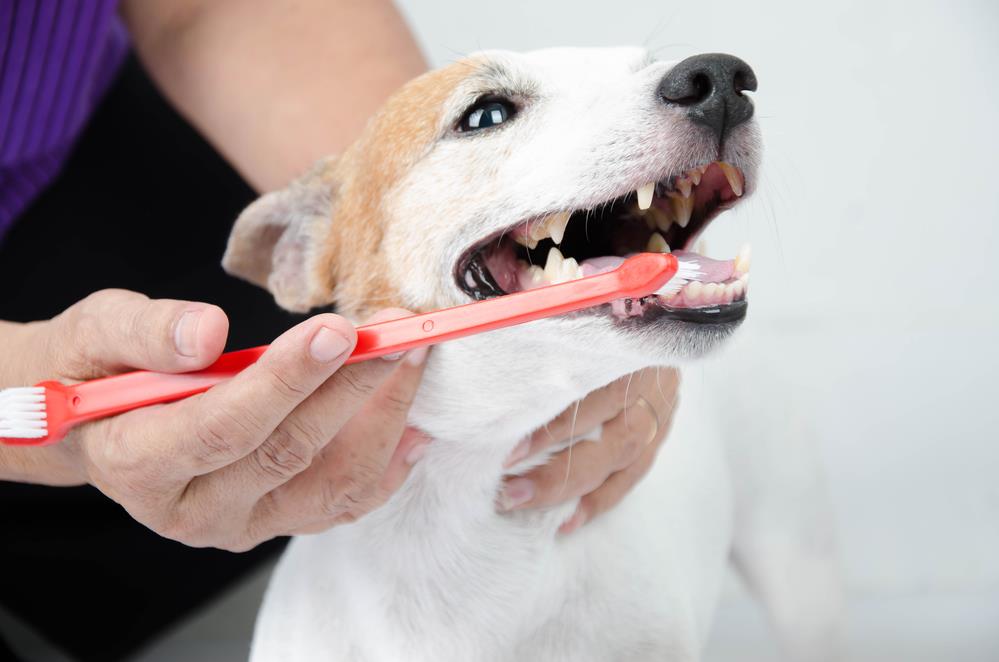
Daily brushing is ideal. Even if you can only manage a few times a week, consistency still helps. Use toothpaste made for pets—human toothpaste isn’t safe for animals to swallow, and cats in particular can become unwell if they ingest common human formulations.1, 6
Getting your pet comfortable with brushing
- Start with brief, calm sessions—seconds at first—then build up.7
- Begin by touching lips and gums gently, then introduce explaining motions with a finger brush or soft brush.7
- Focus on the outer tooth surfaces along the gumline (where plaque builds fastest).7
- Stop before your pet struggles. The goal is tolerance over time, not one heroic session.
Dental chews, diets, and gels: useful, but secondary
Some dental diets, chews, and water additives can reduce plaque and/or tartar. Look for products with evidence behind them, such as those carrying the Veterinary Oral Health Council (VOHC) Seal of Acceptance, which indicates data has been reviewed against set standards for plaque and calculus reduction.8, 9
These products can support brushing, especially when brushing isn’t daily, but they don’t replace a proper dental examination and professional cleaning when disease is already established.4
Professional dental cleaning: what happens and why
A professional clean is more than “a quick scrape”. Under general anaesthetic, the team can scale above and below the gumline, polish the teeth to slow plaque re-attachment, take dental radiographs where indicated, and treat problems found during the examination (including extractions if a tooth is painful or unsalvageable).4, 5
Before the procedure
Your clinic will usually advise fasting beforehand because anaesthetic is involved. You’ll also be asked about existing health conditions and medications, and your vet may recommend pre-anaesthetic blood tests depending on your pet’s age and health status.4
Diet and dental health: a grounded view
Diet affects the mouth, but it isn’t a magic fix. Some veterinary dental diets are designed to mechanically reduce plaque and tartar through kibble size and texture. Wet food, on its own, doesn’t “cause” dental disease, but it also doesn’t provide the same mechanical abrasion that certain dental diets can offer. Most pets still need brushing and periodic veterinary checks regardless of whether they eat wet, dry, or mixed diets.4, 9
Promoting lifelong dental health for your pet
Good dental care is mostly routine: a quick look in the mouth now and then, an annual vet check that includes teeth and gums, and a brushing habit that becomes as ordinary as filling the water bowl. When professional dental work is needed, anaesthetic and dental radiographs aren’t frills—they’re how vets find the disease that hides under the gumline and treat it properly.4, 5
If you’ve noticed bad breath, gum redness, changes in eating, or mouth sensitivity, book a vet check. Dental pain tends to move quietly, then all at once.1
References
- RSPCA Knowledgebase: How should I take care of my cat or dog’s teeth?
- American Animal Hospital Association (AAHA): Dentistry (Senior Care Guidelines)
- RSPCA Australia: Importance of dental health
- RSPCA Knowledgebase: Anaesthesia and dental examination/cleaning overview (in “How should I take care of my cat or dog’s teeth?”)
- AAHA Dental Care Guidelines: Unconscious oral evaluation (anaesthetised exam and intraoral radiography)
- RSPCA Pet Insurance: Guide to cat dental care
- FOUR PAWS Australia: Dental care for dogs and cats (brushing method and acclimatisation)
- Veterinary Oral Health Council (VOHC): About the VOHC and the Seal of Acceptance
- Veterinary Oral Health Council (VOHC): Accepted Products (dogs and cats)

Veterinary Advisor, Veterinarian London Area, United Kingdom