
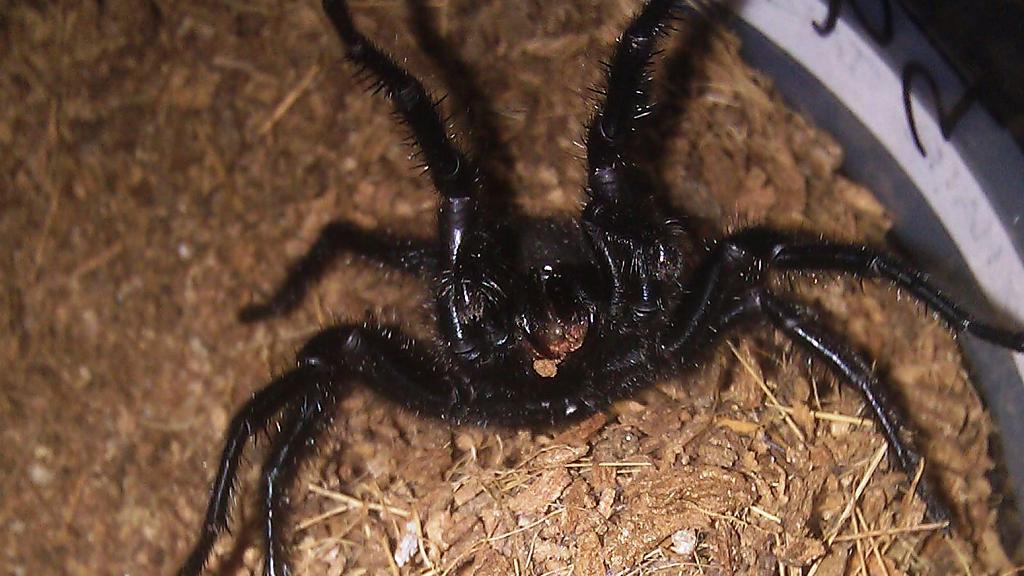
Most people search for Australian spiders because they’ve just seen one at home, in the shed, or in the garden and want to know two things quickly: what it might be, and whether it’s a medical worry.
Australia has thousands of spider species, and almost all are harmless to people. A small handful can cause serious illness if they bite. Knowing a few practical ID cues, the usual hiding places, and the right first aid (which changes depending on the spider) makes the difference between a calm relocation and an unnecessary scare.1, 2, 3
Australia’s spiders in context
Spiders turn up everywhere in Australia: rainforests, deserts, coastal scrub, suburban gardens, and the quiet corners of houses. The number you’ll see quoted depends on whether we’re talking about named (described) species or all species thought to exist, including those not yet formally described. One museum estimate puts Australia’s described spider fauna at about 2,000 species, while another notes there are approximately 2,900 species found in Australia, and that many more remain undescribed.1, 2
The useful takeaway is simple: diversity is high, danger is rare. Only a few groups are considered capable of causing potentially life-threatening bites, including redbacks and some funnel-web and mouse spider species.2, 6
Where spiders fit in the ecosystem
Most spiders are insect predators. In gardens and bushland, they quietly reduce numbers of flies, moths, cockroaches and other small animals, and in turn they are eaten by birds, lizards and other predators. Even when a spider feels conspicuous on a wall, it is usually just passing through its habitat, following prey and shelter rather than seeking people.2
How to recognise a spider without overreaching
Quick identification is often possible at a family level (orb-weaver, huntsman, funnel-web relative) from shape and behaviour, but many Australian spiders cannot be reliably identified to species from a photo alone. Colour can vary with age and sex, and key features may be subtle.
Practical features to check
- Body shape and posture: huntsman spiders often look flattened with legs splayed sideways; orb-weavers tend to have a rounded abdomen and are often found on or near a web; trapdoor spiders are stockier and tied to burrows.2, 4
- Where you found it: on a web in a sheltered corner (often a redback), on walls and ceilings at night (often a huntsman), or on the ground near moist shelter (some funnel-web relatives).3, 4
- Web style (if present): orb-weavers make the classic wheel-shaped web; redbacks make a messy, tangled web in protected sites; funnel-webs make a tubular retreat or “funnel” leading into shelter.4
Behaviour and habitat you’re likely to notice
Australian spiders use a few broad hunting strategies. Web-builders wait; ambush hunters sit at the mouth of a burrow; active hunters roam. Many are more active at night, when insects are moving and the air is cooler and wetter.
In cities and towns, the most common encounters are with spiders that tolerate disturbance: huntsmen, house spiders, orb-weavers in gardens, and redbacks in sheltered clutter. In bushy, moist environments along the east coast, funnel-webs and close relatives are more likely, especially in shaded leaf litter and around logs and rocks.2, 6
Commonly encountered spiders (and what matters about them)
Redback spider (Latrodectus hasselti)
Redbacks are often found in dry, sheltered places with a tangle-web: outdoor furniture, sheds, meter boxes, stacked items, and the undersides of ledges. The adult female is the one associated with significant envenomation risk; bites commonly happen when a hand goes into a hidden web space. Typical early features include pain that can become severe, sweating (often including local sweating), and sometimes nausea and vomiting. Antivenom is available, and modern treatment has made deaths exceedingly rare.3, 7
Huntsman spiders
Huntsmen are large, fast-moving spiders commonly seen on walls and ceilings. They can look intimidating at close range, but medically serious bites are not typical for huntsmen, and they are best thought of as roaming insect predators that sometimes share our indoor spaces for a night or two.2
Funnel-web spiders and close relatives
Funnel-web spiders (including the Sydney funnel-web) are among the Australian spiders of greatest medical concern. They favour moist, sheltered environments and can appear in suburban areas near bushland. Effective antivenom exists, and there have been no recorded fatalities from Sydney funnel-web bites since antivenom became available in 1981, but any suspected funnel-web bite should still be treated as a medical emergency.2, 6
Health and safety: bites and first aid
Most suspected “spider bites” turn out to be something else (minor skin infections, splinters, insect bites). Still, if you see the spider and symptoms are progressing, treat it seriously and get advice. In Australia, first aid differs depending on the type of spider, so it’s worth being precise.
First aid if you suspect funnel-web (or mouse spider) bite
- Call 000 for an ambulance.
- Keep the person still and calm.
- Use a pressure immobilisation bandage (firm elastic bandage over the bite site and along the whole limb), then splint the limb if possible.
- Do not wash the bite area if emergency services advise keeping venom traces for testing.
Australian health guidance recommends pressure immobilisation for funnel-web (and mouse spider) bites specifically, because it slows venom movement through the lymphatic system.5, 6
First aid for suspected redback bite
- Wash the area with soap and water if available.
- Apply a cold pack or ice pack (wrapped in cloth) for pain.
- Do not use a pressure immobilisation bandage for redback bites.
- Seek medical advice promptly, especially for children, pregnant people, older adults, or if pain is severe or spreading.
Clinical guidance and Australian Museum advice both note that pressure immobilisation is not used for redback bites, and that cold packs can help with pain while medical assessment is arranged if needed.3, 7
When to get medical help (even if you’re unsure)
- Severe or worsening pain, sweating, nausea, vomiting, headache, muscle cramps, or feeling unwell.
- A bite from a big black spider in an east-coast funnel-web region, especially if the person becomes unwell.
- Any bite in a small child, or if you’re worried.
When in doubt, follow Australian health advice and seek urgent assessment; serious envenomation is uncommon, but it can escalate quickly in the small number of high-risk cases.5, 6
Reducing encounters around the home (without trying to sterilise nature)
- Wear gloves when moving stored items, timber, pots and garden debris.
- Shake out shoes, gloves and towels that have been left outside or in sheds.
- Reduce sheltered clutter where redbacks favour web sites (stacked items against walls, unused pots, crowded corners).
- Use a container-and-card method to move indoor spiders outdoors if you’re comfortable doing so.
Fun facts that are actually true
A wild female trapdoor spider in Western Australia, known as “Number 16”, was estimated to have lived for about 43 years—currently the longest known lifespan recorded for a spider. She was part of a long-term field study that began in 1974, and her age was determined through repeated monitoring of her burrow over decades.8
Final thoughts
Australian spiders are mostly small predators living close to the ground, in leaf litter, bark, corners and crevices—quietly doing their work. If you learn the few medically important groups and the right first aid for each, the rest becomes simpler: observe, give space, and let the spider keep moving through the landscape.
References
- Australian Museum — Classifying spiders
- Australian Museum — An introduction to spiders
- Australian Museum — Redback Spider
- Queensland Museum — Spiders (Animals of Queensland)
- Sydney Children’s Hospitals Network (NSW Health) — Spider bites factsheet
- healthdirect (Australian Government) — Spider bites: symptoms, treatment and first aid
- Royal Children’s Hospital Melbourne — Clinical Practice Guidelines: Spider bite (Redback spider)
- National Geographic — World’s oldest known spider dies at 43 (trapdoor spider “Number 16”)

Veterinary Advisor, Veterinarian London Area, United Kingdom