
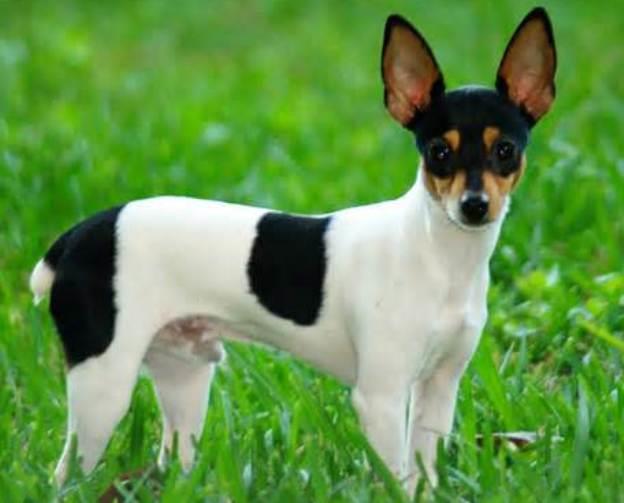
People usually start looking up Toy Fox Terriers when they’re deciding whether a small dog will fit their home, their daily routine, and their tolerance for noise and movement. The stakes are practical: a dog this tiny can be wonderfully adaptable, but only if you’re ready for brisk energy, careful handling, and consistent training.
The Toy Fox Terrier is a compact American terrier—quick on its feet, bright-eyed, and built like a little athlete. Below you’ll find reliable size and lifespan figures, what the breed was made for, what day-to-day care looks like, and the health problems owners most often end up discussing with their vet.
Toy Fox Terrier at a glance
- Height: about 21.5–28 cm at the shoulder (8.5–11 inches)1
- Weight: usually 2–3.6 kg (up to 8 lb; many sit around 2–3.4 kg / 4.5–7.5 lb)1
- Coat: short, fine, glossy
- Colour: predominantly white with black and/or tan markings (patterns vary by standard)1
- Temperament: alert, lively, affectionate, often vocal in the “watchdog” way2
- Life expectancy: commonly around 13–15 years3
- Exercise needs: daily walks plus play and short training sessions
- Grooming needs: low coat maintenance, but dental care matters
What they’re like to live with
A Toy Fox Terrier tends to move through a house like a small, alert animal that has noticed everything. They’re affectionate and keen to be involved, but they’re still terriers: quick to chase movement, quick to investigate, and sometimes quick to announce what they’ve found.2
Many do best with people who enjoy daily interaction—short games, a bit of training, a warm lap later. Left under-stimulated, they can turn that spare energy into barking, pestering, and creative mischief.
Families, children, and other pets
Toy Fox Terriers can be excellent family companions, especially where children understand that a small dog’s body is fragile. Supervision is sensible with very young kids, not because the breed is “bad with children”, but because accidental knocks and drops happen fast at this scale.
With other animals, early socialisation helps. Many Toy Fox Terriers have strong prey drive with small pets, so caution is wise around birds, rodents, and free-roaming rabbits.
History and origin (United States)
The breed developed in the United States from small Smooth Fox Terriers, with breeders also using several toy breeds—including the Chihuahua and Manchester Terrier—to stabilise size and type. The result was a dog that kept a terrier’s animation and grit, while fitting neatly into a smaller frame.2, 4
They were valued as ratters on farms and, in a charming twist of history, also found work as “trick dogs” in circuses thanks to their speed, focus, and willingness to learn.4
The Toy Fox Terrier was recognised by the American Kennel Club as of January 1, 2003.5
Physical characteristics
In the hand, a good Toy Fox Terrier feels compact and muscular rather than delicate. The coat lies close and glossy, and the overall outline is clean and athletic—more sprinter than ornament.1
They’re commonly seen in a white base coat with black and tan markings, though acceptable patterns depend on the registry standard you’re using as your reference.1
Training and exercise
This breed is usually sharp and responsive, and they often learn quickly when training is calm, consistent, and reward-based. Keep sessions short—minutes, not half-hours—and use everyday moments (meals, greetings, leash on/off) as practice. The terrier mind likes purpose.
Exercise needs are best met with a mix of:
- a daily walk (or two shorter ones),
- indoor play that doesn’t encourage reckless jumping off furniture,
- brief training games for mental work (touch, recall, “find it”, simple agility at safe height).
Health and lifespan
Toy Fox Terriers are often long-lived, with many sources placing typical lifespan around 13–15 years.3
Common health issues to know about
No breed is trouble-free, and small, athletic dogs tend to share a familiar set of orthopaedic and dental concerns.
- Patellar luxation: the kneecap slips out of place, sometimes showing up as an intermittent “skipping” lameness. Severity varies from mild to disabling, and treatment depends on grade.6
- Legg-Calvé-Perthes disease: a painful hip disorder seen most often in small breeds, typically in young dogs, and usually requiring veterinary assessment and often surgery.7
- Dental disease: small mouths can crowd teeth, and tartar builds quickly without home care. Regular tooth brushing and vet dental checks make a noticeable difference over a lifetime.8
Preventive care that actually pays off
- Keep them lean. Extra weight stresses tiny joints and knees.
- Protect the knees and hips. Use ramps or steps for couches if your dog is a frequent jumper, and avoid repetitive high-impact jumps.
- Brush teeth regularly. Aim for most days; even a few times a week helps.8
- Routine veterinary visits. Early detection matters with orthopaedic pain and dental disease.
Grooming and maintenance
The coat is straightforward: a weekly brush usually handles loose hair and keeps the coat glossy. Bathing is occasional—when they’re dirty, not on a rigid schedule.
Where owners often underestimate the work is not the coat, but the small essentials: nails (overgrown nails change how a small dog stands and moves), ears, and teeth.
Diet and nutrition
Feed a complete, balanced diet suited to a small, active dog, and measure portions. Because Toy Fox Terriers are light, even modest overfeeding adds up quickly.
Be careful with “people foods”. Several common items are toxic to dogs, including:
- chocolate and caffeine,
- grapes and raisins,
- onion, garlic, and chives,
- xylitol (a sweetener found in some sugar-free products).9
Final thoughts
A Toy Fox Terrier is a small dog with a clear-eyed terrier engine: quick, watchful, affectionate, and usually happiest when life includes a daily wander, a short training game, and a warm place to settle. If you can offer steady routines and gentle handling, they often repay it with years of bright companionship.
References
- United Kennel Club (UKC) – Toy Fox Terrier Breed Standard
- American Kennel Club (AKC) – Press release: Toy Fox Terrier background and development
- WebMD – Toy Fox Terrier: height, weight and lifespan overview
- American Kennel Club (AKC) – Toy Fox Terrier history
- American Kennel Club (AKC) – AKC recognition (January 2003) and breed summary
- Merck Veterinary Manual – Patellar luxation in dogs
- Merck Veterinary Manual – Legg-Calvé-Perthes disease in dogs
- RSPCA Australia – Why dental care is important for dogs
- ASPCA – People foods to avoid feeding pets (toxicity guidance)

Veterinary Advisor, Veterinarian London Area, United Kingdom