
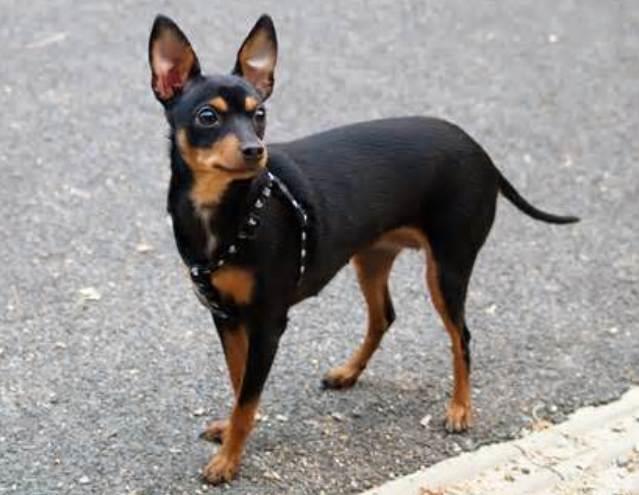
People usually land on Miniature Pinscher pages for one of two reasons: they’re thinking of bringing a Min Pin home, or they already live with one and want to know what’s “normal” for the breed—size, temperament, exercise, and the health issues to watch for.
These dogs are small enough to fit neatly into daily life, but lively enough to run it if their needs are ignored. A little planning—secure fencing, early training, sensible routines—makes the difference between a sharp, joyful companion and a restless pocket rocket.
Miniature Pinscher at a glance
- Height: 25–30 cm at the withers (shoulder)1
- Weight: usually around 3.5–5 kg (varies by build and lines; adults should feel lean and muscular)
- Coat: smooth, hard and short; close-fitting1
- Colours: solid red in various shades, or black/blue/chocolate with sharply defined tan points1
- Temperament: alert, active, inquisitive; often bold for their size
- Typical lifespan: often 12–15 years with good care
- Common health concerns: patellar luxation, Legg–Calvé–Perthes disease, dental disease (especially if home care is skipped)3, 4, 5
History and origin
The Miniature Pinscher was developed in Germany as a small, quick-footed ratter for homes and stables. They are often mistaken for “mini Dobermans”, but the breed’s history runs on its own track, with its own look and movement.2
That movement is part of their signature: a high-stepping, hackney-like gait—more lift through the front than you’d expect from a dog this size, paired with steady drive behind.1, 6
Physical characteristics
The Min Pin is compact and squarely built, with a clean outline and a short, glossy coat. In motion, they tend to carry themselves upright and with a distinct lift through the forelegs, which is explicitly described in breed standards as hackneyed action.1, 6
Coat colour is one of the clearer guideposts: red (various shades), or black/blue/chocolate with sharply defined tan markings. Slight white on the chest may be seen but is considered undesirable in the standard.1
Temperament and behaviour
A well-bred, well-managed Miniature Pinscher is busy and watchful. They notice everything. That alertness can look like confidence, and sometimes it tips into barking or pushiness if the dog hasn’t been taught calmer habits early.
Min Pins usually bond closely with their people and will often act as a small but serious watchdog—quick to announce movement outside, visitors arriving, or the neighbour’s bin lid rattling in the wind.
Children, visitors, and other animals
Many Min Pins do well in families, but they are not a “set-and-forget” toy breed. Because they’re small and quick, they can be injured by rough handling, and they can also learn to use noise or nipping to control situations if boundaries are inconsistent.
With other pets, early socialisation matters. Their original vermin-hunting role can show up as chase behaviour with small animals, so management and training are more reliable than wishful thinking.
Training and exercise needs
Miniature Pinschers learn quickly, including the things you didn’t mean to teach. Short, frequent training sessions work best—two minutes here, five minutes there—built around rewards the dog genuinely values (food, play, access to a favourite spot).
Early training and socialisation
Start young and keep it gentle. The goal is a dog that can move through the world without needing to argue with it. Focus on handling (paws, mouth, collar), calm greetings, and a reliable recall before you rely on off-lead freedom.
Daily exercise and safe outlets
Most Min Pins need daily walks plus active play. Mental work counts too: sniffing games, basic obedience, and simple agility-style obstacles in a safe space can take the edge off the breed’s constant readiness.
Security matters more than people expect with this breed. Their curiosity and speed can turn a loose gate into a long afternoon, so check fencing, doors, and balcony gaps as carefully as you’d check a toddler’s environment.
Health and lifespan
Miniature Pinschers are often long-lived, but they’re not invincible. The most useful approach is quiet prevention: keep them lean, keep their teeth cared for, and don’t ignore small changes in gait.
Patellar luxation (kneecap slipping)
Patellar luxation is common in small and miniature-breed dogs. It occurs when the kneecap moves out of its normal groove, and it often shows up as an intermittent “skip” in the back leg that resolves after a few steps.3
Severity varies. Mild cases may be managed conservatively, while moderate to severe grades are more likely to require surgery—your vet will grade the luxation and talk through options based on pain, function, and progression.3
Legg–Calvé–Perthes disease (hip/femoral head disease)
Legg–Calvé–Perthes is a hereditary condition most often seen in young, small-breed dogs. It causes progressive hind-limb lameness and pain associated with changes to the femoral head (the “ball” of the hip joint), typically diagnosed on X-rays.4
If you notice persistent limping, reluctance to jump, or sensitivity around the hips, it’s worth a prompt vet visit rather than waiting for it to “settle”.4
Dental disease (common, preventable, often expensive)
Small dogs are particularly prone to dental trouble, and Min Pins are no exception. Regular home care matters: brushing is the most effective prevention, introduced gradually and paired with calm rewards.5
RSPCA guidance also emphasises regular vet checks, and notes that you shouldn’t use human toothpaste for pets due to stomach upset risk.5
Grooming and maintenance
The Min Pin’s coat is easy to live with: short, close, and generally low-odour. A weekly brush is usually plenty, more often during seasonal shedding.
- Coat: quick weekly brush; wipe-down after muddy walks
- Nails: trim regularly—small dogs’ nails can overgrow quickly
- Ears and skin: check during grooming for redness, wax build-up, or irritation
- Teeth: build a routine early; daily brushing is ideal where possible5
Diet and nutrition
Feed for steady energy, not constant snacking. Miniature Pinschers can gain weight quickly, and extra kilograms place real pressure on knees and hips that are already at risk in small breeds.
Use measured meals, keep treats small, and make “extra food” work as training rewards rather than bonus calories.
Foods to avoid
Chocolate is a genuine toxin for dogs. It contains methylxanthines (including theobromine and caffeine), and toxic effects depend on dose, chocolate type, and the dog’s size—with small dogs at higher risk from small amounts.7
Fun facts (kept sensible)
The Miniature Pinscher’s distinctive “hackney” movement is not an accident or a fad—it’s written into breed standards as a defining part of how the dog should move.1, 6
Final thoughts
A Miniature Pinscher is a bright, compact animal with a strong opinion about the world. They do best with calm structure: daily movement, early training, secure boundaries, and consistent handling. Give them that, and you tend to get a small companion with a clear-eyed, lively presence—always watching, always ready.
References
- Dogs Australia (ANKC) – Miniature Pinscher breed standard
- Westminster Kennel Club – Miniature Pinscher overview
- Merck Veterinary Manual – Patellar luxation in dogs and cats
- VCA Animal Hospitals – Legg-Calvé-Perthes disease (necrosis of the femoral head) in dogs
- RSPCA Australia – Importance of dental health
- United Kennel Club (UKC) – Miniature Pinscher breed standard (movement/gait)
- Merck Veterinary Manual – Chocolate toxicosis in animals

Veterinary Advisor, Veterinarian London Area, United Kingdom