
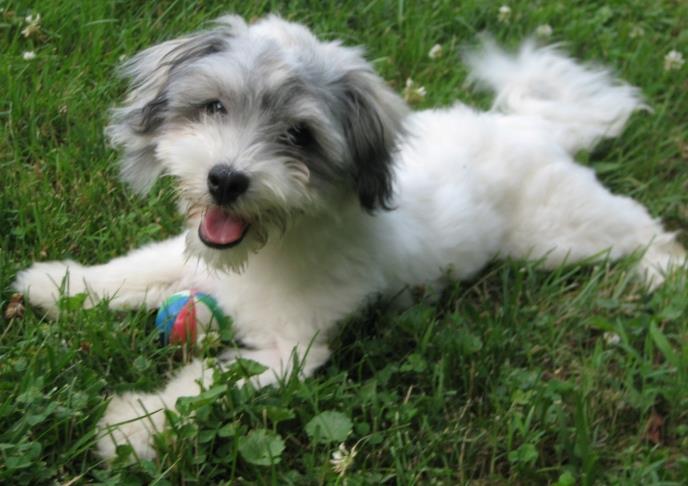
People usually look up the Havanese when they’re deciding whether this small Cuban companion dog will fit their home — and what day-to-day care actually looks like. Size, grooming, exercise, and the breed’s common health risks matter, because they shape your costs, your routine, and how comfortable the dog will be over the long run.
Below is a clear snapshot of what a Havanese is like to live with, grounded in breed standards and veterinary guidance, with practical notes on training, coat care, and health checks.
Havanese at a glance
- Size: Small; typically 23–27 cm at the shoulder (with some standard tolerance outside that range).1
- Weight: Commonly around 3–6 kg in pet homes; breed references often place adults around 7–13 lb (about 3.2–5.9 kg), depending on the registry and the individual dog.2, 3
- Coat: Long, soft, and flat to wavy; undercoat can be minimal or absent. Matting is the main enemy, not shedding.1, 4
- Colours: Many colours and markings are accepted, with pure white uncommon in some standards.1, 5
- Temperament: Companion-focused, alert, playful; typically people-oriented and responsive to gentle training.6
- Exercise needs: Moderate; daily walks and play suit most adults.
- Life expectancy: Often around 12–15+ years; many sources place the breed in the mid-teens with good care.4
- Origin: Cuba; widely recognised as the national dog of Cuba.6
History and origin
The Havanese developed as a companion breed associated with Cuba. Modern breed descriptions commonly trace the type back through the bichon family of small companion dogs, shaped over generations for home life rather than work.6
One point worth correcting: claims about specific famous owners (for example, Queen Victoria or Charles Dickens) are often repeated online but are not consistently supported by reliable primary sources. It’s safer to treat them as folklore unless a reputable historical reference is provided.
Physical characteristics
A Havanese is small but not fragile: a compact dog with a light, elastic gait and a plumed tail carried over the back. Height is more tightly defined in the standard than weight, and dogs can look “bigger” than expected once the coat is fully grown.1
The coat is the defining feature — long, soft hair that falls flat or in waves. In the Australian breed standard, trimming and scissoring the coat for shape is generally not allowed (aside from limited tidying), which reflects the breed’s natural outline.1
Temperament and behaviour
Havanese are typically lively, social dogs that stay close to their people. They tend to do best in homes where someone is around often enough to provide interaction, short training sessions, and simple companionship throughout the day.6
With children and other pets
Most Havanese are gentle and sociable when they’re well socialised, but their small size means they can be injured by rough handling. Calm supervision, especially with very young children, matters more than the breed’s friendliness.
Training and exercise
Early training and socialisation
Start early, keep it light, and make it regular. Short, frequent sessions suit a small companion dog: a few minutes of attention, a clear reward, then a break. Early exposure to household sounds, visitors, grooming tools, and gentle handling helps a Havanese move through adult life with less fuss.
Training techniques that work
Reward-based training (food rewards, play, praise) tends to work best. Harsh methods can create avoidance and anxiety, especially in a breed bred to stay close to people.
Daily exercise
Think in small, steady doses: a couple of short walks, indoor play, and a bit of problem-solving (snuffle mat, simple scent games, basic tricks). Many Havanese enjoy quick bursts of speed, then settle back into quiet company.
Health and lifespan
Havanese are generally robust for a toy breed, but they can still be prone to inherited and small-dog problems. Commonly mentioned concerns include eye disease (such as cataracts), kneecap issues (patellar luxation), and some heart murmurs, along with hip or knee problems in some lines.4
Regular veterinary checks matter most when they’re paired with at-home observation: changes in appetite, weight, energy, vision, or walking pattern are often the earliest signs something needs attention.
Dental care: the small-dog issue that sneaks up
Dental disease is extremely common in dogs, and small breeds are often at higher risk. Daily toothbrushing is widely recommended as the most effective home habit for slowing plaque build-up, alongside vet dental checks as advised for your dog.7, 8
Grooming and coat care
A Havanese coat behaves more like human hair than a typical shedding dog coat: loose hair tends to stay caught in the coat, which reduces visible shedding but increases matting risk. That trade-off is the heart of Havanese grooming.1, 4
A practical grooming routine
- Brush: Several times a week at minimum; daily is often needed if the coat is kept long.4
- Bath: As needed, with a dog-specific shampoo; rinse thoroughly to avoid skin irritation.
- Eyes and ears: Check regularly for discharge, redness, odour, or debris.
- Nails: Trim regularly so the dog stands and moves comfortably.
- Teeth: Brush daily where possible; use pet toothpaste, not human toothpaste.7, 8
Are Havanese “hypoallergenic”?
They’re often described as low-shedding, and some people with allergies tolerate them better than heavier shedders — but no dog is truly hypoallergenic. Allergy reactions are usually triggered by dander and saliva proteins as much as hair, so individual response still varies.
Diet and nutrition
Most Havanese do well on a complete and balanced diet appropriate for small dogs, with careful portion control to avoid gradual weight gain. Extra weight can quietly increase strain on joints and make dental and heart issues harder to manage over time.4
For feeding amounts, use your dog’s body condition (not just the label) as your guide, and ask your vet to help you set a target weight and daily ration.
References
- Dogs Australia (ANKC) – Havanese breed standard
- Pet Circle – Havanese breed guide (Australia)
- American Kennel Club (AKC) – Breed weight chart (Havanese)
- Purina Australia – Havanese breed profile
- United Kennel Club (UKC) – Havanese breed standard (colour/size)
- Westminster Kennel Club – Havanese breed overview
- American Animal Hospital Association (AAHA) – Your pet’s dental care (daily brushing guidance)
- WSAVA – Global Dental Guidelines

Veterinary Advisor, Veterinarian London Area, United Kingdom