
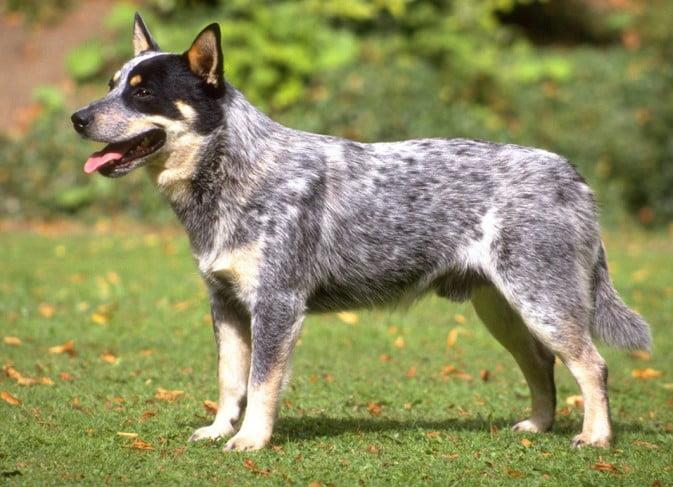
People usually search for Australian Cattle Dog grooming because the coat looks “easy” on paper, yet the house fills with short hairs, the undercoat starts to lift in seasons, and the dog’s skin can get irritated if bathing and brushing aren’t balanced.
The trick is simple and steady: keep the coat clean without stripping its natural oils, keep nails and ears in good order, and use grooming as a quiet handling routine so health changes don’t slip past unnoticed.
Breed Name: Australian Cattle Dog
Also known as: Blue Heeler, Red Heeler, Queensland Heeler
Height: 46–51 cm (male), 43–48 cm (female)1
Weight: commonly around 15–23 kg (varies by build and lines)2
Coat: short, weather-resistant double coat (dense undercoat)1
Colour: blue (mottled/speckled) or red speckle; other colours are not accepted in the breed standard1
Temperament: alert, intelligent, loyal; can be protective and may try to “herd” movement (including children) if not guided early3
Exercise needs: high—best suited to daily physical work plus problem-solving and training games3
Coat and shedding: what you’re actually managing
The Australian Cattle Dog coat is built for weather and distance: a straight outer coat over a tight undercoat, designed to shed dirt and keep the dog moving in heat, wind and scrub.1 That design is why many dogs stay “naturally tidy”, yet still drop surprising amounts of hair across the year.
Most owners notice two patterns:
- Background shedding that’s steady and prickly (those short hairs wedge into fabric).
- Seasonal coat release, when the undercoat loosens more heavily and brushing suddenly matters a lot more.
Grooming routine (quick, reliable, repeatable)
Weekly baseline
- Brush once a week to lift dead coat and dust, and to check the skin as you go.4
- Ear check (look, sniff, gentle wipe only if needed). Any strong smell, redness, head-shaking or tenderness is a reason to book a vet visit.
- Paws and nails check. Many active dogs wear nails down naturally, but don’t assume—listen for clicking on hard floors and look for nails touching the ground when standing.
During heavier sheds
Increase brushing frequency for a short stretch. A few extra sessions close together removes loose undercoat before it ends up on your couch, and it reduces matting in the thicker areas (neck, rump and tail base).
Tools that suit an Australian Cattle Dog coat
- Rubber grooming mitt or soft curry brush for short coats (great for weekly maintenance).
- Slicker brush for lifting loosened undercoat during seasonal shedding.
- Undercoat rake used lightly and sparingly (helpful in coat-blow periods, but avoid scraping the skin).
- Comb for checking the “dense bits” (neck and behind the thighs) after brushing.
- Nail clippers or grinder—choose what you can use calmly and consistently.
Bathing: less often, done properly
Because the coat is weather-resistant, most Australian Cattle Dogs don’t need frequent baths. Bathe when they’re genuinely dirty, smelly, or after a messy adventure, and use a mild dog shampoo so you don’t strip the coat and trigger itchiness.5
After bathing:
- Rinse thoroughly (leftover product is a common cause of irritation).
- Towel-dry well, then allow the coat to air-dry in a warm, draught-free spot.
- Brush once fully dry to lift any loosened coat.
Nails: trimming without turning it into a wrestle
There isn’t a single “correct” schedule for every dog. Nail growth depends on age, genetics, surfaces walked on, and how much wear the nails get day to day.
A practical guide:
- Check monthly as a minimum.
- Trim roughly every 1–2 months for many pet dogs, but some need more often and some much less.4
If you’re learning, take off tiny amounts and stop early. A slow approach prevents painful quicking and helps the dog tolerate handling. If your dog is very reactive around feet, ask your vet clinic or groomer for a short, low-drama plan and demonstrate safe technique.
Ears, teeth and skin: small checks that catch big problems
Grooming is also surveillance. While you brush and handle the dog, look for:
- Redness, scabs, dandruff or patches of hair loss
- New lumps, heat, swelling, or tenderness
- Persistent scratching, paw-licking, head-shaking, or a sudden change in coat quality
Australian Cattle Dogs can be affected by inherited conditions, including eye disease such as progressive retinal atrophy (PRA) and congenital deafness in some lines. If you notice night vision changes, bumping into objects, or uneven response to sound, it’s worth an early veterinary assessment rather than a wait-and-see approach.6, 7
Exercise, training and grooming: why they overlap
This breed is famously capable, and often happiest with a job. Daily movement plus training games reduces frustration behaviours and makes grooming easier, because the dog has already spent some energy and can settle into handling.3
Keep training plain and consistent. Reward calm standing, gentle paw handling, and stillness for a few seconds at a time. Over weeks, those seconds quietly add up.
Australian Cattle Dogs as working dogs and family dogs (a quick reality check)
Australian Cattle Dogs were developed for controlling cattle across distance and rough country, and the breed standard still describes a dog built for endurance and soundness rather than exaggeration.1 In family homes, that same intensity can show up as herding behaviour (like nipping at heels) if early training and supervision aren’t in place—particularly around running children.3
They can be affectionate companions, but they tend to thrive with structure: clear boundaries, daily exercise, and regular handling.
Final thoughts
An Australian Cattle Dog doesn’t ask for elaborate grooming. It asks for rhythm: a weekly brush, a steady eye on nails and ears, and the occasional bath when life gets muddy. Done calmly, grooming becomes a small quiet ritual—one that keeps the coat tidy, the skin comfortable, and the dog easy to examine when something changes.
References
- The Kennel Club (UK) – Australian Cattle Dog breed standard
- United Kennel Club (UKC) – Australian Cattle Dog breed standard (height/weight guidance)
- Wikipedia – Australian Cattle Dog (overview, behaviour notes and citations)
- RSPCA Pet Insurance – How often should dogs be groomed?
- RSPCA Pet Insurance – Guide to dog cleaning and grooming
- American Kennel Club – Progressive Retinal Atrophy (PRA) in dogs
- Merck Veterinary Manual – Deafness in animals
- Vetwest Veterinary Clinics – Nail clipping for dogs

Veterinary Advisor, Veterinarian London Area, United Kingdom