
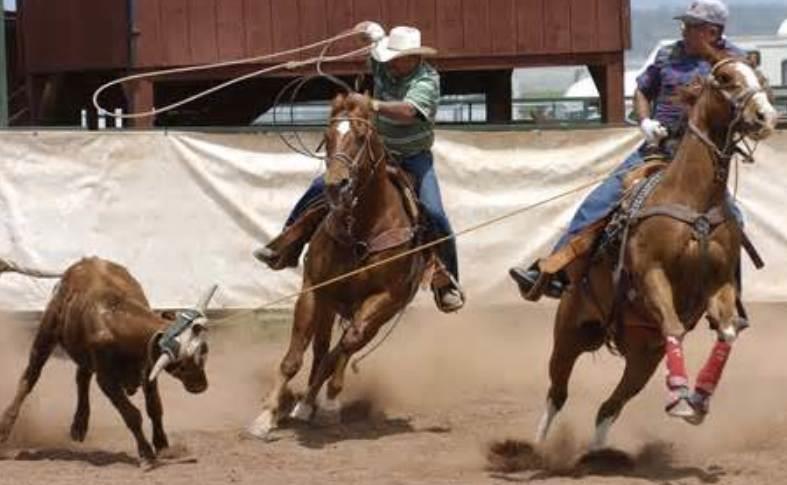
People usually look up team roping when they’re trying to understand what counts as a legal catch, why a run earned a penalty, or what to practise before they spend money on gear and entry fees. In a timed event measured in tenths of a second, small details—barrier timing, where the header catches, whether the heeler gets one leg or two—decide whether you place, or don’t even get a qualified time.
Team roping is a practical ranch skill reshaped into a clean, rule-driven arena sport: two riders, two ropes, one steer, and a clock. What follows sticks to the basics that matter in Australia, then widens out to training, safety, and how local competition pathways work.
What is team roping?
Team roping is the only true team event in rodeo. Two mounted competitors work the same steer in the same run: the header catches the front end, and the heeler catches the hind legs. A qualified run is fast, but it’s also tidy—legal catches, controlled turns, and a finish where both riders have their ropes tight and their horses facing each other with no slack.1, 2
The header’s job
The header leaves the box after the steer’s head start (managed by a barrier). A legal header catch is one of three: both horns, one horn and the head, or the neck. Anything else is an illegal catch and the team won’t receive a qualified time.1, 2
The heeler’s job
The heeler trails and reads the steer’s stride. The aim is to rope both hind legs. Catching only one hind leg typically draws a time penalty; roping front legs is not a qualified catch.1, 2
How a run is timed (and why penalties happen)
Most arenas give the steer a head start using a breakaway barrier. If the header leaves too early and breaks the barrier before the steer completes its start, a time penalty is added.1, 2
The clock stops when both ropers have their catches made and there is no slack in the ropes, with the horses facing each other in control. The clean finish matters because it proves the steer is properly caught and the run is complete.1, 2
Where team roping came from
Team roping grew out of working cattle on ranches, where a large animal sometimes needed more than one rider to catch and hold for routine tasks such as treatment or branding. The rodeo version keeps that core idea—two riders doing one job—then measures it under standardised rules and a timer.1
Equipment and gear that matters
Most problems in the arena look like “bad luck” until you trace them back to simple things: a rope that doesn’t feel consistent, tack that shifts, or a horse that can’t stay balanced when the steer changes line. Gear choice should support control and safety first, then speed.
Ropes
- Header rope: built to stand up to horn/neck catches and quick dallying.
- Heeler rope: designed for clean delivery to the hind legs and smooth handling as the loop opens.
Saddle and tack
Ropers use saddles built for dallying and for staying centred during the turn. Good fit (horse and rider) reduces slipping, sore backs, and the little delays that add up across a run.
Protective gear
Gloves are common for rope handling. Helmets are increasingly used, especially in junior and training settings, because the biggest risk moments tend to be sudden: a horse stepping, a rope tightening unexpectedly, a fall when balance disappears.
Technique: what actually makes a run work
Timing and coordination
At speed, teamwork is mostly about space. The header’s job is not only to catch, but to set the steer’s line so the heeler sees the feet and can throw with confidence. The heeler, in turn, must match the steer’s stride and avoid rushing the delivery.1, 2
Positioning
Good positioning looks quiet. The horses travel with purpose, but without wasted motion—straight lines when possible, controlled angles when needed, and no frantic catching-up after a mistake.
Training and practice
Skill in team roping is built in layers: mechanics first, then timing, then speed. Practice that skips straight to “go fast” tends to produce the same pattern—either missed catches, or catches that cost penalties.
Practical training approach
- Start your swing and delivery work on a dummy to build consistent mechanics.
- Practise barrier timing and box work so your first few strides are calm and repeatable.
- Run with the same partner often enough to develop shared timing—where the steer turns, how much room the heeler likes, how the finish is set up.
- Use video occasionally. Small position errors are easier to see than to feel.
Competitions and events in Australia
In Australia, a common pathway into timed events is through association jackpots and championship-style finals. The Australasian Team Roping Association (ATRA) runs affiliated events and an annual National Finals, with published qualification requirements and dates.3, 4
ATRA National Finals (example of how finals work)
ATRA has listed the 2026 National Finals at Bridgeman Park, Capella (Queensland), scheduled for 30 September to 4 October 2026, with qualification tied to competing at affiliated events within the stated period.4
Divisions and categories
Most competitions use divisions so newcomers aren’t matched against open professionals straight away. Exact names and number systems vary by organiser, so check the ground rules for the event you’re entering.
Health and safety (rider and horse)
Team roping moves quickly, and the risk comes from the same place as the thrill: speed, weight, and a rope that can go tight in an instant. Many injuries happen during abrupt stops, turns, or falls, rather than during the throw itself.
Simple safety habits that hold up over time
- Check tack before every run: worn latigos, damaged reins, frayed rope sections, loose back cinches.
- Warm up horse and rider. Cold bodies are slower to react and more likely to strain.
- Keep practice areas clear of hazards (gates, drums, loose rails).
- Communicate clearly with your partner about start cues and how you’ll handle a broken run.
Famous team ropers (and a quick fact-check)
Some of the best-known names in professional team roping include Clay O’Brien Cooper and Jake Barnes, both recognised at the sport’s highest levels. Their runs are a good study in what looks “easy” only because every movement is economical and rehearsed.5
A note on Australian names: riders and trainers often cross disciplines, and reputations can spread through clinics and social media. If you’re using a “famous ropers” section for a specific Australian rodeo organisation, it’s worth matching names to verified competition records from that organisation rather than relying on general popularity.
Fun facts (kept honest)
Is team roping the only rodeo event where men and women compete equally?
Team roping is widely described as the only true team event in rodeo, but the idea that it’s the only event where men and women compete equally isn’t reliable as a general rule—many rodeo organisations run open events with mixed participation, and others separate divisions by category. It’s more accurate to say that team roping is a team discipline where mixed-gender partnerships are common in many settings.1, 6
How fast can team roping get?
Times at the top end are extraordinarily quick. The long-cited 3.3 seconds by Chad Masters and Jade Corkill (2009) remains a famous benchmark, and more recent reporting shows even faster ProRodeo times recorded since then (with record-keeping depending on event and conditions).7
Final thoughts
Team roping rewards calm hands and clear decisions. The best runs look almost quiet: a clean start, a legal catch set without drama, hind legs delivered on time, then two horses settling into the finish as the rope comes tight. If you build your practice around repeatable mechanics and safe control, speed tends to arrive on its own.
References
- The Cowboy Channel — Rodeo 101: Team Roping
- New Zealand Rodeo Cowboys Association — Team Roping
- Australasian Team Roping Association (ATRA) — Official site
- ATRA — National Finals (dates and qualification details)
- ProRodeo Hall of Fame — Official site
- Texas High School Rodeo Association — Rodeo 101 (Team Roping overview)
- The Team Roping Journal — Fastest Team Roping Runs (3.3 and faster history)
- ABC Rodeo — Team Roping (rules summary)

Veterinary Advisor, Veterinarian London Area, United Kingdom