
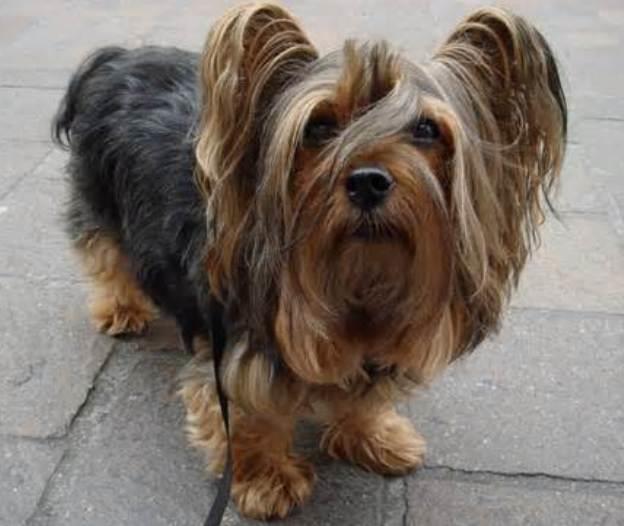
People usually end up looking up Silky Terriers for one of two reasons: they’re deciding whether this small Australian terrier will fit their home, or they already live with one and want to get the coat, teeth, exercise, and training right.
They look delicate at a glance, but they move through life like a working terrier—quick, alert, and interested in whatever scurries. A little planning makes the difference between a lively companion and a dog who invents their own hobbies.
Silky Terrier snapshot
- Height: 23–26 cm at the withers (dogs)1
- Weight: commonly around 4.5 kg (about 10 lb), though individuals vary2
- Coat: straight, fine, glossy, silky; long but not meant to drag on the floor1
- Colour: blue and tan (blue can range from silver-blue to slate), with clear, rich tan markings1
- Temperament: quick, friendly, responsive; shyness or excessive nervousness is undesirable in the standard1
- Lifespan: often around 13–15 years3
Where the Silky Terrier came from
The Silky Terrier was developed in Australia, drawing on small terrier lines that included Yorkshire Terrier influence. In the early decades, different states used slightly different names and standards, including “Sydney Silky”. Cross-breeding between the Silky, Yorkshire and Australian terriers was later restricted, and the type stabilised into the modern breed recognised nationally in the mid-20th century.4
Appearance: small frame, bright finish
A Silky Terrier is compact and fine-boned, with a coat that falls in straight lines and catches the light when it’s clean and well-brushed. The look is tidy rather than floor-length: enough hair to flow, not so much that it hampers movement.1
The coat’s texture is often compared to human hair, which is useful shorthand for owners: it tangles rather than “blows out”, and it rewards regular, gentle maintenance.2
Temperament: companion first, terrier always
In the breed standard, the Silky is described as quick, friendly, and responsive, with the characteristic alert air of a terrier.1 In everyday life, that often shows up as:
- Watchfulness: they notice changes in their environment quickly and may bark if something feels new.
- Chase instinct: many Silkies will pursue small, fast-moving animals if given the chance—an echo of their rodent-hunting roots.5
- Close attachment: they tend to prefer being near their people rather than “out in the yard” dogs.
They can do well with children and other pets, but their small size and quick reactions mean adult supervision matters—especially with very young children, or with rough play that could lead to a nip or a fall.
Training and daily exercise
Silkies are bright, fast to learn, and easily bored by repetition. Training works best when it’s calm, consistent, and reward-based, with short sessions you can repeat through the day.
Exercise needs vary with the individual, but many Silkies need purposeful movement every day—walks plus play, with time to sniff and investigate. As a rough guide, some veterinary references suggest around an hour of daily activity for the breed (split into manageable chunks).3
What helps most in real homes
- Teach a recall early (and keep it reinforced), because the chase instinct can switch on suddenly.
- Practise handling—feet, mouth, ears—so grooming and vet checks stay low-stress.
- Use enrichment (food puzzles, scatter-feeding, brief training games) to prevent “busy” behaviours indoors.
Health: what to watch, what to prevent
No dog breed comes with guarantees, but a few patterns are common in small terriers.
Knees (patellar luxation)
Patellar luxation—where the kneecap shifts out of its normal groove—is commonly seen in small and miniature-breed dogs. It can present as an intermittent “skipping” gait and may range from mild to severe.6
Keeping your Silky lean and well-muscled helps, but if you notice hopping, skipping, or reluctance to jump, it’s worth a vet assessment rather than waiting.
Dental disease
Small dogs are often prone to dental problems, and prevention is far easier than treatment. Regular tooth brushing is widely recommended as the most effective at-home measure, introduced gradually and paired with calm rewards.7
Coat care and grooming routines (without the drama)
The Silky coat doesn’t look after itself. If brushing is irregular, fine hair knots close to the skin, especially behind ears, in armpits, and around the collar line.
A practical baseline routine
- Brush several times a week (daily if the coat is kept long), working in small sections to the skin.
- Bathe as needed with a gentle dog shampoo; follow with thorough drying to avoid skin irritation.
- Keep feet tidy so hair doesn’t collect grass seeds and debris.
- Check ears and nails routinely and keep them maintained.
The breed standard also makes it clear that coat length shouldn’t impede movement and that the feet should be free of long hair—useful guidance when you’re deciding how “showy” to keep the coat at home.1
Feeding: keeping a small dog lean
Silkies can gain weight easily, and extra kilos matter more on a small frame—especially for joints. Use a measured diet, keep treats small, and reassess portions as activity changes across seasons.
If you’re unsure whether your dog is at a healthy weight, a body condition score is a reliable, vet-supported way to check. WSAVA provides nutrition guidelines and tools used by veterinary teams to assess body condition and plan feeding.8
Choosing a Silky Terrier: quick checks before you commit
- Grooming time: if you don’t want regular brushing, choose a different breed—or commit to a shorter clip and a schedule.
- Noise tolerance: alert barking is common; you’ll want to train a cue for quiet and manage triggers early.
- Safe spaces: provide a calm retreat away from rough play, visiting dogs, and busy doorways.
- Vet partnership: plan for dental care and for monitoring small-dog orthopaedic issues over time.
Final thoughts
A Silky Terrier is small enough to suit close living, but not a passive ornament. When their coat is kept comfortable, their teeth are maintained, and their day includes movement and simple training games, they tend to settle into a lively, watchful rhythm—always present, always noticing, and rarely far from the centre of household life.
References
- Dogs Australia (ANKC) — Australian Silky Terrier breed standard
- WebMD — What to know about Silky Terriers
- PetMD — Silky Terrier (breed health and care)
- Australian Silky Terrier Club of Victoria — Breed history
- American Kennel Club — Silky Terrier facts
- Merck Veterinary Manual — Patellar luxation in dogs and cats
- RSPCA Australia — Importance of dental health
- WSAVA — Global Nutrition Guidelines

Veterinary Advisor, Veterinarian London Area, United Kingdom