
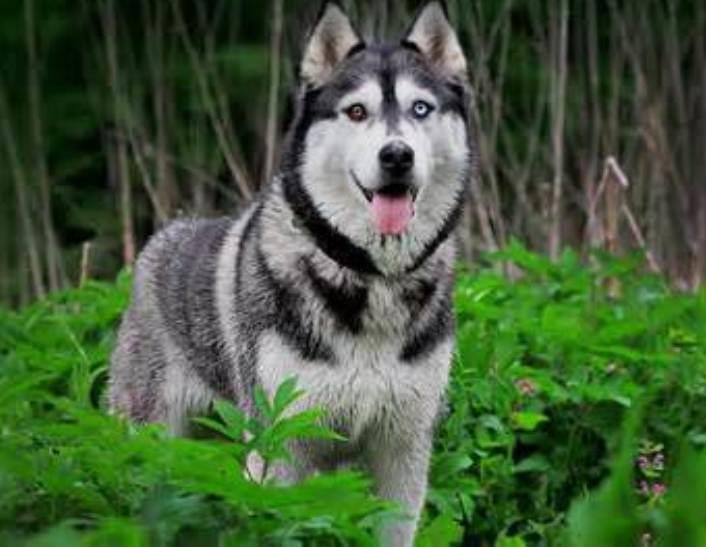
People usually look up Siberian Huskies when they’re weighing up the fit: “Can this breed cope with my home, my schedule, my climate?” The stakes are practical. A Husky that’s under-exercised, overheated, or bored will find its own outlet, often by roaming, digging, and unpicking fences.
Below is a clear, breed-standard snapshot of what a Siberian Husky is built for, what they’re like to live with, and the everyday care that keeps them steady and healthy.
At a glance: Siberian Husky basics
- Size: Medium working dog. Males typically 53.5–60 cm at the withers and 20–27 kg; females typically 51–56 cm and 16–23 kg.1
- Coat: Double coat with a soft undercoat and longer guard hairs; all colours from black to pure white are accepted, with many head markings common.1
- Temperament: Friendly and gentle, alert and outgoing; not naturally a guard dog and usually not suspicious of strangers.2
- Life expectancy: Commonly around 12–14 years (individuals vary).3
- Noise: Often more “talky” than barky—howls and vocalising are typical for the type, especially when under-stimulated.2
History and origin
Siberian Huskies were developed in north-eastern Siberia by the Chukchi people as sled dogs that could travel efficiently over long distances in harsh conditions, while remaining workable around people.3, 4
They became widely known outside Siberia after being brought to Alaska in the early 1900s for sled dog racing, where they proved fast and consistent performers against heavier freighting dogs.3
The breed’s public legend is tied to the 1925 relay that delivered diphtheria antitoxin to Nome during winter storms—an event often remembered through the names Balto and Togo, but built on many teams and many miles of hard running.3
Physical characteristics
A Siberian Husky is designed for endurance: moderately compact, light on its feet, with a smooth, efficient gait and a coat that insulates without needing heavy bulk.1, 2
Common features include erect ears, almond-shaped eyes (brown, blue, or one of each), and a well-furred “brush” tail carried in a sickle curve when alert or moving.2
Temperament and behaviour
Most Huskies are sociable dogs: friendly with people, generally not possessive in the way many guarding breeds are, and often happiest when they have regular contact with their household.2
They also have a strong instinct to travel. Off lead, many will follow scent and movement beyond the boundary you thought was obvious, so recall can be unreliable unless it’s carefully trained and consistently reinforced.3
Prey drive varies by individual, but it’s common enough that small animals (including cats, poultry, and wildlife) need thoughtful management—secure fencing, supervised introductions, and a lead in unfenced areas.
Training and exercise needs
Huskies do best when training is practical, consistent, and rewarding. Short sessions suit them—clear cues, calm repetition, and positive reinforcement—rather than long drills that invite boredom.2
Exercise needs are substantial. Think beyond a slow lap of the block. Many adult Huskies need one to two hours of purposeful activity most days—brisk walking, running with you, hiking, structured play, and mentally taxing games that make them think as well as move.3
Because roaming is a known trait, exercise should be on lead or in a genuinely secure area. “Looks fenced” and “is Husky-proof” are not the same thing.3
Health concerns to be aware of
Siberian Huskies are often robust, but there are a few conditions that come up often enough to plan for.
Eyes
Hereditary cataracts, corneal dystrophy, and progressive retinal atrophy are recognised concerns in the breed. Ask breeders about eye testing and results for both parents.5
Hips
Hip dysplasia can occur, but large screening datasets suggest the breed is less affected than many others. It’s still sensible to look for health screening and sound movement, especially if you’re buying a puppy.6
Skin and zinc-responsive dermatosis
Arctic breeds including Siberian Huskies can develop zinc-responsive dermatosis, with crusting and scaling often around the eyes and mouth. This needs veterinary diagnosis and a tailored plan—don’t start supplements casually, because “more” isn’t always safer.7, 8
Grooming and maintenance
The double coat is built to shed. Regular brushing (at least weekly, and more often during seasonal coat blows) helps lift dead undercoat before it mats or ends up through the house. The breed standard does not support trimming the coat for convenience, aside from tidying feet.2
Bathing is occasional rather than constant. Over-washing can dry the skin; a good brush and a rinse when genuinely dirty is usually enough.
Diet and feeding notes
Feed to condition, not to the label. Huskies can stay lean and athletic when portions are measured and adjusted to activity levels and seasons.1
If weight starts creeping up, treats are often the quiet culprit. Keeping treats to less than 10% of daily calories is a common veterinary target, and using pieces of the dog’s normal kibble as training rewards can help without adding extra energy.9
If your Husky has persistent itch, recurrent ear infections, or chronic gastrointestinal upsets, ask your vet about a structured diet trial rather than hopping between foods at random.
Living conditions: what suits a Husky (and what doesn’t)
A Siberian Husky can adapt to many households, but only if their daily routine matches what they were built to do: move, think, and stay connected.
- Best suited to: active people; homes with secure fencing; owners who enjoy training and structured exercise; families who can supervise and involve the dog daily.3
- Often challenging in: apartments and small yards without a solid exercise plan; homes where the dog is left alone for long stretches; properties with easy escape points (gaps, low fencing, loose gates).3
Choosing and adopting a Siberian Husky
If you’re buying, look for a breeder who health-tests appropriately, can show evidence of testing (not just verbal assurance), and is candid about what living with the breed is like on an ordinary weekday.2, 5
If you’re adopting, be honest about your daily capacity for exercise and management. Many rescue Huskies are affectionate, clever dogs that simply outpaced their previous home’s routine.
Final thoughts
A Siberian Husky is not a decoration. It’s a long-distance engine wrapped in fur—friendly, resilient, and restless when life becomes too small. Meet their need for movement, training, and secure freedom, and you’ll usually see the best of them: steady companionship and a quiet, tireless confidence on the track.
References
- Dogs Australia (ANKC) – Siberian Husky breed standard
- The Kennel Club (UK) – Siberian Husky breed standard
- Encyclopaedia Britannica – Siberian Husky (overview, history, care)
- Encyclopaedia Britannica – Chukchi
- Siberian Husky Club of America – Eye testing and prevalence summary
- Siberian Husky Club of America – Hip screening and OFA statistics summary
- Merck Veterinary Manual – Nutritional dermatoses (zinc-responsive dermatosis in Arctic breeds)
- Merck Veterinary Manual – Zinc supplementation guidance (integumentary disease)
- American Veterinary Medical Association (AVMA) – Pet obesity resources

Veterinary Advisor, Veterinarian London Area, United Kingdom