
People usually start looking up cockatiel care when they’re weighing up a new bird, trying to fix a diet that’s become “seed-heavy”, or checking whether a behaviour change is normal. With cockatiels, small daily choices matter. A cramped cage, poor air quality, or the wrong food can quietly build into illness over months.
Cockatiels are hardy little parrots from Australia’s inland, shaped by open country and long travel between water and food. In a home, that translates to a bird that wants space to move, things to chew and forage, and steady social contact—without constant handling. The details below stick to what’s known from avian vets and Australian wildlife sources, with practical checks you can use straight away.1, 2
Size: 30–33 cm
Weight: ~80–120 g (varies by sex, build, and condition)2
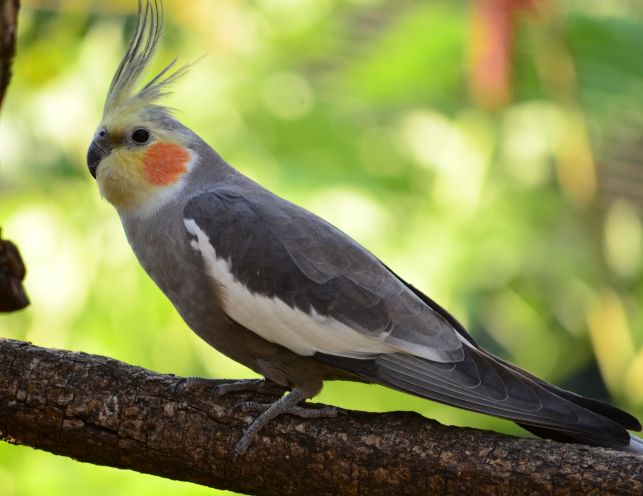
Colour: Wild-type grey with yellow face and orange cheek patch; many domestic colour mutations (e.g., lutino, pied, pearl)1
Lifespan: Often 15–20+ years with good care (some live longer)8
Temperament: Social, active, often people-oriented; tends to do best with daily interaction and routine
Diet: In the wild, mostly seeds (foraged on the ground); in captivity, a balanced, portion-controlled diet is safer than a seed-only diet1, 7
Habitat (pet): Spacious cage/aviary with safe out-of-cage time and enrichment
Noise level: Moderate; whistles, contact calls, and dawn/dusk activity are normal
Talking ability: Variable; many learn tunes and household sounds more readily than clear speech
Activity level: High
History and origin
The cockatiel (Nymphicus hollandicus) is native to mainland Australia and is most common through the arid and semi-arid inland. In the wild they move with conditions, gathering in flocks and travelling to find seeding grasses and reliable water.1, 2
They typically use open woodlands, lightly wooded grasslands, and river-edge eucalypt country, but will also turn up on farmland where food is available.1
Physical characteristics
What a cockatiel looks like
Cockatiels are slender parrots with a long tail and a soft, upright crest that shifts with alertness and arousal. Wild-type birds are mostly grey with a white wing patch, a yellow face, and orange cheek patches, with males generally brighter than females.1, 2
Colour variations in pets
Many pet cockatiels are colour mutations (such as lutino, pied, cinnamon, pearl, and others). These variations are the result of selective breeding and don’t change the core care needs, but they can make sexing by appearance less reliable, especially in juveniles.
Temperament and behaviour
Cockatiels are flock birds. They tend to settle best when the household has a predictable rhythm—regular light, regular meals, and a steady amount of social time each day rather than bursts of attention followed by long stretches alone.
Vocalising is part of normal contact behaviour. A sudden change—much quieter than usual, or calling continuously—can be an early sign something is off (stress, boredom, illness, or a change in the environment).
Living with children and other pets
Cockatiels can suit families, but they’re small and easily injured. Keep handling gentle and supervised, and assume cats and dogs are unsafe around birds unless separated by secure barriers. Even “friendly” pets can trigger panic flight or cause injury in seconds.
Housing and daily exercise
A cockatiel’s body is built for movement. In the wild they forage on the ground and fly between feeding and water sites; in a home, that needs to be replaced with space, climbing, and daily out-of-cage time in a bird-safe area.
Set-up essentials
- Space to move: Choose the largest practical cage (width matters for wing-stretching and short flights).
- Perches that vary: Use different diameters and textures to reduce pressure on the feet.
- Foraging and chewing: Rotate safe toys and offer ways to work for food (paper parcels, foraging cups, browse).
- Clean air: Avoid smoke, strong aerosols, and fumes (including overheated non-stick cookware). Good ventilation matters.
Training and mental stimulation
Training is less about tricks and more about predictable, low-stress handling. A simple “step up” onto a hand-held perch or finger can make vet trips, cage cleaning, and nail checks much safer.
Use short sessions and reward calm behaviour. Keep it steady. A cockatiel that chooses to approach is easier to live with than one that’s chased, grabbed, and handled only when necessary.
Diet and nutrition
In the wild, cockatiels mainly eat seeds, foraging mostly on the ground.1, 2 In captivity, however, a seed-only diet is strongly associated with malnutrition problems in pet birds, including obesity and vitamin and mineral imbalances.7, 8
A practical everyday diet
Most avian vets recommend using a quality formulated diet (pellets) as a foundation, then adding vegetables and other safe foods for variety and enrichment. Seed is best treated as a smaller portion rather than the base.7, 8
Foods to avoid (important)
Some common household foods are genuinely dangerous for birds. Avocado is a well-known example; onion is also commonly listed as potentially toxic for birds.6, 9
Quick feeding hygiene
- Wash fruit and vegetables before offering them.6
- Remove fresh foods after a couple of hours in warm weather to reduce spoilage risk.6
- Weigh your bird regularly (weekly is a sensible rhythm) so slow weight gain or loss doesn’t slip by unnoticed.7
Health and lifespan
With good care, many cockatiels live for decades, and it’s reasonable to plan for a long-term commitment rather than a short-lived pet.8
Common health issues to watch for
Many illnesses in companion birds trace back to diet and long-term imbalance. Obesity is common in pet birds on high-fat diets with low activity, and seed-heavy feeding patterns are a frequent contributor.7
Changes that deserve prompt veterinary attention include:
- Fluffed feathers, sitting low, or reluctance to move
- Tail bobbing, wheezing, open-mouth breathing, or persistent sneezing
- Noticeable drop in appetite, rapid weight change, or very watery droppings
- Repeated egg laying, straining, or swollen abdomen (hens)
Preventative care
- Book regular check-ups with an avian-experienced vet, even when your bird seems well.
- Keep the cage clean and dry; replace soiled substrate promptly.
- Provide daily movement and enrichment, not just food and a perch.
- Keep diet balanced and portion-controlled; avoid seed-only feeding.7, 8
Grooming and maintenance
Bathing and feather care
Many cockatiels enjoy a shallow bath dish or a gentle mist. Bathing supports feather condition and can help with dust, which cockatiels naturally produce in larger amounts than many parrots.
Beak and nails
Offer cuttlebone and safe chewing items. Nails usually stay manageable with varied perches, but if they’re snagging or overgrown, a vet or experienced groomer should trim them—small birds can bleed heavily from a poorly clipped nail.
Fun facts (kept sensible)
In the wild, cockatiels are often seen foraging on the ground in tight, watchful groups, then lifting together in coordinated flight. They may gather in flocks that range from small groups to very large numbers when conditions are good.1
Final thoughts
A cockatiel is not a decoration in a cage. It’s a small, alert animal shaped by wide skies and long distances, and it tends to thrive when a home offers the same basics: clean air, room to move, steady companionship, and food that supports a long life. Get those right, and the rest—whistles, curiosity, quiet company—usually follows.
References
- BirdLife Australia — Cockatiel (Nymphicus hollandicus)
- Museums Victoria Collections — Nymphicus hollandicus (Cockatiel)
- Oakvale Wildlife Park — Cockatiel profile
- RSPCA Queensland (Greencross Vets) — Pet bird nutrition
- Pet Circle — Feeding your small parrot
- VCA Animal Hospitals — Cockatiels: Feeding
- Merck Veterinary Manual (Professional) — Nutritional diseases of pet birds
- Merck Veterinary Manual (Pet Owner) — Nutritional disorders of pet birds
- PetMD — Toxic foods for birds

Veterinary Advisor, Veterinarian London Area, United Kingdom