
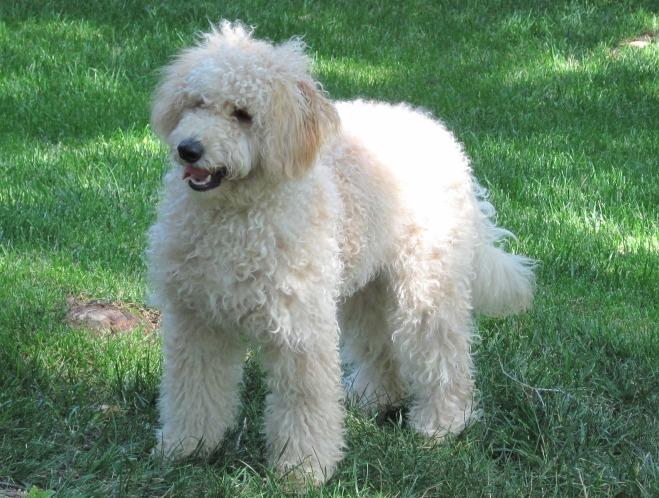
People usually land on a Goldendoodle page for one of three reasons: they’re weighing up a puppy, they’re trying to make sense of the “low-shedding” promise, or they’ve realised this cross can be more work (and more dog) than the cute photos suggest.
Goldendoodles can make steady, affectionate companions, but the coat, the training, and the daily movement needs are real. The details matter—especially if allergies, young children, or a busy household are part of the picture.
What a Goldendoodle is (and what it isn’t)
A Goldendoodle is a cross between a Golden Retriever and a Poodle. You’ll also see them described as “designer dogs” or “doodles”. In Australia, Goldendoodles are not recognised as a pedigree breed by major kennel clubs, and there isn’t a single enforced breed standard—so temperament, coat, and size can vary a lot from dog to dog.
The coat is often described as “hypoallergenic”, but no dog is truly hypoallergenic. Most dog allergies are triggered by proteins found in dander and saliva, and those proteins are still present even when a dog sheds less.4
History and origin
Unlike older working breeds with long, documented histories, the Goldendoodle is a relatively recent cross. It became popular as interest grew in Poodle crosses that might combine trainability, family-friendly temperaments, and lower shedding—though outcomes are not guaranteed.
Appearance: size, coat, colours
Goldendoodles can be small, medium, or large, depending largely on the Poodle parent (toy, miniature, or standard). Even within a litter, pups can mature into very different adults.
Common coat types include:
- Wavy (fleece): often lower shedding than a straight coat, but still prone to tangles.
- Curly (wool): can shed less, but mats easily without routine brushing and professional clipping.
- Straighter coats: more likely to shed and can be less predictable for allergy-prone households.
Colours vary widely (cream, gold, apricot and more). Coat colour doesn’t reliably predict temperament, shedding, or allergy-friendliness.
Temperament and behaviour
Many Goldendoodles are social, people-focused dogs with a quick mind and a soft mouth—traits that often reflect their Golden Retriever and Poodle heritage. They can suit families who enjoy an involved dog: one that wants to be near the action, learn routines, and follow you from room to room.
That same closeness can tip into trouble if a dog is under-exercised, under-stimulated, or left alone for long stretches. Boredom and frustration don’t always look dramatic; sometimes it’s the slow unravelling of manners—jumping up, chewing, barking, or pestering children and other pets.
Are Goldendoodles good with children and other animals?
They often can be, particularly when they’re thoughtfully socialised and the household sets clear boundaries. But “good with kids” is never automatic. Any dog can bite, especially when a child’s behaviour is fast, loud, or unpredictable, or when the dog is eating, sleeping, cornered, or overwhelmed.2, 3
Practical safety habits that make a difference:
- Supervise closely—close enough to step in, not from across the room.2
- Separate dogs and children during high-energy play, when food is around, and when either is resting.3
- Teach “hands off” rules: no hugging, climbing, chasing, grabbing, or taking items from the dog.2
- Give the dog an exit: a quiet retreat space where children don’t follow.2
Training and exercise needs
Goldendoodles tend to learn quickly, but they still need clear, consistent teaching. Short sessions, rewarded with food, praise, and play, usually land well—especially when started early and repeated often in real-life situations (doors, visitors, lead walking, cafés, parks).
Exercise needs vary by size, age, and individual temperament, but most Goldendoodles do best with daily movement plus mental work. As a baseline, plan for at least one decent walk a day, and ideally a second outlet such as a game of fetch, sniffing time, or training games.1
Grooming: the hidden workload
A low-shedding coat is not a low-maintenance coat. Goldendoodles commonly need brushing several times a week to prevent tangles turning into tight mats, and many households also rely on professional grooming every 6–8 weeks.
Grooming is also a regular health check in disguise: it’s when you notice skin irritation, parasites, sore paws, ear odour, or lumps early—when problems are easier to fix.1
Ears: a common trouble spot
Many doodle-type dogs have hairy, floppy ears that hold warmth and moisture. Ear care is mostly about observation and gentle maintenance: look for redness, odour, discharge, head-shaking, or discomfort, and see your vet early if those signs appear.6
Routine cleaning isn’t always needed for every dog—over-cleaning can irritate the ear canal. A sensible rule is to clean when dirt is visible, after swimming or bathing, or as advised by your vet for dogs with recurrent ear issues.6
Health considerations and lifespan
Lifespan is variable, and it’s affected by size, genetics, body condition, and preventive care. Like their parent breeds, Goldendoodles may be at increased risk of conditions such as hip dysplasia and some eye and ear problems. If you’re buying a puppy, health testing in the parents matters more than marketing language.
Hip dysplasia is a developmental joint condition seen across many breeds. Risk is influenced by genetics and by factors such as growth rate, exercise, and body weight—one more reason to keep your dog lean and well-muscled across their life.5
Preventive care basics
- Vaccination: follow your vet’s schedule. International guidelines commonly recommend puppy vaccinations through 14–16 weeks, a booster at around 12 months, then core boosters no more often than every three years for many dogs (depending on product, risk, and local requirements).7
- Dental care: tooth brushing is the most reliable home method for reducing plaque. Even a few times per week can help—daily is ideal if your dog tolerates it.9
- Parasite control: use a vet-recommended plan suited to your region and your dog’s lifestyle.
- Weight management: staying lean protects joints and improves long-term comfort and mobility.5
Diet and nutrition
A Goldendoodle doesn’t need a trendy diet so much as a steady one: complete, balanced nutrition matched to life stage (puppy, adult, senior), body size, and activity level.
If you’re comparing foods, don’t rely on the ingredient list alone—it can be misleading. The World Small Animal Veterinary Association (WSAVA) recommends using more meaningful label information and choosing diets backed by appropriate expertise and quality control, and having your vet team perform a nutritional assessment for your individual dog.10
Quick check: is a Goldendoodle likely to suit your household?
- You can commit to daily exercise and regular training time.1
- You’re prepared for frequent brushing and routine professional grooming.
- You’re comfortable with variability: the adult coat and temperament aren’t fully predictable in a crossbred dog.
- If allergies are a concern, you’ll trial time with similar-coated dogs and speak with your doctor or allergist—rather than trusting the word “hypoallergenic”.4
Final thoughts
A well-raised Goldendoodle often moves through a home like warm weather—present, gentle, and hard to ignore. The best outcomes usually come from early training, careful socialisation, realistic expectations about the coat, and a daily routine that gives the dog both movement and purpose.
References
- RSPCA Pet Insurance Australia — 8 considerations when choosing a dog
- RSPCA Knowledgebase — How do I introduce a new dog or puppy to children?
- Better Health Channel (Victoria) — Animals and child safety
- CBS News — “No dog breed is hypoallergenic” (reporting on research and Mayo Clinic guidance)
- International Hip Dysplasia Institute — Hip dysplasia information and guidance
- Cornell University College of Veterinary Medicine — How to clean your dog’s ears
- World Small Animal Veterinary Association (WSAVA) Vaccination Guidelines (peer-reviewed publication via PubMed Central)
- American Kennel Club — Tips for preventing ear infections
- Dogs Life (Australia) — Dental care for dogs (includes Australian Veterinary Dental Society commentary)
- WSAVA — Global Nutrition Guidelines

Veterinary Advisor, Veterinarian London Area, United Kingdom