
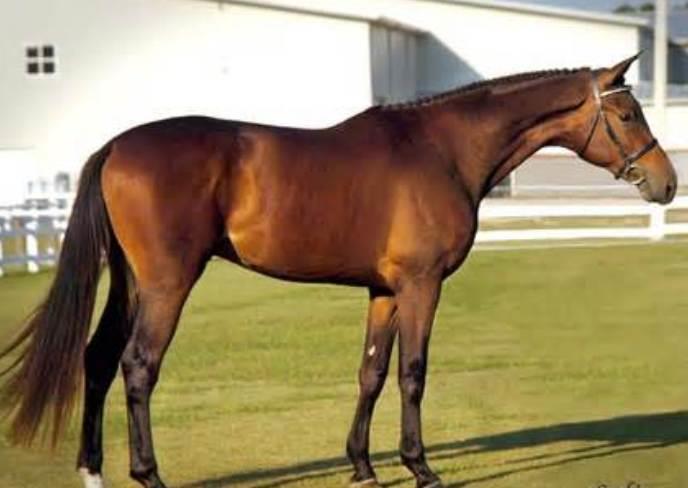
People usually look up Trakehners when they’re weighing up a sport-horse purchase, checking whether a horse’s build and temperament suit their riding, or trying to understand the breed behind a pedigree and brand. The details matter: training approach, feed routine, and soundness risks can shape everything from day-to-day enjoyment to vet bills and performance.
Trakehners are refined warmbloods with a long, carefully managed studbook. They’re known for athletic movement, quick learning, and a sensitivity that rewards quiet, consistent handling. What follows is a grounded guide to the breed’s origins, what they’re typically like to live with, and the practical care that keeps them thriving.
Trakehner at a glance
- Origin: East Prussia (historical region; stud founded at Trakehnen in the 1700s)1, 2
- Height: commonly about 15.2–17 hands (around 157–173 cm)1, 3
- Weight: often around 500–600 kg (varies with height and type)
- Coat colours: most often bay, black, chestnut, and grey1
- Typical temperament: intelligent, willing, sensitive (best with tactful riding)3
- Common uses: dressage, eventing, showjumping; also pleasure and endurance (individual-dependent)3
- Life expectancy: often into the mid-to-late 20s with good care (individual-dependent)
- Distinguishing features: refined head, longer lines through neck and shoulder, strong hindquarter typical of a modern riding horse1, 3
History and origin
From the Trakehnen State Stud
The breed takes its name from Trakehnen, where the Prussian state stud was established in the early 1700s. The goal was a riding and cavalry horse: lighter and more enduring than the heavy types of the day, but still tough enough to stay sound through long work.1, 2
A “closed” warmblood with carefully selected blood
Trakehners are often described as the most “blood” or refined of the warmbloods. That’s tied to a controlled breeding approach, traditionally allowing only Trakehners and a limited set of approved “full” blood (notably Thoroughbred and Arabian-related lines) into the studbook, to keep the type athletic and modern.1, 3
War, dispersal, and survival
The breed’s history was heavily shaped by 20th-century upheaval in East Prussia, especially during the Second World War, when the original breeding region was disrupted and horses were scattered. Trakehner organisations later rebuilt the population and maintained the studbook under strict rules, which is part of why modern Trakehners are so consistently “typey”.3
Physical characteristics
What they typically look like
Trakehners are purpose-built riding horses: longer necks, sloping shoulders, and a hindquarter that tends to sit under the body and push. Many have an elegant head and a fine, clean outline through the legs compared with heavier warmbloods.1, 3
Height, bone, and “type” can vary
Within the breed you’ll see variation. Some are lighter and sharper, closer to Thoroughbred type. Others are more substantial, especially those bred for jumping power. The common thread is a riding-horse frame designed for balance, stamina, and scope rather than sheer bulk.1
Temperament and behaviour
Sensitive, not fragile
Many Trakehners are quick to notice patterns: a rider’s weight shift, a new sound by the arena gate, a change in routine. That sensitivity can look like “spookiness” in the wrong setup, but it often becomes a strength when the handling is steady and clear.3
Best match for riders who like feel and finesse
Trakehners often suit riders who enjoy training—people who like small improvements, good basics, and a horse that answers a light aid. Heavy hands, rushed schooling, and inconsistent boundaries can create noise in the system: tension in the body, tension in the mind.
How they go in a herd
Temperament is individual, but well-socialised Trakehners are typically straightforward in a group. Turnout with compatible companions, plenty of forage, and predictable routines tends to make any performance horse easier to live with, Trakehner included.
Training and exercise needs
Start early with calm exposure
Because many Trakehners are observant, early education matters. Quiet handling, short sessions, and gradual exposure to new places and objects helps build an adult that can travel, compete, and cope with change without boiling over.
Training style that usually works best
- Consistency: same cues, same expectations, every day.
- Pressure and release: clear aids, then a clear softening when the horse tries.
- Variety without chaos: arena work balanced with hacking, poles, and turnout.
Workload and recovery
These are athletic horses and many will give you “more” if asked. Conditioning should be built gradually, with planned easy days. Soundness is rarely about one big moment; more often it’s a slow accumulation of small overloads.
Health considerations and lifespan
Osteochondrosis (including OCD)
Like other warmblood populations, Trakehners can be affected by osteochondrosis/osteochondritis dissecans (OCD), a developmental joint condition influenced by multiple factors (including genetics, growth rate, and management). In practical terms, it’s one reason to take young-horse vetting and imaging seriously when buying, especially for sport.6
Colic risk is management-sensitive
Colic isn’t a “Trakehner-only” problem—it’s a horse problem. But performance horses can be more exposed to risk factors: stabling, travel, rich feed, inconsistent water intake, and sudden routine changes. The basics make a measurable difference: forage-first feeding, small concentrate meals, turnout and exercise, clean water, and regular dental checks.7, 8
How long do they live?
With sensible management, many Trakehners live well into their 20s. Longevity tends to come down to steady body condition, good feet, good teeth, and avoiding the cycle of “too much work, then too much time off”.
Daily care: grooming, feet, and routine
Grooming
Regular grooming is less about shine and more about surveillance. Dirt hides small heat, swelling, rubs, and early skin problems. A simple daily brush-down, hoof pick-out, and quick check of legs is often enough, with deeper grooming as needed during shedding.
Hoof care and soundness
Stick to a consistent farrier schedule that suits the individual hoof and workload. Sudden changes in trim or shoeing can ripple up the limb, especially in a horse doing collected work or jumping.
Diet and nutrition
Base the ration on forage
Most horses do best when the majority of the diet is forage (pasture and/or hay). As a practical guide, feeding rates are often discussed in terms of kilograms per 100 kg bodyweight per day, adjusted for condition, work, and pasture quality. Clean water must always be available.9
Reduce colic risk through feeding habits
- Keep forage as the foundation (aiming for the bulk of intake from hay/pasture).7, 8
- Split hard feed into smaller meals rather than one large feed.8
- Make feed changes gradually, over days to weeks, not overnight.8
- Prioritise turnout, movement, and routine—horses are built for steady intake and steady motion.8
Breed identifiers and “fun facts” worth knowing
The elk antler brand
Purebred Trakehners are widely associated with an elk antler brand, a traditional marker tied to the breed’s East Prussian origins and registry practices. Branding practices and placement can vary by registry rules and local regulations, but the antler symbol remains the best-known visual shorthand for the breed.1, 4
Olympic and elite sport presence
Trakehners and Trakehner-bred horses have a long record in top-level sport, particularly dressage and eventing, where elasticity, stamina, and careful training tend to pay off over time.
Final thoughts
A good Trakehner is a study in quiet precision: light on the ground, tuned to the rider, and built to carry itself. They’re not the easiest choice for every rider, but for someone who values feel, correctness, and a horse that improves with patient handling, the breed has a way of rewarding the work.
References
- Wikipedia: Trakehner
- American Trakehner Association: Profile of the Trakehner Horse
- American Trakehner Association: Our History
- Trakehner Horse Society of Australasia: History
- The Horse Magazine: The Trakehner
- PubMed: Refinement of a quantitative gene locus on equine chromosome 16 responsible for osteochondrosis in Hanoverian warmblood horses
- Colorado State University Veterinary Teaching Hospital: How to prevent colic in horses
- AAEP (via Atlanta Equine): Preventing Colic in Horses
- Agriculture Victoria: Basic horse care

Veterinary Advisor, Veterinarian London Area, United Kingdom