
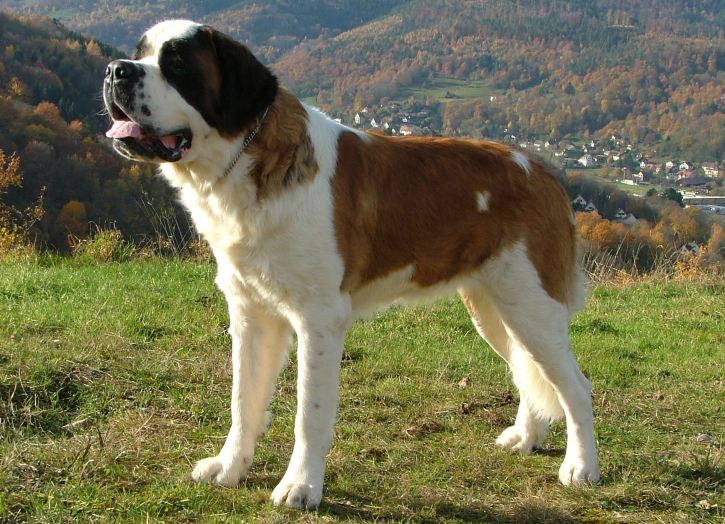
People usually start reading about St Bernards for one of two reasons: they’re thinking of bringing a giant-breed pup home, or they’ve already met one and want to know what living with that much dog really involves. Size changes everything — from training (a “small” manners problem becomes a big safety issue) to heat management, feeding routines, and the risk of bloat.
Below is a clear, practical guide to what a St Bernard is like, where the breed comes from, and the day-to-day care that matters most. Where stories and folklore blur the edges — like the famous brandy barrel — the more reliable version is noted.
Breed snapshot (quick facts)
- Breed type: Giant, molossoid mountain dog
- Country of origin: Switzerland (Great St Bernard Pass region)
- Coat: Two varieties — short-haired (smooth) and long-haired
- Typical height: Males 70–90 cm; females 65–80 cm (at the withers)1
- Exercise needs: Moderate, low-impact (especially while growing)
- Common lifespan: Often around 8–10 years (varies with genetics and care)
- Best suited to: Calm households with space, time for training, and a plan for giant-breed costs
What a St Bernard is really like
A St Bernard is built for steadiness: a powerful body, a large head, and a balanced frame designed for hard conditions, not speed. Breed standards describe an “impressive” dog that should still move soundly and stay functional — not exaggerated, not fragile, not short of breath simply from existing.1
Temperament is often gentle and tolerant, especially with familiar people, but gentleness isn’t the same as “no training required”. A young St Bernard can gain size faster than they gain self-control, and that’s where early manners quietly pay off.
History and origin (and what’s myth)
The breed is closely tied to the hospice at the Great St Bernard Pass, a historic alpine crossing. Dogs from this region became known for working alongside people in harsh weather and difficult terrain, and the St Bernard’s rescue reputation grew from that setting.2
The famous image of a St Bernard carrying a small barrel of brandy is best treated as folklore. It’s a powerful symbol, but it’s not considered a reliable description of standard rescue practice.2
Barry and the rescue legend
One dog, Barry, became the best-known St Bernard in the rescue stories of the early 1800s, and his name is still used as shorthand for the breed’s alpine identity. As with many historic working-dog tales, specific numbers attached to rescues are hard to verify, but the broader role of the hospice dogs is well established.2
Size, coat, and physical characteristics
St Bernards come in two coat types: short-haired and long-haired. Both have dense coats suited to cold conditions, with markings typically described as red-and-white (often with darker shading on the face).1
Adult height ranges are clearly set out in the breed standard, but weight varies widely between individuals and lines. In everyday life, what matters most is not a number on a chart — it’s maintaining a lean, athletic condition so joints, heart, and lungs aren’t forced to carry unnecessary load.
Temperament and behaviour in the home
Many St Bernards are calm, patient, and people-oriented. They often prefer staying close rather than ranging far, and they can be surprisingly sensitive to noise and household tension despite their bulk. They’re also slow to mature compared with smaller breeds — you may see adolescent goofiness long after the body looks “adult”.
With children
St Bernards are often tolerant with kids, but supervision matters because of sheer mass. A friendly lean, a happy tail, or an enthusiastic turn can bowl over a small child. Set up the space so children don’t need to “manage” the dog, and teach the dog that calm behaviour earns attention.
With other animals
Many live well with other pets when introduced carefully. Early, positive exposure helps, and so does preventing rough play from becoming a habit while they’re still growing.
Training and socialisation (start early, stay kind)
St Bernards tend to respond best to calm, reward-based training. Harsh handling can create avoidance or stubbornness, while steady routines and clear rewards build the sort of cooperation you’ll want in a dog that can outweigh an adult human.3, 4
The socialisation window
Puppies go through a critical socialisation period early in life. Gentle exposure to people, surfaces, noises, handling, and other dogs — paired with good experiences — shapes what feels “normal” later on.3
Practical training priorities for a giant breed
- Loose-lead walking (before they’re strong enough to drag you)
- Polite greetings (no jumping, no leaning on visitors)
- Handling skills (ears, feet, brushing, vet checks)
- Settle on a mat for calm behaviour indoors
- Reliable recall using rewards and repetition, not punishment
Exercise needs (steady, not intense)
Despite the “rescue dog” reputation, most St Bernards don’t need high-intensity exercise. They do best with regular, low-impact movement: relaxed walks, sniffing time, and gentle play. Heat is often the limiting factor; on warm days, exercise earlier or later and keep sessions short.
Puppies and adolescents need extra care. Rapid growth plus heavy bodies can strain developing joints, so avoid repetitive impact (long runs, jumping in and out of cars, hard stairs) and focus on controlled, sensible movement.
Health and lifespan
St Bernards are a giant breed, and giant breeds commonly face issues linked to size: orthopaedic strain, shorter average lifespan, and increased risk of gastric dilatation-volvulus (GDV), also known as bloat. A good veterinarian and a cautious routine make a genuine difference.
GDV (bloat): the risk to take seriously
GDV is a medical emergency where the stomach becomes distended and may twist, cutting off blood flow. It can become life-threatening quickly, and urgent veterinary care is essential.5, 6
- Feed two or more smaller meals rather than one large meal.5, 7
- Avoid hard exercise around meals (your vet can advise exact timing, but the principle is “rest before and after food”).7
- Discuss prophylactic gastropexy with your vet if your dog is high risk (often considered during desexing).5, 6
Orthopaedic issues
Large, fast-growing dogs are more vulnerable to joint problems such as hip dysplasia. Keeping a steady growth rate in puppyhood, maintaining a lean body condition, and avoiding excessive impact are practical ways to reduce stress on joints over the long term.
Grooming and day-to-day maintenance
The coat is thick and sheds. Brushing a few times a week usually keeps it manageable; during heavier shedding, daily brushing helps. Pay attention to the areas that felt and knot easily — behind the ears, the feathering on legs, and the tail on long-haired dogs.
Other routine care matters more than most people expect with this breed:
- Drool management (some dogs are tidy, others are not)
- Ear checks, especially if moisture gets trapped
- Nail trims to keep movement comfortable
- Dental care to reduce gum disease risk
Diet and feeding
St Bernards do best on a complete, balanced diet suited to their life stage, with careful portion control. Extra weight is not a cosmetic issue in a giant breed — it’s mechanical stress on joints and increased load on the heart and lungs.
For many dogs, splitting the daily ration into two meals helps digestion and is commonly recommended as part of GDV risk management.5, 7
If you’re raising a puppy, ask your vet about giant-breed puppy nutrition. Growth that’s too fast can create problems that are hard to undo later.
Is a St Bernard right for you?
A well-raised St Bernard suits people who like a quiet, steady dog and can commit to early training, sensible routines, and the practical realities of giant-breed care. They take up space. They cost more to feed and medicate. They shed. They may drool. In return, many offer a calm presence that feels almost geological — slow-moving, watchful, and very hard to ignore once they’ve decided you’re their person.
References
- Dogs Australia (ANKC) — St Bernard breed standard (FCI Standard No. 61)
- Fédération Cynologique Internationale (FCI) — St. Bernard (No. 61) breed information and standard publication details
- RSPCA Australia — Here’s how to care for your puppy (socialisation period, reward-based training)
- RSPCA Knowledgebase — Training recommendations (reward-based training, avoiding aversives)
- Cornell University College of Veterinary Medicine — Gastric dilatation-volvulus (GDV) or “bloat”
- American College of Veterinary Surgeons (ACVS) — GDV and gastropexy
- American Animal Hospital Association (AAHA) — Understanding canine bloat (GDV): a medical emergency
- RSPCA Knowledgebase — How can I socialise my puppy?

Veterinary Advisor, Veterinarian London Area, United Kingdom