
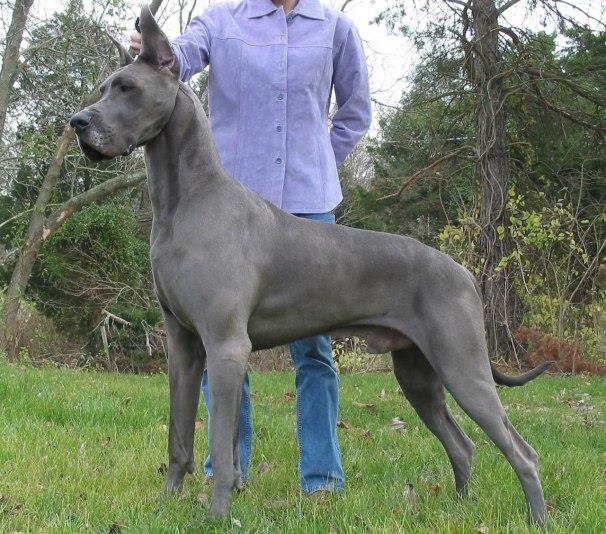
People usually land on a Great Dane page for one of two reasons: they’re thinking about bringing home a Dane, or they’re trying to make sense of the realities of living with a truly giant dog. Size changes everything — from training and transport to feeding routines, vet bills, and the very real risk of bloat (GDV).
Below is a clear, practical picture of the breed: how big they typically are, what they’re like to live with, what care tends to matter most, and where the health risks sit. Quiet facts first, then the finer detail.
Great Dane at a glance
- Height (at withers): Minimum 76 cm (adult males), 71 cm (adult females) in many kennel club standards; many individuals are taller.1, 2
- Weight: Commonly around 50–79 kg, with wide variation across bloodlines and individuals.3
- Coat: Short, dense, sleek.
- Recognised colours (commonly listed): Fawn, brindle, black, blue, mantle, harlequin.2
- Temperament: Often described as friendly, dependable, and calm at home when well trained and well exercised.3
- Typical lifespan: Often quoted as about 7–10 years, though some sources note shorter averages in giant breeds.3, 4
History and origin
The Great Dane is a German breed developed at least 400 years ago, shaped for strength and reach, and used in boar hunting.3
The name is a small historical oddity. “Great Dane” comes from the French Grand Danois, even though the breed is not known to have originated in Denmark; in Germany, it is commonly called Deutsche Dogge.3
Physical characteristics
Overall build
A Great Dane’s outline is tall and square, with long legs and a deep chest. In motion, a sound Dane looks almost effortless — long strides, level topline, and a sense of balance that makes their size feel less heavy than it is.
Head, ears, and tail
The head is typically long and rectangular with a strong jaw. Ears are naturally floppy; cropping is still seen in some places, but it’s restricted or illegal in others, and many owners leave ears natural.
Temperament and behaviour
Most Great Danes are known as “gentle giants” for a reason: many are affectionate, steady, and people-focused, especially when raised with consistent handling and clear boundaries.3
They can be protective simply by presence. A Dane standing quietly in a doorway does not need to do much else. Still, temperament varies with breeding, early experiences, and training — and a friendly giant without manners is still a problem in a crowded room.
With children and other animals
Many Danes live well with children and other pets, particularly when introduced early and supervised sensibly. The main risk in family life is often accidental: a joyful turn, a sweeping tail, a heavy paw on a small foot. Calm routines and gentle management matter.
Training and exercise needs
Early training matters more than “advanced” training
Because adult Danes are so strong, the essential skills are simple ones done well: walking politely on lead, coming when called, settling on cue, and allowing handling for grooming and vet checks.
Positive reinforcement tends to work well for the breed — short sessions, steady repetition, generous rewards, and a clear end point before boredom sets in.
Exercise: moderate, regular, and joint-friendly
Most adult Great Danes do well with daily walks and some relaxed play. They’re not usually built for endless high-impact running, especially as they age. Puppies also need careful, sensible exercise while they’re growing; the goal is steady fitness, not pounding mileage.
Health and lifespan
Key risks to understand
Great Danes are a giant breed, and that brings predictable pressures: joints, heart, and the digestive system. The condition owners tend to fear most is gastric dilatation-volvulus (GDV), often called bloat — a rapidly progressive emergency where the stomach dilates and may twist.5, 6
Other commonly discussed concerns in the breed include hip dysplasia and heart disease such as dilated cardiomyopathy, along with other conditions seen in giant breeds.4
Fast bloat (GDV) check: signs that are not “wait and see”
- Swollen or tight-looking abdomen
- Retching without bringing anything up
- Drooling, restlessness, obvious discomfort
- Rapid breathing, weakness, collapse
If GDV is suspected, treat it as urgent and go straight to a vet or emergency hospital. Outcomes worsen the longer it goes on.5
Reducing GDV risk (no guarantees, but sensible habits)
- Feed two or more smaller meals rather than one large meal.5, 6
- Avoid hard exercise right before and after meals.6
- Avoid raised food bowls unless your vet has advised one for a specific medical reason.6
- Ask your vet about prophylactic gastropexy (tacking the stomach) — often discussed for at-risk breeds like Great Danes, sometimes done at the time of desexing.5, 7
Grooming and maintenance
The coat is short and usually low-fuss. A weekly brush with a soft brush or grooming mitt lifts loose hair and spreads skin oils. Baths are occasional — more about mud and smell than a strict schedule.
Grooming time is also inspection time: check nails, pads, ears, and skin folds around the lips. With a Dane, small problems can become big quickly simply because there’s so much dog attached.
Diet and nutrition
Great Danes need a diet that suits giant-breed growth and adult maintenance. Rapid growth and excess calories can stress developing joints, so many vets and breeders favour carefully formulated large/giant-breed diets, especially through puppyhood.
Because GDV risk is part of life with deep-chested giant breeds, meal structure matters as much as the ingredient list: smaller meals, calmer feeding, and a watchful eye for dogs that bolt food.5, 6
Fun facts and trivia (kept honest)
The tallest dog ever recorded by Guinness World Records was a Great Dane named Zeus, measured at 111.8 cm at the shoulder.8
In wartime Britain, a Great Dane named Juliana was awarded two Blue Cross medals — one for reportedly extinguishing an incendiary bomb, and another for alerting her family to a fire.9
Final thoughts
A Great Dane is not a “big dog”. It’s a different category of animal living in your house — gentle, often wonderfully calm, and physically capable of rearranging a room without meaning to. The best Danes are shaped early: quiet training, steady routines, and owners who respect the health risks and plan around them.
References
- The Kennel Club (UK) – Great Dane breed standard (size and colours)
- Great Dane Club of Victoria (Australia) – Breed standard (size and colours)
- Encyclopaedia Britannica – Great Dane (origin, temperament, size, lifespan)
- Great Dane Club of Victoria (Australia) – FAQ (lifespan and health issues discussed in the breed)
- American College of Veterinary Surgeons (ACVS) – Gastric Dilatation-Volvulus (GDV), signs, urgency, prevention
- Merck Veterinary Manual – Gastric dilation and volvulus in small animals (risk reduction guidance)
- American College of Veterinary Surgeons (ACVS) – Prophylactic gastropexy
- Guinness World Records – Zeus: tallest dog ever
- Wikipedia – Juliana (Great Dane awarded Blue Cross medals) (useful summary; details should be cross-checked for historical writing)

Veterinary Advisor, Veterinarian London Area, United Kingdom