
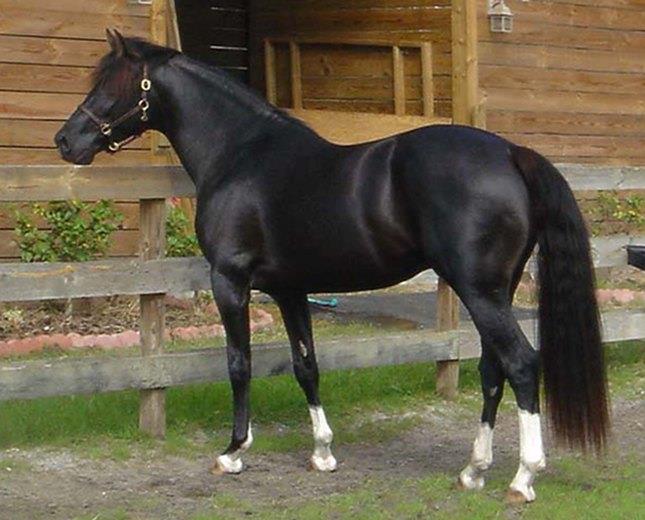
People usually start searching for the Holsteiner when they’re comparing sport-horse breeds, checking whether a particular horse will suit show jumping or dressage, or trying to make sense of the breed’s reputation for power and rideability. The details matter: height, temperament, and soundness risks all shape what the horse is like to live with, and what it can comfortably do over the long haul.
Holsteiners come from northern Germany’s Schleswig-Holstein, a landscape of wet marsh ground and strong coastal winds that quietly shaped a tough, athletic warmblood. Today they’re still recognised for the same essentials: a large frame, scope over a fence, and a way of moving that suits careful, systematic training.1, 2
Holsteiner at a glance
- Origin: Schleswig-Holstein, northern Germany1
- Type: German warmblood sport horse1
- Typical height: around 16–17 hands (about 1.63–1.73 m)1
- Common colours: usually bay and grey; other solid colours also appear1
- Common uses: especially show jumping; also dressage, eventing, hunters, driving1
- Lifespan (as a guide for horses generally): often around 25–30 years with good care3
Overview: what a Holsteiner is known for
The modern Holsteiner is bred with sport in mind. Under saddle, the breed is best known for a strong engine behind, a naturally uphill balance in many lines, and a jump that tends to feel rounded and economical rather than extravagant. At top level, Holsteiners have a long record in international show jumping, and they also appear in dressage and eventing where the individual horse’s movement, soundness, and training history matter more than any label on paper.1
Temperament is often described as willing and rideable, with many horses responding best to calm, consistent handling. They’re frequently sensitive to timing and balance (as most purpose-bred sport horses are), which can be a gift in skilled hands and a complication when the training is rushed.
History and origin
Holsteiner breeding has deep roots in Schleswig-Holstein, and the organised story is often traced back to medieval times. The Holsteiner Verband describes key early milestones around the year 1225, including the Uetersen monastery’s role in keeping and grazing horses, and the gradual shift from monastery and state involvement to the practical, long-term work of rural breeders.2
Across centuries, the “job description” of the Holsteiner changed: agricultural and carriage work shaped a substantial, durable horse; later, as the market moved toward riding and competition, breeding goals tightened around athleticism and modern sport type.2
The brand and studbook identity
Many Holsteiners carry a distinctive brand: a crowned “H” within a shield, traditionally placed on the left hind leg.1 The Verband also notes that the brand used today was introduced in 1944, a small, practical mark that became part of the breed’s visual identity.2
Physical characteristics
Size and build
Holsteiners are typically tall, commonly around 16–17 hands, with enough bone and depth to feel substantial without being a heavy horse. The overall outline tends to read as “made for power”: strong hindquarters, a well-set neck, and a frame that can sit, push, and lift through a jump when conditioned and trained appropriately.1
Coat colours and markings
Bay and grey are commonly seen, and other solid colours can occur. Markings vary by individual, though sport-horse breeding programs often prefer relatively minimal white.1
Temperament and behaviour
Most Holsteiners are bred to be workable: attentive, quick to learn, and steady enough to cope with the repetition of training. In day-to-day handling they often do best with clear boundaries and a quiet routine—small signals, repeated consistently, rather than big corrections.
As with any warmblood, temperament sits on a spectrum. Bloodlines, early handling, rider balance, pain, feed, and turnout all influence what you’ll see in front of you. A “difficult” horse can be an uncomfortable one; it’s worth keeping that possibility in mind before blaming personality.
Training and exercise needs
Early education and social exposure
Holsteiners tend to thrive when their early training is unhurried: straight lines, good surfaces, patient repetition, and plenty of time to understand the question. Exposure to everyday life—floating tarps, clippers, the wash bay, traffic noise, different arenas—usually produces a horse that wastes less energy on worry and has more available for work.
Workload: what “enough” looks like
Because they’re athletic, Holsteiners usually need more than occasional rides to stay comfortable in their bodies. A sensible week often includes a mix of:
- low-intensity movement (turnout, walking hacks, long reins)
- suppling flatwork to build strength and coordination
- sport-specific sessions (poles, grids, jumping schools) used sparingly and with purpose
Conditioning matters as much as talent. Many joint and back problems begin as a slow mismatch between workload, recovery, and basic strength.
Health considerations and lifespan
Holsteiners are generally robust, but they’re also large, athletic horses—so wear and tear is part of the picture. Joint disease and soft-tissue injuries are common across performance horses, especially when training intensity climbs faster than the horse’s strength and soundness can follow.
For lifespan, a useful general guide is that horses often live around 25–30 years with good care, though individual outcomes vary widely with genetics, workload, injury history, and management.3
Colic: a practical risk for any horse owner
Colic simply means abdominal pain, and it ranges from mild, short-lived episodes to emergencies requiring urgent veterinary care. Common signs include pawing, flank-watching, rolling, sweating, stretching as if to urinate, loss of appetite, and reduced manure output.4, 5
In Australia, NSW DPI advises contacting a vet immediately if your horse shows acute abdominal pain (colic), and outlines typical warning signs such as restlessness, patchy sweating, pawing, looking at the flanks, lying down, and rolling.6
Grooming and routine care
Holsteiners don’t require unusual grooming, but their size and workload make routine checks important. Daily grooming is a quiet health assessment: heat in a tendon, a new rub under the saddle, a subtle change in digital pulse, or a stiffness you didn’t see yesterday.
Hooves and teeth
Good hoof care and dental care support everything else—comfort, digestion, behaviour, and performance. NSW DPI notes that unshod horses may need trimming about every eight weeks (as a general guide), and recommends regular dental checks (at least annually for horses over five).6
Diet and nutrition
For most horses, the foundation is forage: grass and/or hay, fed in a way that keeps the gut moving steadily across the day. Concentrates and grains can be useful for hard-working sport horses, but they’re best added carefully, in amounts that match workload, and adjusted slowly when anything changes.
Sudden feed changes are a common theme in colic prevention advice. Keeping routines consistent—feed type, timing, and exercise—reduces avoidable digestive stress.6
Quick facts and well-known names
Holsteiners have a strong presence in international show jumping, and a number of famous competition horses and influential sires come from Holsteiner lines, reflecting how heavily the breed has been shaped around jumping performance.1
Final thoughts
A Holsteiner is usually at its best when the basics are quiet and reliable: consistent feed, plenty of turnout, careful hoof and dental care, and training that builds strength before asking for brilliance. When those pieces are in place, the breed’s trademark qualities—power, balance, and a practical mind—tend to show themselves without fuss.
References
- Wikipedia — Holsteiner (horse breed overview, origin, uses, brand note)
- Holsteiner Verband — The History (breed history milestones; brand introduced in 1944)
- WebMD — Horse lifespan (general guide: often 25–30 years)
- Merck Veterinary Manual (Pet Owner Version) — Colic in horses (overview and common signs)
- University of Minnesota Extension — Colic in your horse (signs and management)
- NSW Department of Primary Industries — Caring for horses (routine care, teeth/hooves, when to call a vet; colic signs)

Veterinary Advisor, Veterinarian London Area, United Kingdom