
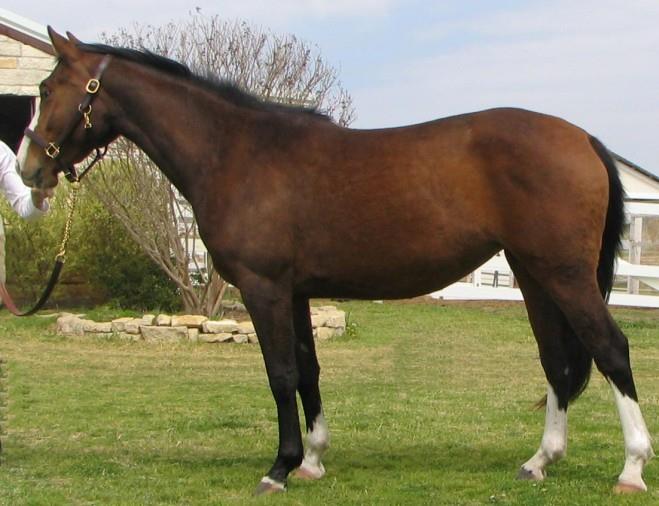
People usually start looking up Hanoverians when they’re weighing up a sport-horse purchase, checking whether a horse’s “Hanoverian” label is meaningful, or trying to understand what day-to-day care looks like for a warmblood built for work. Get it wrong and you can end up with a horse that doesn’t suit your riding, your budget, or your expectations of soundness and temperament.
Below is a clear, breed-focused guide to the Hanoverian: where it came from, what it tends to look and move like, how breeding and registration works (including in Australia), and the practical care points that matter when the horse is in your paddock.
Hanoverian horse: quick facts
- Origin: Lower Saxony (Niedersachsen), Germany1
- Typical height: commonly around 15.3–17.2 hands (most sit in the mid-16s)2
- Typical weight: often in the 500–650 kg range, depending on height and type2
- Common coat colours: bay, chestnut, black, grey (solid colours are most typical)2
- Well-known for: dressage, showjumping, eventing, and capable leisure riding2
- Common lifespan: roughly mid-20s to around 30 years with good care2
History and development
The Hanoverian began as a practical horse: useful under saddle, in harness, and for farm work in what is now Lower Saxony. The famous State Stud at Celle was founded in 1735 under George II (also Elector of Hanover), to provide quality stallions to local breeders and lift the standard of regional horse breeding.3
As Europe mechanised, the need for heavy working horses fell away. Breeding goals shifted towards a modern riding horse with athletic gaits, sound limbs, and the scope and balance needed for sport. That change is still visible in the Hanoverian you see today: a warmblood shaped for movement and jumping, rather than pulling a carriage all day.2
Physical characteristics (what you’re usually looking at)
Hanoverians are typically tall, rangy warmbloods with substance through the body and a clean, athletic outline. You’ll often notice a long, sloping shoulder, a strong back, and powerful hindquarters that can sit and push—useful in collected work and over fences.2
Most are solid-coloured, commonly bay, chestnut, black, or grey. Markings vary, but in many warmblood studbooks (including Hanoverian programmes) excessive white can be a disadvantage for breeding approval, depending on the registry’s rules and the individual horse’s overall quality.2
Temperament and trainability
A well-bred Hanoverian is usually described as willing, trainable, and quick to understand new work. That doesn’t mean every individual is “easy”; they’re athletic animals with enough sensitivity to respond to fine aids, and that sensitivity can look like sharpness when training is rushed or inconsistent.
In calm, consistent hands, many Hanoverians settle into a steady rhythm: workmanlike, alert, and cooperative, especially when their daily routine includes turnout, forage, and varied exercise.
Hanoverians in sport (and why they’re everywhere in warmblood circles)
The Hanoverian is one of the major warmblood populations in international sport. Breeding selection places heavy emphasis on performance traits—movement, jump technique, rideability, soundness—so it’s common to see Hanoverian bloodlines across dressage, showjumping, and eventing, including in Australian competition stables.2
Breeding, registration, and what “Hanoverian” really means
“Hanoverian” can mean different things in casual conversation. In a strict sense, it’s a studbook identity: a horse recorded with a recognised Hanoverian breeding programme, with pedigree and inspection requirements that support consistent type and performance. The Hannoveraner Verband in Germany runs the core breeding programme, including mare studbook inspections and stallion licensing pathways.4, 5
Modern registries also use genetic tools for parentage verification and related services. The Hannoveraner Verband has moved to SNP-based parentage verification and offers genomic services through its member portal, reflecting how sport-horse breeding now blends tradition with laboratory certainty.6
Hanoverians in Australia
In Australia, the Hanoverian Horse Society of Australia (HHSA) operates WBFSH-approved studbooks and provides registration and breeding services locally, including pathways for mare entry and classification within its programmes.7
Health: what to watch (without panicking)
No breed is immune to injury, and sport-horse bodies live hard lives. Hanoverians, like other warmbloods, can be represented among developmental orthopaedic conditions such as osteochondrosis (often discussed as “OCD” in young horses), which is influenced by a mix of genetics, growth rate, nutrition, and management.8
You will also hear “Wobbler syndrome” (cervical vertebral stenotic myelopathy) mentioned in warmblood circles. It’s not unique to Hanoverians, but it is one of the conditions that can appear in large, fast-growing horses, and it’s one reason buyers value a careful veterinary examination when a horse shows incoordination, weakness, or unexplained performance decline.9
Practical checks that help in real life
- Pre-purchase exam: especially important for a horse aimed at jumping or upper-level dressage.
- Young horse management: steady growth, balanced minerals, and sensible workload reduce avoidable strain on joints and soft tissues.8
- Watch the basics: consistent hoof care, dental checks, and an appropriate vaccination and parasite-control plan for your area (your vet will tailor this).
Care, feeding, and daily management
A Hanoverian thrives on the same foundations as any horse: plenty of forage, clean water, turnout, and regular movement. Because many Hanoverians are big, muscular animals in work, their energy and protein needs can be higher than a lighter pleasure horse—but more feed is not automatically better. Condition, temperament, workload, and manure quality tell the truth more reliably than a scoop size.
For most, a sensible baseline looks like:
- Forage first: quality pasture and/or hay as the core of the diet.
- Concentrates as needed: adjust based on body condition score and workload.
- Daily movement: turnout plus training that varies the demands (flatwork, poles, hills, hacks).
- Routine health care: dentistry, farriery, and veterinary checks scheduled before small issues turn into time off work.
Famous Hanoverians (real examples)
There are enough Hanoverians at the top of the sport that “famous” lists can become long and messy quickly. Two widely recognised examples are:
- Gigolo FRH (dressage), partnered with Isabell Werth in a highly decorated international career.10
- Shutterfly (showjumping), partnered with Meredith Michaels-Beerbaum and known for a long, successful top-level run.10
References
- Hanoverian horse (overview, origin and breed societies) — Wikipedia
- Hanoverian Horse: uses, characteristics and other facts — WebMD
- Celle State Stud (founded 1735 under George II) — Wikipedia
- Studbook inspections (mares) — Hannoveraner Verband
- Stallions and stallion book requirements — Hannoveraner Verband
- MeinHannoveraner genomic services and SNP parentage verification — Hannoveraner Verband
- Hanoverian Horse Society of Australia (HHSA) — Official site
- Osteochondrosis in horses — MSD Veterinary Manual
- Cervical vertebral stenotic myelopathy (Wobbler syndrome) — MSD Veterinary Manual
- Isabell Werth (athlete profile; associated horses and career context) — Olympics.com

Veterinary Advisor, Veterinarian London Area, United Kingdom