
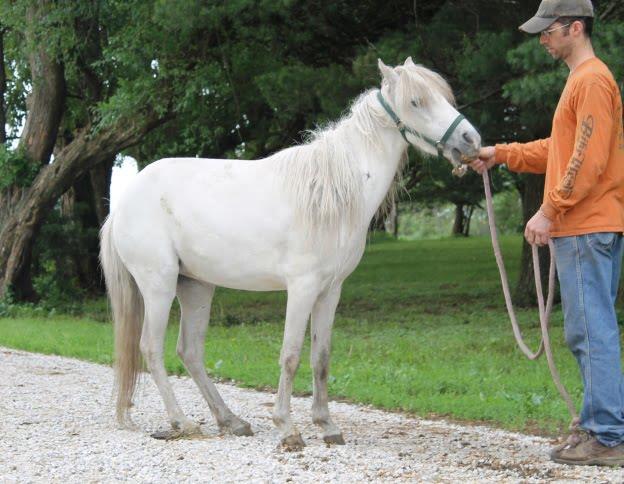
People usually look up the Caspian Horse when they’re trying to identify a small horse they’ve seen, check whether it’s a pony breed, or work out if it could suit a child’s riding, driving, or a family property. Size matters here: it affects tack, feed, handling, and—most of all—whether the horse is genuinely a safe, sensible match for the rider and the work.
The Caspian is a rare, ancient breed from northern Iran: compact, elegant, and surprisingly athletic for its height. It’s often described as “horse-like” rather than pony-like in build and movement, with a reputation for quick learning and neat jumping when trained well.1, 2
Quick breed profile
- Type: Small horse (often discussed alongside ponies, but breed societies describe it as a horse)1, 2
- Typical height: Average about 11.2hh (1.17 m); ideally not above 12.2hh (1.27 m), though individuals vary with upbringing and conditions1, 2
- Colours: Most colours; many standards exclude piebald/skewbald (pinto)1, 2
- Build: Fine-boned but strong; long, sloping shoulder; deep girth; clean legs; notably tough, oval hooves; abundant, silky mane and tail1, 5
- Temperament: Intelligent, alert, generally kind and willing when handled consistently1, 2
History and origin
The Caspian comes from northern Iran, near the Caspian Sea. It was long considered lost to history, then rediscovered in the mid-1960s in the Alborz (Elburz) Mountains by Louise Firouz, whose early breeding and exports helped establish small populations outside Iran.6, 7
Archaeological finds in northern Iran have been discussed in connection with very early small horses in the region; these discoveries are interesting, but they don’t neatly “prove” a direct, unbroken line to modern Caspians in the way people sometimes claim.4
Physical characteristics (what to look for)
A Caspian tends to read as a scaled-down riding horse: refined head, large eyes, a clean throatlatch, and a neck that can look long for such a small body. The breed standards emphasise proportion—no foreshortened limbs, no oversized head—and an overall impression of an elegant, small horse.1, 2
Commonly noted features include:
- Head: Distinctive, often with a vaulted forehead; fine muzzle; large nostrils1, 2
- Coat and hair: Fine, silky coat (sometimes described as having a summer sheen); mane and tail can grow long and silky1, 2
- Legs and hooves: Clean limbs with little or no feathering; strong, oval hooves often described as exceptionally tough3, 5
- Movement: A floating, ground-covering way of going, and a reputation for agility and jumping ability1, 2
Temperament and behaviour
Most Caspian descriptions converge on the same picture: bright, attentive, and generally kind—an animal that notices its surroundings and learns patterns quickly. That alertness is useful under saddle and in harness, but it also means handling needs to be steady and clear rather than forceful or rushed.1, 2
Are they suitable for children?
Their size makes them a natural candidate for younger riders, but suitability still comes down to the individual horse, training, and supervision. A well-schooled Caspian can be a quiet, capable children’s mount; an under-handled one can be sharp simply because it’s observant and quick to react.1, 2
Training and exercise needs
Caspians generally respond best to calm, consistent training with frequent short sessions. Early handling matters: not to “make them obedient”, but to make the ordinary things—catching, leading, feet, dentist, float, farrier, loading—feel routine and unremarkable.
For exercise, aim for regular movement and variety. Their athletic build and breed standards’ emphasis on agility mean many enjoy (and benefit from) a mix of schooling, poles, small jumps, trail riding, and groundwork, adjusted to age and fitness.1, 2
Health, lifespan, and preventative care
No horse is maintenance-free, but Caspians are widely described as hardy. Like any small-mouthed, fine-headed breed type, dental checks matter—especially if feed is dropping, bit acceptance changes, or weight is hard to hold. Hoof care matters too, even with famously strong feet: tough hooves still need regular trimming and balanced angles.5
Lifespan: Many sources cite a lifespan around the mid‑20s, with some individuals reaching 30 years with good care.8
Practical preventative care checklist
- Veterinary check-ups: At least annually, more often for seniors or performance horses.
- Dental: Routine dental assessment on a schedule your vet recommends for age and mouth conformation.
- Hooves: Consistent farrier schedule; don’t rely on “good feet” as an excuse to stretch intervals.
- Vaccinations and parasite control: Follow local veterinary advice for your region and risk level.
Grooming and day-to-day maintenance
Grooming is usually straightforward: regular brushing to lift dust and distribute oils, with extra attention during shedding. Their mane and tail can be abundant and fine, so gentle detangling and sensible rugging (when needed) helps prevent breakage. Keep it simple: clean skin, clean feet, and early notice of small changes—heat, swelling, rubs, tenderness—before they become bigger problems.
Diet and nutrition
Base the diet on forage: quality pasture and/or hay, with salt and constant clean water. Concentrates are only as necessary as the workload demands. Small horses can be efficient keepers, so it’s worth monitoring body condition and adjusting feed early rather than trying to fix weight with abrupt changes later.
If you’re adding hard feed, supplements, or changing forage, do it gradually and with your veterinarian or equine nutritionist’s input—especially if there’s a history of laminitis, metabolic issues, or poor dentition.
Fun facts (kept honest)
- Breed societies describe the Caspian as a small horse rather than a pony, with proportion and movement expected to resemble a well-bred riding horse in miniature.1, 2
- The modern breed’s survival outside Iran is closely tied to the mid‑1960s rediscovery and the early export and breeding work led by Louise Firouz and collaborators.6, 7
Final thoughts
The Caspian Horse is small, rare, and quietly capable—built for neat footwork and lively, balanced movement rather than sheer size. If you’re considering one, treat it like any other horse purchase: look past the romance of the history, assess the individual in front of you, and prioritise training, soundness, and a calm match between rider and animal.
References
- Caspian Conservation Society – Breed Standard
- International Caspian Society – About ICS (Breed Standard excerpt)
- North American Caspian Society – Caspian Horses (breed description)
- Caspian Conservation Society – Caspian horse remains unearthed (Gohar Tappeh report)
- Caspian Horse Society of the Americas – The Caspian Horse (breed characteristics)
- Wikipedia – Horses in Iran (rediscovery in 1965)
- Wikipedia – Louise Firouz
- PetCurious – Caspian Horse (health and lifespan overview)

Veterinary Advisor, Veterinarian London Area, United Kingdom