
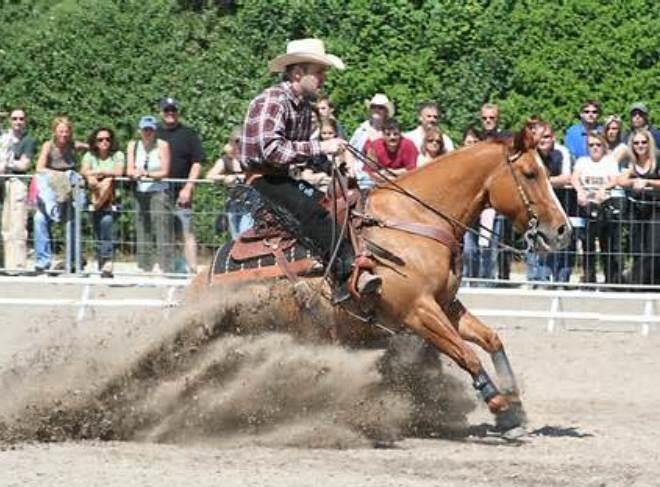
People usually go looking for “reining horses” when they’re weighing up a new discipline, watching sliding stops and spins online, or trying to work out what sort of horse thrives in that kind of athletic, stop-and-turn work. The details matter. A horse that’s trained hard without the right footing, feeding, and rest can end up sore, sour, or simply worn down.
Reining is a judged Western sport built on the same quick, precise manoeuvres that once helped a horse handle cattle efficiently. In the sections below, you’ll find what reining asks of a horse, the type of build that tends to suit it, how training is usually structured, and the everyday care that keeps an equine athlete sound and steady.1, 2
What reining is (and what judges are looking for)
Reining patterns are designed to show a horse’s willingness and athletic ability: fast and slow circles, flying lead changes, spins, and the signature sliding stop, performed with control and minimal visible resistance.2 The best runs look almost quiet. The horse stays balanced, the rider’s cues are subtle, and the whole pattern keeps its shape.
At higher levels, competitions are typically run on specialised arena footing intended to support traction and slide while reducing strain on the horse’s limbs.3
History and origins
Reining grew out of practical ranch work in the American West, where a horse needed to turn quickly, stop hard, and change direction smoothly to hold cattle. Those working movements were later formalised into judged patterns.
The National Reining Horse Association (NRHA) formed in 1966 and became a major rules-and-standards body for the sport internationally.1 Reining was accepted for international competition by the Fédération Équestre Internationale (FEI) in 2000, and it remained an FEI discipline until 2021.3
Physical characteristics that suit reining
There isn’t a single “reining horse breed”, but many top performers share a similar, stock-horse build: compact, strong through the loin and hindquarters, and able to sit and push from behind without losing balance. That hind-end strength is what makes controlled stops and fast spins possible, and a lower centre of gravity can help with stability during quick changes of direction.
Height and colour vary widely. What matters more is sound conformation, strength through the back, and a way of going that stays rhythmic even when the manoeuvres get sharp.
Temperament and behaviour
Good reining horses are usually described as responsive and trainable. In practice, that means they cope with repetition, stay attentive in a busy show environment, and can accept very small rider cues without bracing or rushing.
Plenty of reiners also make pleasant all-rounders, but it’s worth remembering what they’ve been trained to do: quick acceleration, quick turns, and “rate” (coming back smoothly). Matching that training to the rider’s experience and the horse’s day-to-day job is part of keeping both safe and relaxed.
Training and exercise needs
Start with foundations, not manoeuvres
Before spins and sliding stops, a reining horse needs steering, brakes, straightness, and confidence in the arena. Good trainers tend to build:
- clear go-forward and clear stop, without anxiety or rushing
- balanced circles at different speeds
- soft lateral control (shoulder and hip placement) so turns don’t fall apart
- fitness that supports repeated efforts without sloppy form
Warm-up, surfaces, and wear-and-tear
Because reining involves high forces through the limbs during stops, turns, and lead changes, training is usually managed with careful warm-ups, sensible repetition, and attention to footing. The goal is to keep the horse confident in the work while limiting unnecessary strain.
Health and lifespan: what to watch in a reining horse
Reining horses are athletes, and athletic work can expose weak points. The issues you’ll hear about most often are lameness problems (especially lower-limb and joint strain), and digestive trouble linked to routine changes, travel, and feeding management.
Colic: early signs and fast action
Colic has many causes, from gas and spasms to impaction and (more rarely) twists that become life-threatening. Learn the early signs and treat them as a reason to call your vet promptly:
- pawing, restlessness, repeatedly lying down and getting up
- looking at the flank, kicking at the belly
- sweating without exertion
- reduced appetite, fewer droppings, or dull behaviour
Sand ingestion and low water intake can contribute to some impaction colics, particularly where horses are fed on sandy ground or don’t drink well when travelling.7
Gastric ulcers: common risk factors in performance horses
Horses produce stomach acid continuously, so long gaps without forage, high-grain feeding, and stressful routines can increase ulcer risk. Diets low in roughage and prolonged fasting are well-recognised risk factors.8 For many performance horses, simply protecting “forage time” and avoiding sudden feeding changes makes a noticeable difference.
How long do reining horses live?
Many horses live into their 20s, but competitive longevity depends less on a number and more on soundness, management, and how carefully the workload is matched to the individual. A well-managed reiner may compete for years; a horse pushed too hard, too young, on poor footing, may not.
Grooming and maintenance
Coat and skin
Regular grooming isn’t only cosmetic. It helps you spot rubs, heat, swelling, rain scald, and girth galls early—small problems that can quietly grow teeth when training intensity rises.
Hoof care
Hooves carry the whole sport. Reining horses need balanced feet to turn cleanly and stop straight, and farriery intervals are commonly in the range of four to eight weeks, with some evidence suggesting shorter intervals (around four to six weeks) may help limit hoof distortion in working horses.9 The right schedule depends on growth rate, season, footing, and workload—best decided with your farrier and vet.
Diet and nutrition for a reining horse
Reining horses do best when forage is the base of the diet, with concentrates used only as needed for condition and work level. In Australia, a practical rule of thumb is that horses can typically consume around 1.5–2% of bodyweight per day as dry feed, and rations should be adjusted to the individual and the season.6
For many reiners, the most useful nutrition “upgrades” are simple and steady:
- keep forage consistent and available as much as practical
- avoid sudden changes in hay, hard feed, or schedule
- match energy intake to actual workload to prevent fizz or unwanted weight gain
- prioritise hydration, especially during travel and hot weather
Notable horses and a small piece of reining trivia
Some horses become landmarks in the sport because they excelled in the arena and then shaped breeding programs. One well-known example is the American Quarter Horse stallion Hollywood Dun It, inducted into the NRHA Hall of Fame in 2000 and widely recognised for his influence as a sire in reining lines.10
Final thoughts
A good reining horse doesn’t look dramatic. It looks prepared. The body is strong enough to sit and stop, the mind stays present, and the training has been built layer by layer, on reliable footing and ordinary good care.
If you’re choosing a reining horse, or bringing one into heavier work, keep coming back to the basics: sound feet, steady forage, careful repetition, and early attention to soreness before it becomes a habit.
References
- National Reining Horse Association (NRHA) — About Us
- Reining — overview of manoeuvres and recognition (Wikipedia)
- FEI — Reining (discipline information and dates)
- NRHA — Historic Milestones
- Agriculture Victoria — Feed requirements of horses
- Agriculture Victoria — How much feed a horse can consume daily (rule-of-thumb guidance)
- Merck Veterinary Manual — Colic in horses (signs, causes, and prevention considerations)
- Equine gastric ulcer syndrome — recognised risk factors (overview)
- Peer-reviewed study (PMC): Shoeing/trimming intervals and hoof balance in working horses
- Hollywood Dun It — background and NRHA Hall of Fame induction (Wikipedia)

Veterinary Advisor, Veterinarian London Area, United Kingdom