
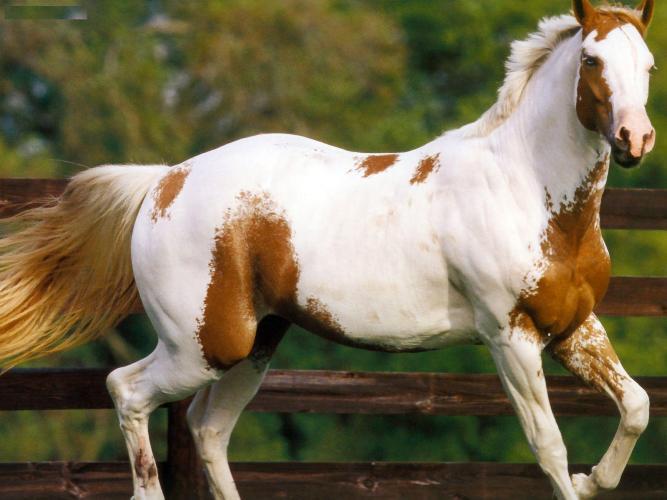
People usually look up the American Quarter Horse when they’re weighing up a first horse, checking whether the breed suits a job (ranch work, rodeo, trail riding, racing), or trying to make sense of the breed’s reputation for speed and steadiness. Those choices have real consequences: the wrong match can mean avoidable injuries, training frustration, and expensive health problems.
The Quarter Horse is best understood as a compact sprinter with a calm working brain—built for quick acceleration, close handling around stock, and long days that don’t look dramatic on paper. Below are the practical facts (size, temperament, common uses), a cleaner version of the breed’s history, and the health checks that matter most when you’re buying or breeding.
At a glance: American Quarter Horse
- Origin: Developed in Colonial America from a blend of imported English and Spanish-type horses; later shaped by additional bloodlines as the breed formalised.1
- Height: Commonly about 14.3–16 hands (roughly 145–163 cm).2
- Weight: Often around 430–590 kg (varies with type and workload).2
- Coat colours: Many solid colours are seen, with sorrel/chestnut common; other colours also occur depending on bloodlines.1
- Temperament: Widely valued for a sensible, trainable nature and steady rideability (individuals still vary).1
- Typical uses: Stock work, Western performance events, rodeo, trail riding, and short-distance racing.1
- Lifespan: Commonly 25 years or more with good care.2
- Breed registry: The American Quarter Horse Association (AQHA), founded in 1940, maintains the official registry and promotes the breed worldwide.3
What makes a Quarter Horse a Quarter Horse
Seen side-on, the Quarter Horse carries its strength like a coiled spring: a broad chest, short back, and powerful hindquarters that sit ready under the body. That build supports sharp acceleration, quick turns, and the kind of balance that matters when a rider needs an instant stop or a tight line around cattle.
They’re famous for short-burst speed over “quarter” distances, and the modern breed still reflects that early Colonial taste for sprint races run over about a quarter of a mile, sometimes along the main streets of small towns.4
Temperament and behaviour: what owners usually notice
Most Quarter Horses are bred for work that demands composure—standing quietly at a gate, travelling, waiting their turn, then moving fast when asked. In day-to-day handling that often reads as steady, people-oriented and forgiving, especially when training is clear and consistent.1
That said, “Quarter Horse” is a broad church. Racing-bred horses can feel sharper and more forward; stock-bred horses are often heavier, quieter, and more compact. The individual in front of you matters more than the label on the papers.
History and origin (without the myths)
The Quarter Horse’s roots sit in Colonial America, where settlers needed a horse that could work all week and still sprint hard on the weekend. Over time, those sprinting stock horses were shaped by selective breeding and, eventually, by formal record-keeping as the breed became a defined type.4
One influential Thoroughbred in early sprint-horse history was Janus (foaled 1746), imported to the American colonies in the 1750s. He’s often cited as a foundation influence because he consistently passed on quickness and a compact build—traits prized in short races and later in cattle work.5
In 1940, the AQHA was established to preserve pedigrees and set a clearer standard for the breed as it expanded across ranching, sport and racing.3
Training and exercise: what helps this breed thrive
Quarter Horses generally respond well to training that is quiet, timely and fair. They tend to learn quickly when the task is broken into small, repeatable pieces, with plenty of rests. A steady rhythm matters more than drilling.
- Early handling: Short sessions, frequent exposure to normal life (floats, clippers, hoses, different footing), then stop while things are still calm.
- Fitness: Build gradually. These horses can accelerate fast, which can tempt people to do too much too soon—especially with young horses.
- Mental load: Mix arena work with purposeful riding (trail obstacles, hills, poles). Variety keeps the body honest and the brain settled.
Health and lifespan: what to watch for
Quarter Horses are often long-lived, but there are two practical realities to keep in mind: wear-and-tear from athletic work (feet, joints, back) and a small group of inherited diseases that are well-known in Quarter Horse bloodlines.2
Key genetic conditions (and why testing matters)
AQHA promotes a genetic health panel that covers several important inherited conditions, including HYPP, PSSM, MH, GBED, HERDA and MYHM.6
- HYPP (Hyperkalaemic Periodic Paralysis): Can cause episodes of muscle tremors, weakness and collapse; it traces to the popular sire Impressive in many pedigrees. Management can help, but breeding decisions matter because it’s inherited.7, 8
- Panel testing through a recognised lab: UC Davis Veterinary Genetics Laboratory offers testing commonly used for Quarter Horse and related-breed panels, including HYPP, GBED, HERDA, MH, PSSM1 and MYHM.9
If you’re buying, ask for documented results rather than a verbal “it’s fine”. If you’re breeding, treat testing as basic due diligence, not an optional extra.
Everyday preventative care (the unglamorous part that keeps them sound)
- Hooves: Regular farrier care on a schedule that suits your horse’s growth and workload.
- Vaccinations and worm control: Set a plan with your veterinarian that matches your region and management.
- Teeth: Routine dental checks to help maintain weight and comfort in the bridle.
- Weight management: Many Quarter Horses are efficient doers; keep an eye on condition score to reduce laminitis risk and joint strain.
Diet and nutrition: simple rules that prevent big problems
Most Quarter Horses do best when the diet is anchored in fibre—good pasture and/or hay—then adjusted carefully for workload, age, and body condition. Sudden feed changes are where trouble often begins.
For horses with HYPP risk, potassium content of feeds can matter; reputable veterinary guidance often focuses on managing dietary potassium alongside consistent exercise and routine.8
Quick buying checklist (Quarter Horse edition)
- Ask what “type” it is: stock, racing, all-rounder—then see if that matches your job.
- Confirm height and build: the range is real; some are compact and heavy, others lighter and taller.2
- Request genetic test results (especially if breeding is even a future possibility).6
- Vet check: pay attention to feet, hocks, stifles, back and overall way of going—areas that carry the load in a powerful, quick-turning horse.
Final thoughts
The American Quarter Horse is not famous by accident. It’s a practical animal, shaped by work: sprint speed over short distances, balance for fast turns, and a temperament that tends to stay steady when the day gets busy. Choose the individual with care, keep the basics tidy—feet, feed, fitness, and health records—and you’ll usually see why this breed keeps turning up wherever people need a capable horse with a quiet mind.3, 4
References
- AQHA — History and Facts (Quarter Horse origins and use)
- Western States Equine Veterinary Services — The American Quarter Horse (height, weight, life expectancy overview)
- AQHA — About AQHA (founded 1940; registry scale and role)
- AQHA — History and Facts (quarter-mile racing context)
- Janus (horse) — background and import to Colonial America
- AQHA — 6 Panel Genetic Testing: What to Know (diseases included)
- AQHA — Hyperkalemic Periodic Paralysis (HYPP)
- University of Minnesota Extension — HYPP in horses
- UC Davis Veterinary Genetics Laboratory — HYPP test (and Quarter Horse panel options)

Veterinary Advisor, Veterinarian London Area, United Kingdom