
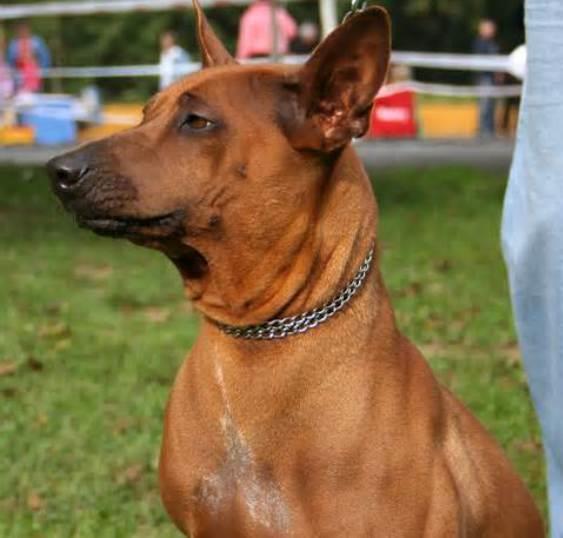
People usually end up searching for the Thai Ridgeback when they’ve seen that unmistakable ridge of hair and want to know what sort of dog it belongs to—how big it gets, what it’s like to live with, and whether it’s a good match for their household.
It’s a striking, athletic breed with a strong sense of territory and a quick, watchful mind. That combination can be steady and rewarding in the right hands, and chaotic in the wrong setting. Below is a clear, practical look at temperament, care needs, training, and the health checks worth prioritising.
Thai Ridgeback at a glance
- Size: Medium
- Height: Males 56–61 cm; females 51–56 cm (breed standard ideal ranges)1, 2
- Weight: Not set in most breed standards; commonly around 16–25 kg (females) and 23–34 kg (males), with individuals outside this depending on build and condition1, 3
- Coat: Short and smooth, with a ridge of hair growing in the opposite direction along the spine1, 2
- Colours (accepted in standards): Solid red, black, blue, and very light fawn (isabella); a black mask is preferred on reds1, 2
- Temperament: Alert, independent, often reserved with strangers; typically loyal to their people when well socialised4
- Life expectancy: Often reported around 12–14 years (varies with genetics, care, and luck)4
What makes a Thai Ridgeback distinctive
The ridge is the headline feature: a neat strip of hair running “backwards” along the spine, clearly set apart from the rest of the coat. Breed standards allow different ridge shapes and lengths, but symmetry matters, and dogs without a ridge are disqualified in some registries.1, 2
Under that coat is a lean, muscular frame built for speed and spring. This is a naturally athletic dog—quick over the ground, quick to notice movement, and quick to learn patterns in the home.
Temperament: loyal, watchful, not automatically easy
Thai Ridgebacks tend to be observant and self-directed. Many are calm with familiar people, then cautious when someone new enters the picture. That reserve can look like aloofness. It can also tip into problem barking or guarding if the dog hasn’t been taught, early and steadily, what “normal” visitors and everyday handling feel like.
Common traits owners report (and should plan around) include:
- Independence: they may pause and assess rather than blindly comply, especially outdoors.
- Protectiveness: useful as a watchdog; risky if it turns into rehearsed reactivity.
- Prey drive: many will chase fast-moving small animals, so recall and secure fencing matter.
Supervision around small pets is sensible, particularly if the dog is adolescent and excited. Early, positive introductions and controlled management are more reliable than hoping instinct will “settle down”.
Training: start early, keep it calm, keep it consistent
With Thai Ridgebacks, training is less about tricks and more about habits: how they greet, how they settle, how they move through doorways, and how they respond when something surprises them.
What tends to work best
- Short, frequent sessions with clear rewards and clean endings.
- Early socialisation that is controlled and pleasant—people of different ages, calm dogs, surfaces, noises, cars, vets.
- Management that prevents rehearsing bad behaviour (escaping yards, practising fence-running, charging the front window).
Harsh methods are a poor fit for a breed that can be sensitive to pressure yet stubborn about repeating what has worked before. Aim for steady, low-drama repetition.
Exercise and enrichment needs
This is an energetic, capable dog. A slow stroll around the block won’t touch the sides for long, especially in young adults.
Most Thai Ridgebacks do best with a mix of:
- Daily aerobic exercise (brisk walks, jogging for suitable dogs, fetch in a secure area).
- Structured training games (recall practice, leash skills, simple scent games).
- Time to decompress—quiet sniffing walks and a predictable routine.
If you’re regularly seeing restless pacing, destructiveness, or constant “patrolling” of the yard, treat it as information: the dog may need more guided outlets and less unsupervised time rehearsing arousal.
Health: what to watch for and what to ask breeders about
Thai Ridgebacks are often described as generally robust, but they still have known issues worth taking seriously—particularly those linked to the ridge gene and to hips.
Dermoid sinus (important)
Dermoid sinus is a congenital condition seen in ridgeback breeds, associated with the dorsal ridge. It can present as a small opening or lump along the midline, sometimes with discharge or recurrent infection, and it may require surgical treatment depending on depth and complications.5
If you’re buying a puppy, ask what checks the breeder does for dermoid sinus, and what their veterinarian has documented. If you already own a Thai Ridgeback and notice a persistent lump, draining spot, or repeated “mystery infection” along the spine, book a vet visit promptly.
Hip dysplasia
Hip dysplasia can occur in many medium-to-large athletic breeds. It’s influenced by genetics and environment, and it’s typically assessed with screening radiographs interpreted through formal schemes (for example, OFA grading).6
If you’re choosing a breeder, ask for hip screening results for both parents. If you’re adopting an adult dog, watch for stiffness after rest, reluctance to jump, or a shortened stride, and discuss assessment options with your vet.
Ears, skin, and everyday health
The short coat is low-fuss, but ears can still become irritated (especially if the dog swims or has allergies). Regular checks—smell, redness, excess wax—catch problems before they turn into chronic infections.
Grooming and care
The Thai Ridgeback coat is straightforward: short, smooth, and typically easy to keep tidy. A weekly brush removes loose hair and dust, and also gives you a chance to check the skin for bumps, parasites, or irritation.
- Brushing: weekly, more during seasonal shedding
- Bathing: as needed; over-bathing can dry the skin
- Nails: trim regularly—active dogs still often need help keeping nails short
- Teeth: routine home care and veterinary advice at check-ups
Living with a Thai Ridgeback: quick reality check
Often a good fit if you want
- a naturally watchful dog that tends to bond closely with its household
- a short coat and relatively simple grooming
- a training project you can stay consistent with for years
Often a poor fit if you need
- a dog that welcomes every stranger without guidance
- an off-lead, low-prey-drive companion by default
- a breed that copes well with minimal daily exercise and little enrichment
Routine care basics in Australia
Good ownership is mostly quiet maintenance: keep prevention boring and regular.
- Microchipping: helps reunite lost pets with owners and relies on up-to-date contact details7
- Vaccination and check-ups: adult booster timing varies (often yearly or three-yearly depending on lifestyle), but a yearly health check is a sensible baseline8
- Desexing timing: depends on the individual dog; discuss breed, size, and health factors with your vet9
References
- United Kennel Club (UKC) – Breed Standards: Thai Ridgeback
- FCI standard (republished) – Thai Ridgeback breed standard details (size/coat/colour)
- Thai Ridgeback overview (weight ranges and general breed notes) – Wikipedia (use with care)
- Wisdom Panel – Thai Ridgeback breed traits (size/lifespan overview)
- Merck Veterinary Manual – Dermoid sinus (dog) image and clinical notes
- Orthopedic Foundation for Animals (OFA) – Hip Dysplasia (screening and grading overview)
- RSPCA Australia – Microchipping (why it matters and keeping details current)
- RSPCA Pet Insurance (Australia) – Vaccination schedules and the value of annual check-ups
- RSPCA Pet Insurance (Australia) – When should a dog be desexed?

Veterinary Advisor, Veterinarian London Area, United Kingdom