
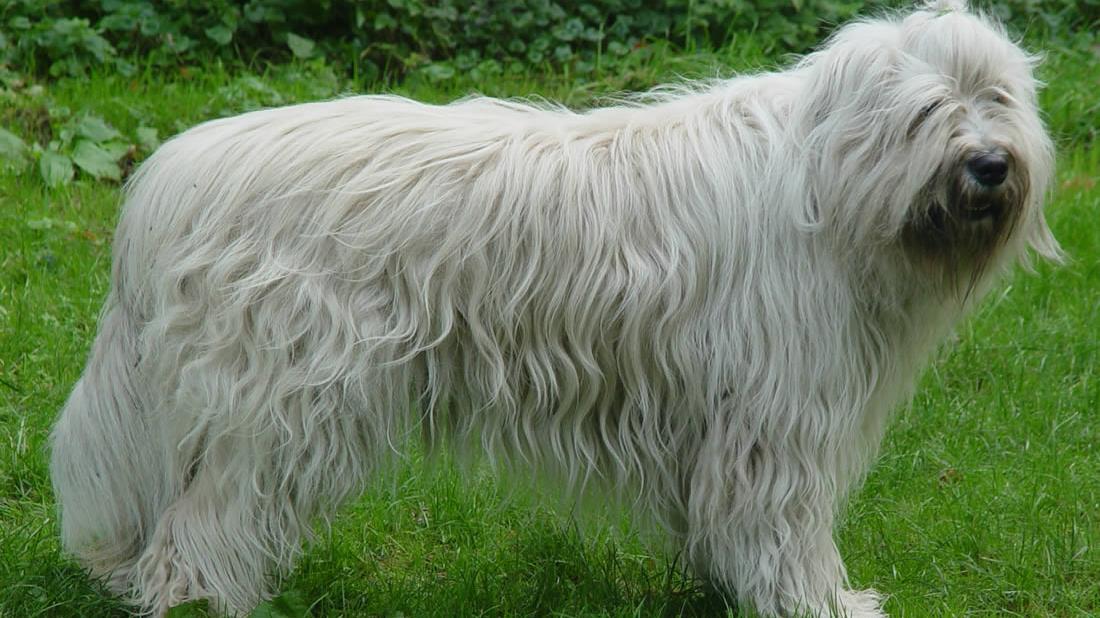
People usually start searching for a South Russian Ovcharka when they’re weighing up a serious guardian dog: how big it gets, how it behaves with strangers, and whether it can live safely in a family home. The consequences are real. A dog bred to confront predators can become difficult to manage if its training, space, and boundaries don’t match its instincts.
The South Russian Ovcharka (South Russian Shepherd Dog) is a powerful, shaggy-coated livestock guardian from the southern steppes. What follows is a clear look at the breed standard, temperament patterns you can expect, and the day-to-day care that keeps this dog steady, healthy, and contained.1, 2
South Russian Ovcharka at a glance
- Type: Large flock guardian with a strong suspicion of strangers (not a “social” breed by default).1
- Coat: Long, coarse, dense double coat (typically 10–15 cm) with undercoat.1
- Colour: Most often white; also white-and-yellow, straw, and shades of grey, including grey-speckled patterns allowed by the standard.1
- Size (minimum at withers): Males 65 cm; females 62 cm (many are larger).1
- Best suited to: Experienced handlers with secure fencing, space, and a plan for ongoing training and management.
History and origin
In the open country of southern Russia and what is now Ukraine, shepherds needed dogs that could stay with stock and hold ground against predators and thieves. The South Russian Ovcharka developed as a hard-working guardian shaped by climate, distance, and the practical demands of livestock protection, rather than close-quarters companionship.3
One well-documented centre of early 20th-century development was the Askania-Nova estate (now in Ukraine), where the type was refined and formalised, and a breed standard later emerged. The breed has been recognised internationally through the Fédération Cynologique Internationale (FCI) for decades.3
Appearance and physical characteristics
At first glance, the coat dominates the silhouette: long, heavy, and equal in length across head, chest, legs, and tail. Underneath is a lean, strongly muscled dog with substantial bone—built for long days outside and quick movement when it matters.1
The breed standard describes a robust dog of above-average size, with a coat designed for harsh conditions. The overall impression is not decorative. It’s functional insulation, camouflage, and protection from weather and rough terrain.1
Coat and colour (what’s normal)
White is the common picture people carry, and it’s accurate—but not the only accepted colour. The standard also allows white with yellow shading, straw tones, and a range of greys, including grey-speckled coats.1
Temperament and behaviour
The South Russian Ovcharka is typically alert, self-directed, and wary of strangers. The FCI standard explicitly describes the breed as distrustful of strangers—an expected trait, not a “problem to train out”.1
With its own people, many individuals settle into a calmer rhythm: watchful rather than busy, affectionate without being ingratiating. But this is still a dog that tends to make decisions. It notices small changes in routine, movement at the boundary, visitors arriving late, a gate left ajar.
Family life: what tends to work (and what doesn’t)
This breed can live with families, but it is rarely a good match for a household wanting an easygoing dog that welcomes guests. The more predictable the home, the easier the dog’s job becomes: clear rules, calm handling, and controlled introductions.
Supervision around children is sensible—not because the breed is “bad with kids” by definition, but because of sheer size and the speed at which a protective dog can react to noise, running, and unfamiliar visitors at the door.
Other animals
Early, structured socialisation helps, but it doesn’t rewrite genetics. Many livestock guardians are selective with other dogs and may show strong territorial behaviour. If you’re planning multi-dog life, expect careful management, slow introductions, and ongoing separation options.
Training and exercise needs
Training works best when it’s steady and unremarkable: short sessions, clear cues, consistent boundaries, and rewards that matter to the dog. Harsh corrections tend to make guardian breeds either shut down or push back, and they can damage trust at the exact moment you need cooperation.
In Australia, RSPCA guidance supports reward-based (positive reinforcement) training as an effective and humane approach, and it pairs well with a breed that is already inclined to think independently.4
Early socialisation (the practical kind)
For a South Russian Ovcharka, socialisation is less about creating a social butterfly and more about building stable patterns: calm exposure to visitors, vehicles, other animals at a distance, grooming, vet handling, and being safely contained while the world moves past.
Exercise: more than just distance
These dogs need daily movement, but they also need a job-like outlet: scent games, structured patrols of the property with you, obedience foundations, and calm place-training. A bored guardian invents work—often at the fence line, often loudly.
Health and lifespan
Large breeds commonly face orthopaedic issues, and hip dysplasia is a well-known concern across many big, heavy dogs. Screening, sensible body condition, and avoiding rapid weight gain in adolescence are practical safeguards you can discuss with your vet.5
Lifespan figures vary by line and management. Many general breed guides place the South Russian Ovcharka in the broad range of roughly 8–12 years.6
Grooming and maintenance
The coat is long, coarse, and dense, with undercoat. It tangles, mats, and holds debris if neglected. Regular brushing isn’t cosmetic; it’s how you prevent skin trouble and painful mats that tighten as they grow.1
A realistic grooming routine
- Brush thoroughly several times a week, checking behind ears, under the collar area, and around the hindquarters where mats form quietly.
- Increase grooming during seasonal sheds to keep undercoat moving out rather than compacting.
- Bath only when needed, and dry properly—dense coats can stay damp near the skin long after the surface feels dry.
- Build handling skills early (paws, ears, mouth) so adult grooming doesn’t become a wrestling match.
Diet and nutrition
For a big, active guardian, the aim is steady condition and slow, even growth—especially through puppyhood. The safest plan is a complete and balanced diet appropriate to age and size, with adjustments based on body condition rather than label promises.
The World Small Animal Veterinary Association (WSAVA) emphasises assessing the whole diet and using reliable nutrition information—because ingredient lists alone don’t tell you whether a food is actually well made or appropriate for your dog.7
Feeding notes that matter for this breed
- Keep them lean: extra weight stresses joints in a large frame.
- Measure, don’t guess, then adjust based on body condition score with your vet.
- Use treats deliberately in training, and count them as part of the day’s intake.7
Quick suitability check
The South Russian Ovcharka tends to thrive when its life is simple, structured, and securely contained. It often struggles when asked to be a constant social companion in busy public settings.
- Good fit if you have: secure fencing, space, experience with large protective breeds, and a calm household routine.
- Think twice if you need: an easy dog-park companion, frequent visitors moving through the home, or a low-maintenance coat.
Final thoughts
A South Russian Ovcharka is not a project dog; it’s a purpose-built guardian with a long memory for patterns and boundaries. In the right setting—space, calm leadership, early socialisation, and ongoing training—it can be a steady presence, quietly watching the edges of its world. In the wrong setting, the same instincts can become exhausting and risky.
References
- Fédération Cynologique Internationale (FCI) Standard No. 326 (EN): South Russian Shepherd Dog
- DogsGlobal — South Russian Shepherd Dog: FCI Standard No. 326 (summary page)
- Wikipedia — South Russian Ovcharka (background history and recognition overview)
- RSPCA Australia — Positive reinforcement training
- Orthopedic Foundation for Animals (OFA) — Hip Dysplasia
- United Kennel Club (UKC) — South Russian Shepherd Dog (history and general appearance)
- WSAVA — Global Nutrition Guidelines
- Dogster — South Russian Ovcharka breed overview (sizes, lifespan range, general traits)
- Continental Kennel Club (CKC) — South Russian Ovtcharka breed information

Veterinary Advisor, Veterinarian London Area, United Kingdom