
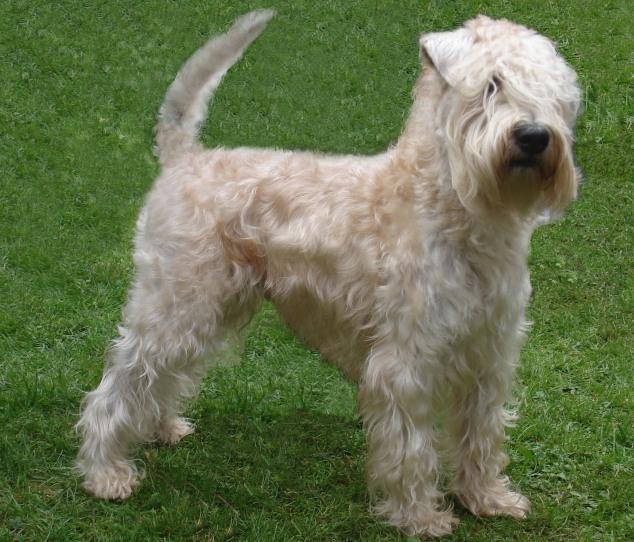
People usually start looking up the Soft-Coated Wheaten Terrier when they’re weighing up a breeder or rescue, checking whether a “low-shedding” dog will suit allergies, or trying to match a lively terrier to their household routine. The details matter: coat care is daily work, training needs patient consistency, and a few breed-linked health conditions are serious if missed early.
Below is a clear, practical portrait of the breed—what a Wheaten typically looks like and acts like, what they need day to day, and which health checks are worth discussing with your vet.
Size: Medium-sized
Weight: Males: around 16–20.5 kg; females: somewhat less (often 14–16 kg)1, 2
Coat: Single coat; soft, silky, loosely waved; not woolly or wiry1, 2
Colour: Clear wheaten (shades of ripening wheat); puppy coats can be darker and usually lighten as they mature1, 2
Temperament: Lively, affectionate, people-focused; typically friendly but still very much a terrier1
Lifespan: Often around 12–15 years (varies with health and care)6
Health issues to know about: Protein-losing enteropathy (PLE) and protein-losing nephropathy (PLN) are important breed-associated conditions; hip dysplasia can occur in any medium dog; Addison’s disease is reported in the breed but is less consistently documented than PLE/PLN in major breed health summaries7, 8, 9
Exercise needs: Moderate to active; most do best with daily walks plus play and training games
Grooming needs: High; regular brushing and combing to prevent mats, plus routine trimming1
Training needs: High; smart, quick to learn, and easily bored—reward-based training suits them best3
History and origin
The Soft-Coated Wheaten Terrier is an Irish farm terrier: a hardy, general-purpose dog shaped by work rather than ornament. In rural settings, dogs like this had to shift between jobs—moving stock, keeping watch, and controlling vermin—then settle back into the household at day’s end.
Modern breed standards still reflect that practical base: a square, balanced build, free movement, and a coat that falls naturally rather than standing off in a harsh terrier jacket.1
Physical characteristics
Size and build
Most adult males stand around 46–49 cm at the withers, with females slightly smaller, and weights commonly sit in the mid-to-high teens (kg). Individuals can fall outside these ranges, but the overall impression is medium, sturdy, and athletic rather than heavy.1, 2
Coat and colour
The signature feature is the coat: abundant, single-coated, soft and silky, with a loose wave or large, light curl. The mature coat is meant to flow and fall naturally; heavy sculpting is discouraged in standards.1, 2
Colour is some shade of wheaten. Young dogs often carry darker shading that clears as they mature, so a puppy’s colour isn’t the final word on how they’ll look as an adult.1, 2
Tail docking (Australian context)
Older breed material sometimes mentions docking, but routine tail docking is banned across Australian states and territories. A veterinarian may only perform it for genuine therapeutic reasons (for example, injury or disease), not for appearance.4, 5
Temperament and behaviour
Wheatens are typically sociable, energetic and strongly attached to their people. They tend to greet visitors with enthusiasm, and they’re often happiest when they can follow household life from room to room, watching and joining in.
They’re terriers, though. Many will investigate movement, chase small fast things, and test boundaries if rules drift. The most settled adults are usually the ones who were given structure early—clear routines, calm handling, and regular outlets for their energy.
Children and other animals
With respectful handling and supervision, Wheatens often do well in family homes. As with any breed, early socialisation matters, and introductions to other pets go best when they’re controlled and unhurried. A terrier’s chase instinct can still appear, particularly outdoors, so it’s wise to plan for secure fencing and reliable recall training.
Training and exercise needs
Training approach that suits the breed
Reward-based training—reinforcing behaviour you want and avoiding harsh punishment—tends to work well for Wheatens. It supports learning without creating fear, and it helps keep a bright, busy dog engaged.3
- Start early: short daily sessions from puppyhood build focus and manners.
- Keep it moving: rotate skills (sit, settle, recall, loose-lead walking) rather than drilling.
- Use real-life rewards: access to sniffing, play, and greeting people can be powerful reinforcers.
Exercise and enrichment
Most Wheatens do best with a daily walk plus time to run, sniff, and think. Games like fetch, scent work in the backyard, and beginner agility-style obstacles suit their springy movement and quick brains.
Health and lifespan
Conditions to discuss with your veterinarian
The two breed-associated conditions that deserve special attention are protein-losing enteropathy (PLE) and protein-losing nephropathy (PLN). Both involve abnormal loss of protein—through the gut (PLE) or kidneys (PLN)—and they can become severe. The breed has a documented familial predisposition, and early testing can help pick up warning signs before the dog is visibly unwell.7, 8, 9
Practical early red flags worth taking seriously include ongoing diarrhoea, weight loss, reduced appetite, swelling (fluid build-up), or unusual lethargy. These signs can have many causes, but they warrant a vet visit—especially in this breed.
Preventative care basics
A steady baseline of preventative care is simple but powerful:
- Vaccinations: adult dogs typically need core boosters at intervals advised by your vet (often every 1–3 years), with non-core vaccines based on lifestyle and risk.10
- Parasite control: tailor flea, tick, intestinal worm, and heartworm prevention to your region and the dog’s routine.
- Regular check-ups: ask your vet whether routine urine testing is sensible for your dog’s age and family history, given the breed’s PLN/PLE risk.8, 9
Grooming and maintenance
The Wheaten coat doesn’t behave like a typical double coat. It keeps growing and it mats easily, especially behind the ears, in the armpits, at the collar line, and around the legs. Regular brushing and combing is less about beauty than comfort: mats pull at the skin and can hide irritation.
- At home: plan on combing right down to the skin several times a week (daily is ideal for many dogs), not just brushing the top layer.
- Professional grooming: many owners book regular trims to keep coat length manageable and hygiene areas tidy.
Diet and nutrition
A good diet for a Wheaten is a diet that keeps them lean, energetic, and steady in the gut. Choose a complete, balanced food suited to their life stage, and keep an eye on body condition rather than relying on the bowl size you’ve always used.
If your dog develops chronic digestive signs, don’t self-prescribe supplements or sudden diet changes. Wheatens have a known risk of protein-losing gut disease, so it’s worth getting veterinary advice early, while the clues are still subtle.7, 9
Final thoughts
A Soft-Coated Wheaten Terrier fits best where there’s time for grooming, steady training, and daily movement—nothing extreme, just consistent. When those needs are met, the breed’s natural friendliness and bright energy tend to settle into something easy to live with: a dog that keeps pace, stays close, and notices everything.
References
- Dogs Queensland (ANKC) – Soft-Coated Wheaten Terrier breed standard
- The Kennel Club (UK) – Soft Coated Wheaten Terrier breed standard
- RSPCA Australia – Reward-based training and positive reinforcement
- Business Queensland – Queensland’s ban on docking dogs’ tails
- Agriculture Victoria – Prohibited procedures on dogs (including tail docking)
- Wikipedia – Soft-coated Wheaten Terrier (overview and reported life expectancy study summary)
- Journal of Veterinary Internal Medicine (PubMed) – Familial PLE/PLN in Soft Coated Wheaten Terriers (222 cases, 1983–1997)
- Oxford Academic (JVIM) – Familial protein-losing enteropathy and nephropathy in Soft Coated Wheaten Terriers
- Soft Coated Wheaten Terrier Club of America – Protein-Losing Nephropathy (PLN)
- RSPCA Knowledgebase – Dog vaccination guidance (core and non-core, adult intervals)

Veterinary Advisor, Veterinarian London Area, United Kingdom