
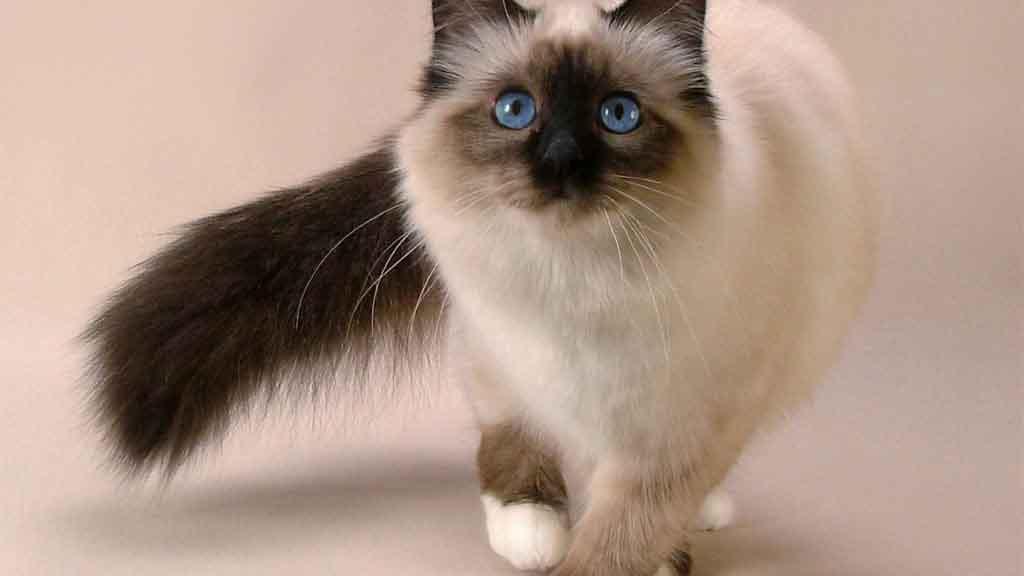
Most people look up Snowshoe cats when they’re weighing up a kitten (or a rescue) and want to know two things quickly: what this breed is really like to live with, and what practical care they’ll need once the novelty wears off. A Snowshoe can be a calm, steady companion, but the same traits that make them charming—social nature, intelligence, strong bonding—also mean they don’t thrive when they’re left to make their own entertainment.
Below is a clear, breed-grounded guide to Snowshoe cats: where they came from, what they look like (and why the markings vary), the temperament you can expect, and the everyday care that keeps them healthy—especially teeth, weight, and safe outdoor access.1, 2
Snowshoe cat at a glance
- Size: Medium; females often around 3.2–4.5 kg and males around 4.1–5.4 kg (individual cats vary).2
- Coat: Shorthaired, smooth; typically low-maintenance grooming.1, 2
- Colour and markings: Pointed pattern with white “shoes” on the feet; many have a white inverted “V” on the face. Markings are naturally variable, and kittens are often born very pale/white with points developing over time.1, 2, 3
- Eyes: Blue (breed standards emphasise blue eyes in Snowshoes).2, 3
- Temperament: Social, people-oriented, playful; often “talkative” with a softer voice than some other pointed breeds, and can be a little reserved with strangers.1, 2
- Life expectancy: Commonly quoted around 9–15 years, though many factors matter (indoor living, diet, veterinary care).2
History and origin
The Snowshoe began in the United States in the early 1960s, after breeder Dorothy Hinds-Daugherty noticed Siamese kittens born with four white feet. Breeding plans that followed used Siamese cats and bicolour shorthair cats (often described in breed histories as American Shorthair or domestic shorthair types) to stabilise the combination of pointed colour, blue eyes, and crisp white feet and facial markings.1, 2, 3
Even today, the Snowshoe’s look can be inconsistent from litter to litter. That isn’t “poor quality” by default—it’s baked into the genetics of white spotting and pointed colour, which don’t always land in tidy, symmetrical patterns.1, 2
Physical characteristics and appearance
A Snowshoe is a balanced, athletic cat: firm and muscular without looking bulky, with the long lines you’d expect from their Siamese heritage. The coat is short and usually lies close to the body, giving a clean, glossy look with minimal effort.1, 2
The hallmark is the contrast: darker “points” (face, ears, tail, legs) against a lighter body, finished with neat white feet—the “shoes”. Many Snowshoes also show a white inverted “V” on the face, though the exact shape and extent of white can vary widely between cats.1, 2, 3
One detail that surprises new owners: Snowshoe kittens can be born very pale, with point colour and contrast deepening as they grow, and full development sometimes taking a long time.1, 2
Personality and temperament
Snowshoes tend to track the household like a quiet shadow—present, observant, and keen to be involved. They’re widely described as affectionate and people-focused, enjoying interactive play and regular contact rather than long stretches of solitude.1, 2, 3
Many are vocal in the way pointed breeds can be, but not always with the sharp insistence people associate with Siamese cats. Some Snowshoes are quite chatty; others barely comment. The through-line is social intelligence: they learn routines, notice patterns, and get bored if the environment never changes.1, 2
Breeding and genetics (why markings vary)
The Snowshoe look relies on a particular mix: colourpoint patterning (which produces the darker points and blue eyes) plus white spotting (which creates the “shoes” and facial white). Because white spotting can express in different amounts and placements, two Snowshoe kittens from the same litter may look like they’re following different maps.1, 2
If you’re choosing a kitten, it helps to separate health and temperament from the cosmetics of symmetry. Breed standards may describe an “ideal” pattern, but a slightly uneven blaze or higher white sock doesn’t automatically predict behaviour, affection, or wellbeing.2, 3
Health and care
Diet and weight management
Snowshoes don’t have a unique nutritional requirement just because they’re Snowshoes—but like many pet cats, they can drift into overweight territory if meals are generous and activity is optional. A measured diet, routine play, and regular weight checks at the vet are the quiet basics that keep joints, skin, and overall health in good order.
Dental care (don’t leave it too late)
Dental disease is common in cats, and it can be painful while remaining easy to miss at home. Veterinary guidelines emphasise proactive dental care across life stages: regular oral checks, and home care where possible (tooth brushing is ideal, but gradual training matters). When disease is present, cats may need a professional dental under anaesthetic with proper assessment and dental radiographs—“anaesthesia-free dentistry” is not considered appropriate by guideline-based veterinary sources.4, 5
Grooming
The short coat is generally easy. A weekly brush is usually enough to lift loose hair and spread skin oils, and many Snowshoes enjoy the attention. Nail trims and routine parasite prevention still matter, even for indoor cats, depending on your vet’s advice and your local risks.1, 2
Exercise and enrichment
Snowshoes are often described as active and smart, with a taste for interactive play. Think climbing options, puzzle feeders, short training sessions (if your cat enjoys it), and toys that mimic chase-and-pounce movement. A small daily rhythm—two or three short play bursts—often suits them better than one long session that happens only on weekends.1, 2
Indoor vs outdoor living (Australia-specific reality check)
In Australia, “outdoor access” carries real risk for cats and wildlife. Victorian government guidance highlights that keeping cats indoors (or securely contained on the property, such as with a purpose-built enclosure) reduces injury and loss, and also prevents nuisance behaviour and wildlife harm; it also notes that some councils have cat curfews or containment requirements.6
For many homes, the middle path works well: a fully enclosed run (“catio”), an escape-proof courtyard, or supervised harness time—enough sensory richness to satisfy curiosity, without the roaming that leads to fights, cars, poisoning, and disappearances.6, 7
Snowshoe cats in pop culture and media
Snowshoes do turn up in online fame cycles and “lookalike” claims, largely because the colourpoint-and-white pattern is instantly recognisable. What matters day to day is less glamorous: a Snowshoe is usually happiest when the house has a steady routine, a warm lap (on their terms), and something to investigate that wasn’t there yesterday.1, 2
Adoption and rescue
Snowshoes are relatively uncommon compared with many other domestic cats, so you may see “Snowshoe type” or “Snowshoe cross” more often than confirmed pedigree. That isn’t a drawback. When you’re adopting, prioritise:
- Temperament: how the cat responds to handling, noise, and new people.
- Health history: vaccination status, desexing, parasite control, and any dental notes.
- Containment plan: how you’ll keep the cat safe while meeting their need for stimulation.6
Final thoughts
A Snowshoe is a study in contrasts: neat white feet and deep blue eyes, a soft coat over a sturdy, athletic frame, and a temperament that often sits somewhere between curiosity and calm. They tend to bond closely, and they do best when daily life includes interaction, play, and gentle structure.1, 2
Get the basics right—weight, teeth, enrichment, and safe containment—and you’re likely to see the best of the breed: a companionable cat moving through the home like a quiet, attentive presence, always close enough to notice what you’re doing next.4, 6
References
- The International Cat Association (TICA) – Snowshoe breed information
- The Governing Council of the Cat Fancy (GCCF) – Snowshoe breed profile
- Fédération Internationale Féline (FIFe) – Snowshoe breed information
- American Animal Hospital Association (AAHA) – Dental care guidance for dogs and cats (home care and products)
- AAHA/AAFP Feline Life Stage Guidelines – Feline dental care
- Agriculture Victoria – Keeping your cat safe at home (benefits of indoor/contained cats)
- Agriculture Victoria – Code of Practice for the Private Keeping of Cats (recommended confinement and welfare)
- Australian Government (DCCEEW) – Feral cats (impacts and disease risk)
- Agriculture Victoria – Feral (wild) cats: impacts, disease transmission and toxoplasmosis

Veterinary Advisor, Veterinarian London Area, United Kingdom