
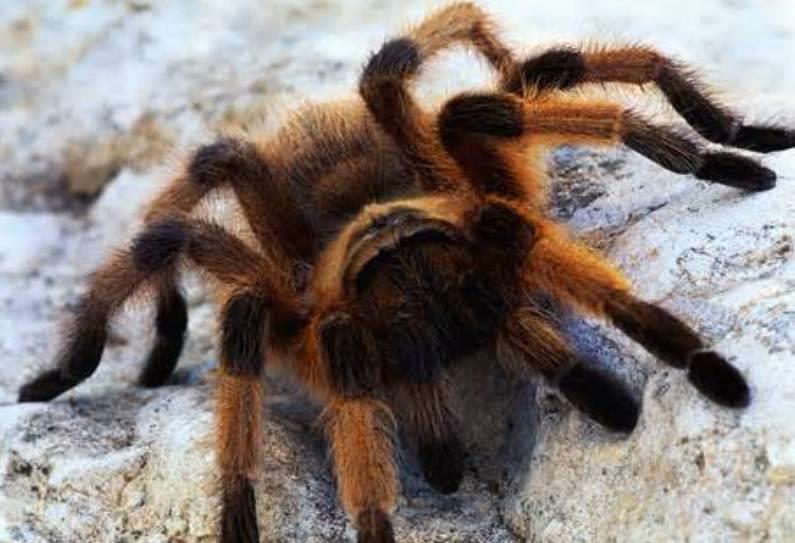
People usually start looking into small pet spiders when they want an unusual, low-space animal they can observe rather than cuddle—something quiet on a desk, in a study, or on a sheltered shelf. The main decisions are practical: which species suits your comfort level, how to house it so it can’t escape or overheat, and how to feed it safely without stressing the animal.
Small spiders are hardy when their basics are right. When they aren’t, problems tend to be simple and preventable: dehydration, overheating in direct sun, injuries from falls, or uneaten prey left in the enclosure for too long. The aim is a stable, calm setup that lets the spider behave like a spider.
Popular small pet spiders (and what they’re like to live with)
Jumping spiders (Salticidae)
Jumping spiders are small, active day-hunters with large forward-facing eyes and a habit of moving in short, deliberate bursts. They don’t build big prey-catching webs; instead, they stalk and leap, using excellent vision to judge distance before a strike.1, 2
They’re often recommended for beginners because they need little space and are easy to watch. Their silk is still important, but it’s used more for safety lines and small retreats than for building an orb web.1, 2
Colour vision note: Some jumping spiders can achieve richer colour vision than was once assumed; research in Current Biology describes a mechanism that can support trichromatic vision in certain colourful groups.3
Tarantulas (mygalomorph spiders)
“Tarantula” covers a wide range of larger, heavy-bodied spiders kept by hobbyists worldwide. Many species are calm to observe, but “docile” is not a guarantee—temperament varies by species and individual, and handling risks injury to the spider even when bites aren’t the main concern.4
Lifespans are often much longer than people expect. Some tarantula-like trapdoor relatives in Australia can live for decades in the wild, which shows how long-lived some mygalomorph spiders can be under the right conditions.5
Orb-weavers and wolf spiders: usually better as observation-only visitors
Orb-weavers are master builders. Many species construct suspended, wheel-shaped orb webs in the evening and may take them down again by morning, recycling silk as they go.6
Wolf spiders are active hunters rather than web trappers, and their care needs can be less forgiving in small, dry enclosures. If you’re drawn to them, they’re often best appreciated outdoors, where their behaviour makes sense at full scale.
Before you buy: legality and ethics in Australia
In Australia, rules about keeping native wildlife (including spiders) vary by state and territory. Check your local requirements before collecting from the wild or purchasing a native species. As a general guide, government advice stresses appropriate housing, safe feeding, and careful handling for pet spiders—and warns against leaving enclosures in direct sun.4
Housing and habitat requirements
Choose a secure enclosure first
The enclosure should be escape-proof, well ventilated, and easy to service without chasing the spider around. A clear plastic or glass container works, as long as airflow and secure closure are built in.
- Shade matters: don’t leave the enclosure in the sun. Heat builds fast in small containers.4
- Stability matters: keep it somewhere quiet, away from vibrations, pets, and curious hands.
Substrate, shelter, and “things to do”
Most spiders do better with a simple landscape: substrate on the base plus a few pieces of bark, sticks, or leaf litter for cover and climbing. This gives the spider options—shade, height, and hiding places—without cluttering the enclosure into a hazard.4
Temperature, humidity, and lighting
Rather than chasing exact numbers, aim for consistency and species-appropriate conditions. Many commonly kept spiders cope well at typical indoor temperatures, provided they aren’t cooked by sun through glass or dried out by heat sources.
Natural day–night light from the room is usually enough. Avoid direct sunlight and avoid placing the enclosure on heat mats unless you’re experienced and monitoring conditions carefully—small volumes swing quickly.
Feeding and water
Diet basics
Pet spiders are predators. Government guidance notes they commonly take insects such as crickets, moths, flies and grasshoppers, and many keepers use feeder insects sourced from pet shops.4
How often to feed
Feeding frequency depends on species, size, age, and whether the spider is approaching a moult. As a rough baseline, many pet spiders are fed once or twice a week, adjusted by observation rather than routine.4
Safe feeding habits
- Offer prey that’s an appropriate size. Oversized prey can injure a small spider.
- If you collect insects yourself, ensure they haven’t been exposed to insecticides.4
- Remove uneaten prey if the spider isn’t feeding—especially if the spider is in moult, when it’s soft and vulnerable.
Water and dehydration
Some spiders drink readily from a tiny shallow dish (for example, a plastic bottle cap). Others pick up moisture from damp material. Government advice suggests shallow dishes or a soggy piece of cotton wool can be used, depending on the species’ needs.4
Handling and interaction
Handling: keep it rare and practical
Most spiders do best when handling is kept to a minimum. It’s not just about bites; it’s about falls, stress, and damaged limbs. Government guidance recommends handling only when absolutely necessary and paying close attention to behaviour that suggests the spider is stressed or likely to strike.4
Reading behaviour without inventing feelings
Spiders don’t “bond” in the way mammals do, but they do show clear, repeatable patterns. A spider that moves slowly, uses cover, and resumes normal activity after you service the enclosure is often coping well. One that bolts, huddles in the open, or repeatedly tries to escape is telling you something is off—light, heat, vibration, or enclosure design.
Why observing is often the best interaction
Watch the spider build, hunt, groom, and choose its resting spots. Orb-weavers, for example, create orb webs with a mix of sticky and non-sticky silk, and move across their own webs with surprisingly little contact.7
Health and lifespan
Common problems in captivity
- Overheating (often from sun on the enclosure).4
- Dehydration (dry air, no water source, or poor ventilation choices).
- Injuries (falls, unstable décor, or handling).
- Pests and hygiene issues (mould, mites, leftover prey).
When something looks wrong
Worrying signs include a spider stuck on its back outside of a normal moult, repeated failed moults, a shrunken abdomen despite access to water, or visible injury. For bites to humans, follow local first-aid guidance and seek medical attention as recommended by health authorities.4
Lifespan expectations
Many jumping spiders have short lifespans compared with larger mygalomorph spiders. Some tarantula and trapdoor relatives can be long-lived, with documented cases in Australia showing remarkable longevity under natural conditions.5
Benefits of keeping small pet spiders
Low space, low noise, and a simple routine
A well-set enclosure takes up little room and doesn’t need daily entertainment. The routine is mostly water checks, occasional feeding, and keeping the enclosure stable and clean.
A close view of real spider behaviour
Jumping spiders show sharp, visual hunting. Orb-weavers show engineering—webs built fast, rebuilt often, and tuned for flying insects.1, 6
Fun facts (kept honest)
- Jumping spiders are diurnal hunters with excellent vision and strong jumping ability, used to stalk and pounce on prey.1
- Orb webs are efficient traps: large capture area for relatively little silk, and many nocturnal orb-weavers rebuild regularly, sometimes recycling silk by eating the old web.6
- Some jumping spiders may achieve trichromatic vision via optical filtering in the eye, expanding colour perception beyond simple UV-and-green sensitivity.3
Final thoughts
A small pet spider is less a companion and more a small, contained habitat you learn to maintain. If the enclosure is secure, shaded, and suited to the species—and if feeding and handling are done with restraint—the spider usually settles into a steady rhythm: stillness, sudden movement, careful maintenance of silk, and long pauses that make the brief moments of action feel sharp and clean.
References
- Australian Museum — Jumping spiders
- Museums Victoria Collections — Salticidae (Jumping Spider)
- Current Biology (via ScienceDirect) — Spectral filtering enables trichromatic vision in colourful jumping spiders
- Northern Territory Government — Keeping spiders as pets
- Time — Report on the 43-year-old trapdoor spider (“Number 16”) and typical trapdoor lifespans (based on Curtin University research)
- Australian Museum — Spider webs (orb webs and web-building behaviour)
- Australian Museum — Spider facts (movement on orb webs and silk properties)
- Australian Museum — Golden orb-weaving spiders
- Australian Museum — Garden orb-weaving spiders

Veterinary Advisor, Veterinarian London Area, United Kingdom