
Most people searching “Sloughi” are trying to answer a practical question: is this desert-bred sighthound suited to life as a companion—especially in a suburban Australian home with neighbours, traffic, and the everyday comings-and-goings of family life.
The details matter. A Sloughi that’s under-exercised or given too much freedom too soon can turn its speed into a problem, and a Sloughi that’s handled harshly can simply switch off. Below you’ll find clear, breed-standard facts, what their temperament tends to look like in real homes, and the care points that genuinely change outcomes.
Sloughi at a glance
- Origin: North Africa (FCI country of origin: Morocco)1
- Height: dogs 66–72 cm; bitches 61–68 cm2
- Coat: fine and short; an undercoat may appear in winter2
- Colour: light sand to red sand (fawn), often with black mask/overlay; excessive white is undesirable under the standard2
- Typical temperament: reserved, loyal, sensitive, often aloof with strangers3
- Common veterinary concerns to discuss with your vet: gastric dilatation-volvulus (bloat) risk in deep-chested dogs; inherited eye disease screening is commonly advised; orthopaedic issues are possible in any athletic breed4, 5
Origins and history
The Sloughi is a North African sighthound developed to hunt by sight across open country—built for long, efficient movement and sudden, decisive speed. Modern breed authorities place the Sloughi within the sighthound group and note Morocco as the recognised country of origin under the FCI system.1
That working background still shows in everyday life: many Sloughis carry a strong chase response, and they tend to be selective with their attention—quietly watchful rather than demonstrative.3
Physical characteristics and appearance
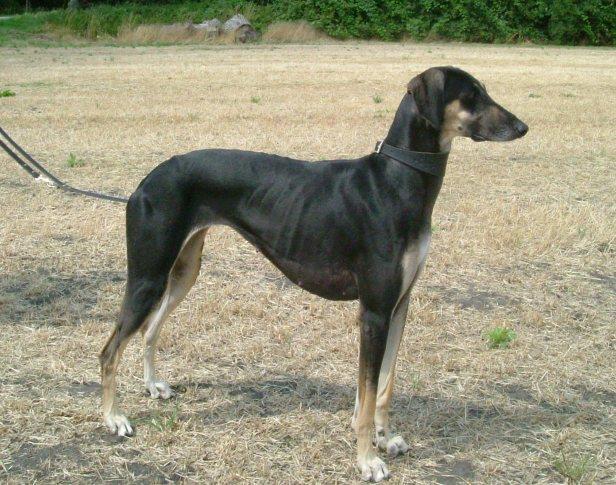
The breed standard describes a lean, athletic hound with a fine, short coat and a free, smooth, effortless gait. Height is typically 66–72 cm for males and 61–68 cm for females, with a long tail carried low and curving up at the tip.2
Colour is not a rainbow palette. Under the Dogs Australia/FCI-style standard, you’ll most often see shades from light sand to red sand (fawn), sometimes with black mask, black mantle, black brindling or black overlay; large white markings are not favoured.2
Temperament: what they’re like to live with
A well-bred, well-raised Sloughi is usually calm indoors, observant, and deeply bonded to its people—without being everyone’s mate. Many are naturally reserved with strangers, and some remain aloof even with careful socialisation.3
They’re also often sensitive. Training that relies on intimidation tends to backfire: you may not get open “defiance”, just a dog that becomes quiet, wary, and harder to reach. Clear routines, gentle handling, and patient repetition suit them better than loud corrections.3
Prey drive and safety
As a sighthound, the Sloughi is wired to notice movement at distance and respond fast. In day-to-day Australia, that can mean sudden chasing of cats, rabbits, wildlife, or a running small dog. Reliable recall can be difficult when the chase response is triggered, so secure fencing and thoughtful leash choices matter more than optimism.3
Training and exercise needs
Sloughis do best with a mix of steady daily movement and short opportunities to stretch out at speed—only in safely enclosed areas. Their bodies are made for running, but their minds still need quiet structure: a predictable routine, calm social exposure, and training sessions that stay short enough to remain meaningful.3
Reward-based training is usually the most productive approach. Aim for calm behaviours (settle on a mat, loose-lead walking, coming when called in low-distraction settings) before you test them around running birds or busy ovals.
Health concerns and day-to-day care
No breed is “problem-free”, but the Sloughi is often described as generally healthy. The main point worth taking seriously is the risk of gastric dilatation-volvulus (GDV), commonly called bloat—seen most often in deep-chested breeds. It can progress quickly and is a true emergency.4, 5
Know the emergency signs of bloat (GDV)
- repeated retching with little or no vomit
- drooling, restlessness, obvious discomfort
- swollen or tight-looking abdomen
- weakness, collapse, pale gums or rapid breathing4, 5
If you see these signs, don’t “wait and see”. Call an emergency vet and go straight in. Diagnosis can require imaging, and treatment is time-critical.4, 5
Preventive care that actually helps
- Routine veterinary checks: ask your vet about eye screening and any breed-relevant orthopaedic monitoring, especially if you’re doing lure coursing or other high-speed sports.
- Vaccination: follow a current, vet-guided schedule based on core vs non-core risk for your region and lifestyle.6
- Coat and skin: the coat is short and low-maintenance, but these dogs can feel the cold; in winter they may need a coat for long, still outings.2
Living with a Sloughi: practical tips
- Secure fencing is non-negotiable: plan for speed, not just strength. A Sloughi that spots movement can cover ground before you’ve finished calling its name.
- Introduce the world early, gently: calm, positive exposure to visitors, handling, grooming, and everyday noises helps a naturally reserved dog feel safer in modern life.3
- Keep sessions short: two minutes of good training beats twenty minutes of repetition that turns dull.
- Choose companions wisely: many Sloughis enjoy other dogs, but rough play from pushy breeds can overwhelm them. Let them set the pace.
Showing and dog sports
Sloughis can shine in sports that reward efficient movement and controlled speed, particularly lure coursing-style activities. They often do best when training stays calm and structured, with plenty of recovery time—both physical and mental—between intense runs.
If you’re aiming for conformation showing, the Dogs Australia breed standard is the clearest guide for size, movement, coat, and colour expectations in an Australian context.2
Rescue and adoption
Because Sloughis are relatively uncommon in Australia, rescue options may be limited compared with more widespread breeds. Start with reputable sighthound rescues and breed clubs, and be ready to travel if the right dog appears. When assessing a rescue Sloughi, pay close attention to shyness, flight risk, and prey drive—traits that can be manageable, but not if they’re ignored.
Final thoughts
The Sloughi is a quiet, spare-limbed athlete—more observation than performance, more bond than bustle. In the right home, with secure spaces to run and training that respects sensitivity, they settle into a steady rhythm: watchful, loyal, and remarkably graceful at rest as well as at speed.3
References
- FCI breeds nomenclature: Sloughi (No. 188)
- Dogs Australia (ANKC): Sloughi breed standard
- Sloughi Club of America: Breed standard and temperament notes
- Cornell University College of Veterinary Medicine: Gastric dilatation-volvulus (GDV) in dogs
- VCA Animal Hospitals: Gastric dilatation and volvulus (bloat) in dogs
- WSAVA: 2024 Vaccination Guidelines for Dogs and Cats

Veterinary Advisor, Veterinarian London Area, United Kingdom