
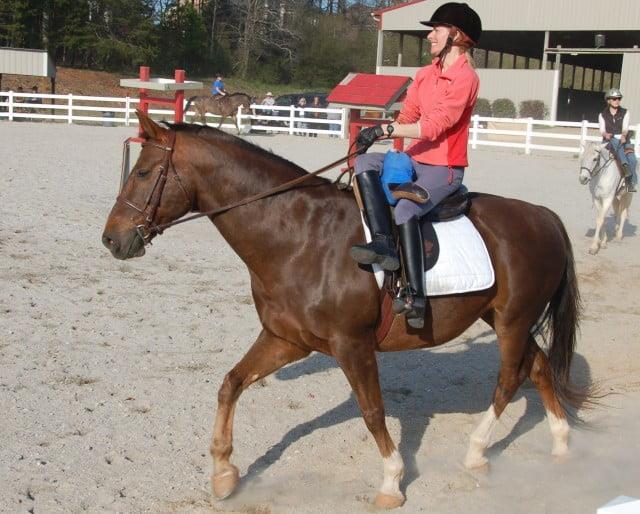
People usually come looking for sidesaddle riding when they’ve found an old saddle in a tack room, seen an “aside” class at a show, or they’re weighing up whether it’s genuinely safe to try. The questions are practical: what gear is actually needed, how the rider stays secure with both legs to one side, and what changes (if any) you should make for modern safety.
Sidesaddle is exactly what it looks like—one rider, one horse, and a seat built for sideways balance. Done well, it’s steady, quiet and precise. Done with poorly fitted equipment, it can turn risky fast. The sections below keep it simple: a short history, how the saddle works, what to wear now, and the basics of riding and safety.
What sidesaddle riding is
Sidesaddle riding (often called “riding aside”) is riding with both legs on the same side of the horse, using a specialised saddle designed to keep the rider balanced and secure. It developed in Europe partly because women’s clothing made astride riding awkward, and partly because social customs treated straddling a horse as immodest.1
Modern sidesaddle isn’t just costume riding. Riders train for balance, straightness and clear aids, then take those skills into showing, dressage, pleasure riding and some jumping—depending on the rider’s experience, the horse, and the saddle’s fit.
A brief history (without the myths)
Early “aside” seats appear in ancient and medieval imagery, but many of those show a passenger arrangement—women perched sideways, sometimes led, with limited control.1 Over time, the saddle evolved into a true riding saddle that allowed independent control and, later, more athletic work.
By the nineteenth century, sidesaddle was widespread in Britain and parts of Europe and North America, particularly among women of the upper and middle classes. It became closely tied to formal riding culture and the fashion of long skirts—practical on the ground, hazardous in the saddle unless managed carefully.1
How a sidesaddle works (key parts)
A modern “English” sidesaddle has a seat that positions the rider slightly offset, plus two main supports (often called horns or pommels):
- Fixed head (upper pommel): the rider’s right leg hooks around this for stability.
- Leaping head (lower pommel): supports the rider’s left thigh and helps prevent the rider sliding forward or left during movement and jumping.
Because the rider’s legs are not symmetrically placed, the saddle must be correctly built, correctly flocked, and fitted to the horse with particular care. A sidesaddle that slips, bridges, or pinches can create uneven pressure, sore backs, and a rider who is forced to brace—never a good combination.
Equipment and attire
The saddle and essential tack
At a minimum, you need a correctly fitted sidesaddle, a suitable girthing arrangement (often point and balance straps are used, depending on saddle design), and a breastplate or balance strap if recommended by a knowledgeable fitter for that horse’s shape and workload. If you’re new to sidesaddle, borrowing a saddle is common—but only if it genuinely fits the horse and sits level and stable when mounted.
What to wear (traditional look, modern safety)
Traditional turnout often uses a long skirt or apron worn over breeches, with a fitted jacket and gloves. Modern riders frequently keep the silhouette but update the safety layer underneath.
Current best practice is simple: wear a properly fitted, fastened riding helmet, even if the rest of the outfit is traditional.2 Many riders also choose a body protector, particularly when learning, riding young horses, or doing faster work.3
If you do wear a skirt or apron, it must be designed for riding aside so it sits cleanly, doesn’t bunch under the seat, and can’t flap into the horse’s flank or snag on the saddle. Loose, everyday fashion skirts are a bad idea around tack.
Learning to ride aside (technique basics)
Mounting
Most riders mount from a mounting block to reduce strain on the horse and avoid twisting the saddle. The details vary by saddle and rider, but the guiding principle is the same: keep the saddle still, settle softly into the deepest part of the seat, and organise your legs without rushing.
Position and balance
Sidesaddle balance is not about “perching”. A good aside seat looks quiet because the rider is stacked—ear, shoulder, hip—then subtly rotated to match the saddle’s design. The torso stays tall and elastic, with the pelvis allowed to follow the horse’s back rather than locking against it.
Many riders find they need to rebuild their feel for straightness. Without a leg on each side, it’s easier to accidentally collapse a hip, twist the shoulders, or grip with the right thigh. A good instructor will keep bringing you back to stillness: soft hands, steady breathing, and weight placed deliberately.
Compared with astride riding
Astride riding gives equal contact on both sides of the horse. Aside riding asks for more precision in balance and timing, because some of your usual “symmetry tools” are gone. The horse should still travel straight, forward and relaxed; the rider simply uses different geometry to get there.
Practical tips that actually help
- Start on a steady horse with a comfortable, regular rhythm.
- Prioritise saddle fit before you worry about “looking right”. A slipping sidesaddle teaches bad habits fast.
- Build core endurance gradually (short rides, frequent breaks). Tension is the enemy of balance.
- Use an experienced sidesaddle coach or mentor—the small adjustments matter more than they do astride.
Safety and welfare: what matters most
Side saddle Australia and similar groups exist because this discipline needs shared standards—particularly around tack fit, judging, and safe participation.4
For riders, the baseline safety habits are familiar but worth stating plainly:
- Wear a correctly fitted helmet and fasten it every ride.2
- Consider a body protector when learning, jumping, or riding in higher-risk settings; fit matters as much as the model.3
- Avoid second-hand helmets if you can’t verify their history and condition.2
- Check stability before leaving the yard: girths even, saddle level, no rolling when you put weight in the stirrup.
For the horse, comfort is the whole story. A sidesaddle must sit level, distribute pressure appropriately, and allow free shoulder movement. If the horse begins to shorten the stride, hollow, swish the tail, or resist being mounted, pause and reassess fit and soreness before you assume it’s “attitude”.
Modern communities and the quiet revival
Sidesaddle has never fully disappeared, but it has become more visible again through historical sport, show rings, clinics and dedicated “aside” classes. In Australia, Side Saddle Australia was formed to promote the discipline nationally, support rider education, and encourage consistent standards for competition and events.4
If you’re curious, the simplest entry point is a supervised try-out on a suitable horse, in a saddle that’s known to fit. The feeling is distinctive: not fragile, not theatrical—just a different way of staying with the horse’s movement.
Final thoughts
Sidesaddle riding endures because it’s functional as well as beautiful. The best rides aside look almost uneventful: a horse moving freely, a rider sitting quietly, and a saddle that does its job without drama. Get the fit right, keep the safety basics modern, and learn from people who do it often. The rest follows in small, steady steps.
References
- Sidesaddle (overview and history) — Wikipedia
- Hats & helmets: fitting & safety — The British Horse Society
- Body protectors: what to consider and standards — The British Horse Society
- About Side Saddle Australia (objectives and national role) — Side Saddle Australia

Veterinary Advisor, Veterinarian London Area, United Kingdom