
People usually start searching “show hunter competition” when they’re about to enter a class, watch a mate compete, or work out whether their horse suits the ring. The details matter: in hunter classes, time is rarely the point, and the wrong expectations can lead to the wrong preparation.
Show hunter in Australia sits inside the wider Show Horse world. It rewards a horse that looks capable of travelling across country—substance, quality, soundness, and an easy, ground-covering way of going—presented with quiet, competent riding rather than speed.1, 2
What is a show hunter competition?
In Australian showing, a “show hunter” is a type rather than a breed: an animal with more substance than a modern show hack, still quality, and presented to give the impression it could hunt over varied terrain comfortably and safely.1, 2
Most show hunter classes are judged, not timed. Judges are looking for an overall picture: straightness, suitability, manners, conformation, and paces that look practical and balanced—especially a correct walk and a true, ground-covering gallop when conditions allow.2
Show hunter vs show jumping: the common mix-up
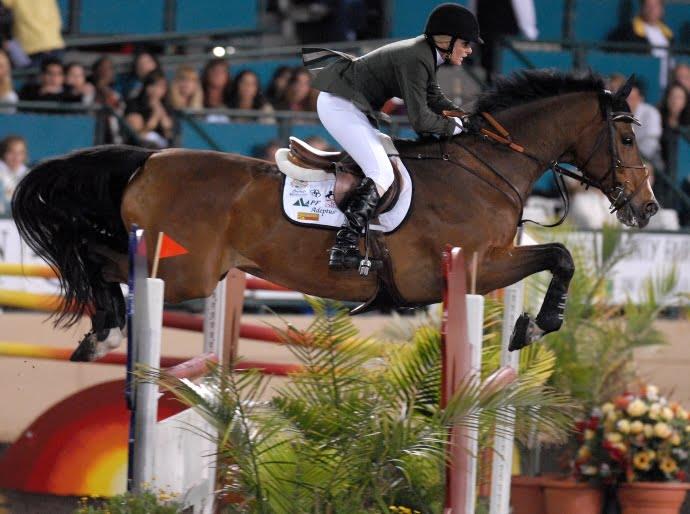
The original draft described a timed jumping course. That’s closer to show jumping than show hunter. In show hunter, the ring work is about way of going and type, with emphasis on calm control and a workmanlike frame rather than rushing the clock.2
How show hunter is judged
Judging is subjective, but the priorities are fairly consistent. A good show hunter tends to look:
- Balanced and fluent, covering the ground without obvious effort from horse or rider.1
- Correct in its paces, with a clear 4-beat walk and a true gallop (not just a hurried canter).2
- Straight and sound, both standing and in motion, with conformation suited to the job.2
- Mannerly and rideable, coming back from stronger work without fuss, staying responsive to light aids.1, 2
In many workouts, a working trot is preferred over an exaggerated, “flashy” trot. Simple changes through walk or trot are commonly requested; flying changes are not usually part of a show hunter workout expectation.2
Common classes you’ll see (and how they’re grouped)
Class names vary between organisers, but show hunter is typically grouped by height and sometimes by age or experience level.
Height divisions used in Australian Show Horse
Equestrian Australia describes show horse (including hunter) divisions by height:
- Pony: not exceeding 14hh
- Galloway: over 14hh and not exceeding 15hh
- Hack: over 15hh1
Experience-based sections (varies by schedule)
Many shows offer levels such as novice and open. As the level rises, expectations sharpen: straighter lines, cleaner transitions, better adjustability, and a horse that stays relaxed and consistent through the work.2
Rules and safety essentials (Australia)
Rules depend on the organising body (for example, Equestrian Australia and its state branches for affiliated events), so always read the current schedule and rulebook for the show you’re entering.1, 3
Helmet standards
For Equestrian Australia competitions, riders must wear an approved helmet with the chinstrap fastened, except where sport rules allow otherwise. Equestrian Australia also publishes a current list of accepted helmet standards.4
Presentation and turnout
Show hunter still lives in the showing world: turnout matters. Horses are expected to be clean and well-groomed, and gear should be clean and correctly fitted so the horse can move freely and comfortably.5
Preparing for your first show hunter class
Preparation is mostly quiet repetition: you’re training the picture you want the judge to see.
- Practise the basics until they look plain: steady rhythm, straight lines, balanced corners, and transitions that don’t change the outline abruptly.2
- Prioritise the walk: it reveals training and correctness quickly, especially after stronger work when the horse needs to come back politely.2
- Condition for quality, not bulk: the horse should look capable and sound, not overdone.2
- Check gear fit early: slipping saddles, pinching bridles, and stiff bits show up as tension in the way of going.
- Know your organiser’s entry requirements: some affiliated events require membership for riders/owners, with particular exemptions depending on the show type and discipline.3
Common mistakes to avoid
- Riding for speed: a rushed round often flattens the rhythm and unbalances the horse, especially through corners.2
- Skipping the course walk or ring plan: even without jumps, you should know where you’ll show your best trot, where you’ll come back, and how you’ll handle the lineup.
- Over-riding the frame: heavy hands and visible effort from the rider spoil the easy, fluent picture judges reward.1
- Messy presentation: dirty gear and untidy turnout distract from the horse’s quality and way of going.5
“Famous competitions and winners” (a quick correction)
The earlier draft listed winners and events that don’t align with mainstream Australian show hunter records, and “Australian Show Hunter Championships” is not a single, universally recognised national title in the way it was described. If you’re looking for a legitimate major event, check the current Equestrian Australia Show Horse calendar and the schedules published by state branches and recognised show organisers.1, 6
Final thoughts
At its best, show hunter is a simple picture: a quality horse with enough substance to look useful, moving in balance with a steady rhythm, guided by a rider who looks almost incidental. If you prepare for correctness—walk, straightness, adjustability, and tidy turnout—you’ll usually be preparing for what the judge is actually rewarding.1, 2
References
- Equestrian Australia — Show Horse (includes Show Hunter overview and links to current rules)
- Australian Hunter Horse Association — Suggested considerations when judging a show hunter class
- Equestrian Western Australia — Getting started in Show Horse (membership notes and overview)
- Equestrian Australia — Current approved safety standards for helmets
- Waler Horse Society of Australia — Showing guidelines (general presentation and gear fit guidance)
- Equestrian Victoria — Show Horse rules (links to EA National Show Horse Rules)
- Equestrian Queensland — What is Show Horse (show horse/hunter division heights and way-of-going notes)
- Equestrian Northern Territory — Show Horse (division heights and show horse way-of-going overview)

Veterinary Advisor, Veterinarian London Area, United Kingdom