
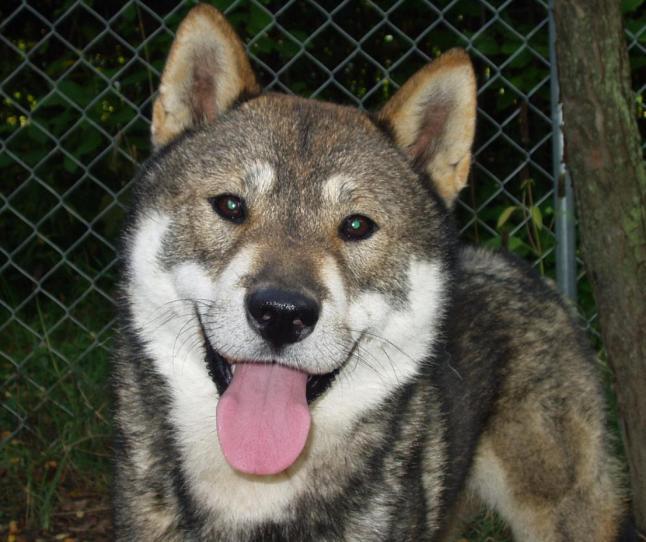
People usually look up the Shikoku Dog when they’re weighing up a rare Japanese spitz as a companion: How big do they get, what are they like to live with, and what sort of daily care keeps them steady and healthy.
The answers matter, because this is a high-drive hunting breed in a medium frame. Get the exercise, training, and containment wrong and you can end up with a bored, roaming dog. Get them right and you have a tough, alert, deeply bonded partner with a coat built for rough country.
Shikoku Dog at a glance
- Size: Medium
- Height: About 52 cm for males and 49 cm for females at the withers (breed standard), with an allowance of ±3 cm1, 2
- Weight: Not specified in the FCI/Dogs Australia breed standard; many adult dogs sit roughly in the mid-teens to mid-20 kg range depending on sex and build3
- Coat: Double coat: harsh, straight outer coat with a soft, dense undercoat1, 2
- Colours: Sesame (including black sesame and red sesame), red, and black & tan (the breed standard also notes “urajiro”/whitish patterning typical of Japanese breeds)2, 4
- Temperament (typical): Energetic, highly alert, enduring; traditionally an enthusiastic hunter and generally docile with its handler2, 5
- Life expectancy: Commonly around 10–12 years6
Origin and what the breed was built to do
The Shikoku (also called the Shikoku Ken) developed in Japan as a hunting dog, shaped by steep country and thick cover. In the mountains of Kōchi Prefecture, these dogs were valued for endurance, quick turning, and the willingness to work close to difficult game such as wild boar.7, 8
In Japan, the breed was designated a Natural Monument in 1937, a marker of cultural value as well as an attempt to protect native types during a time of change.1
Physical characteristics (what you’ll notice first)
Shikoku are compact, athletic dogs with clean-cut muscle, pricked ears, and a tail carried curled over the back or in a sickle shape. They move lightly and briskly, built to slip through uneven ground rather than lumber across it.2
The coat is classic working spitz equipment: a harsh outer layer that sheds water and debris, and a dense undercoat that insulates. Twice a year many will “blow” that undercoat, and your brush will earn its keep.2, 9
Temperament and day-to-day suitability
A well-bred, well-managed Shikoku is typically energetic and alert, with strong hunting instincts and notable endurance. In the home, many are reserved with strangers and more settled with their people, but they’re not a breed that thrives on long, dull days without a job to do.2, 5
They tend to suit experienced, outdoorsy households—people who like routine walks, structured play, and training that gives the dog clear boundaries. For first-time owners, the challenge isn’t intelligence; it’s consistency, and meeting the dog’s daily needs before the dog invents its own activities.
Children and other animals
Temperament varies by lines and socialisation. In general, steady introductions, supervision, and teaching children calm handling matter more than assumptions about the breed. With other pets, early socialisation helps, but a Shikoku’s prey drive can still switch on outdoors, particularly around fast, small animals.
Training and exercise: keeping the dog you wanted
Start early. Socialisation and training in puppyhood are less about tricks and more about building default behaviours: coming when called, settling, and moving through the world without scanning for trouble or chasing movement.10
Keep training short, clear, and regular. Harsh methods tend to backfire, especially with independent, environmentally focused dogs. Use rewards that matter to the dog (food, play, access to sniffing), and practise in low-distraction places before asking for the same behaviour on a bush track.
Exercise: what “enough” often looks like
Most Shikoku need daily exercise that includes both movement and thinking. Long walks, trail hikes, controlled running, scent games, and obedience sessions all help. A quick lap around the block may take the edge off, but it rarely satisfies the breed’s working rhythm.
- Best outlets: hiking, tracking-style games, structured fetch/tug, agility foundations, long-line exploration in safe areas
- Common mistake: providing only physical exercise without mental work, which can leave the dog fitter but no calmer
Health and lifespan
Shikoku are often described as generally healthy, but “healthy” doesn’t mean “no risks”. Hip dysplasia is a known concern in many medium breeds, and it has been reported in Shikoku as well. A veterinarian can advise on screening, weight management, and exercise choices—especially during growth and in later life.6
The commonly cited lifespan is around 10–12 years, though individuals vary with genetics, diet, and overall management.6
Choosing a breeder and reducing avoidable risk
- Ask what health screening is done in the breeding dogs (and for documentation).
- Meet the dam if possible, and observe how the dogs respond to unfamiliar people without being pushed.
- Be cautious of anyone selling on rarity alone. A rare breed still needs sound temperament and careful raising.
Grooming and coat care
The coat is practical, not fancy, and it asks for steady maintenance rather than constant salon work. Weekly brushing is usually enough outside heavy shedding periods; during seasonal coat drop, you may need more frequent sessions to clear dead undercoat and prevent it compacting close to the skin.2, 9
Bathing can be occasional. Over-washing can dry the skin and strip oils that help the coat shed dirt and water. Nail trimming, ear checks, and dental care are the quieter parts of grooming that make a noticeable difference over time.
Diet and feeding basics
Feed for an active, medium-sized dog: a complete, balanced diet appropriate for the dog’s life stage, with portions adjusted to body condition rather than the label on the bag. Keep the dog lean—extra weight adds load to joints and can quietly shorten a working dog’s comfortable years.
If you’re unsure where to start, your vet can help set a target body condition score and a practical feeding plan that matches your dog’s activity and desexing status.
Final thoughts
The Shikoku is a mountain-bred hunter dressed in a neat spitz outline: quick on the track, light on the feet, and watchful in the quiet spaces between activity. In the right home—one that offers training, daily work, and secure boundaries—the breed can be an exceptionally capable companion. In the wrong home, the same instincts that once made the dog valuable can turn into roaming, chasing, and chronic restlessness.
References
- Dogs Australia (ANKC) – Shikoku breed standard
- Dogs NSW – Shikoku breed standard
- Nihonken Hozonkai – Breed standards (medium-type height ranges; includes Shikoku)
- United Kennel Club (UKC) – Shikoku breed standard (colour definitions)
- United Kennel Club (UKC) – Shikoku breed standard (temperament/characteristics)
- PetMD – Shikoku (health issues and typical lifespan)
- Association of Nihon Ken (UK) – Shikoku Ken overview (origin and use)
- United Kennel Club (UKC) – Shikoku (history and purpose)
- PetMD – Shikoku (general care notes)
- RSPCA Australia – Why early socialisation is important for puppies

Veterinary Advisor, Veterinarian London Area, United Kingdom