
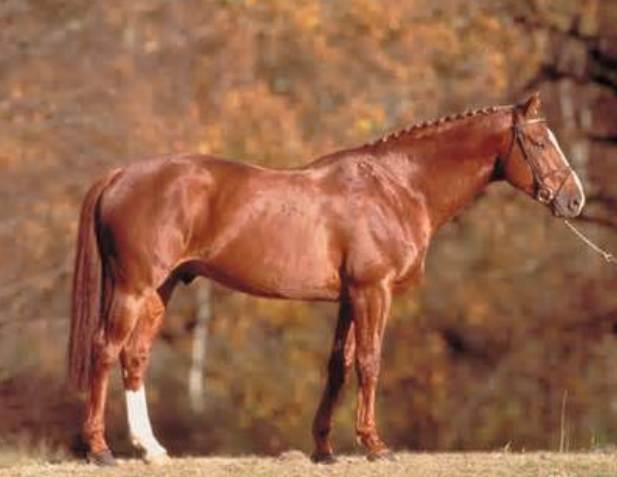
People usually start reading about the Selle Français when they’re weighing up a sport horse for jumping, eventing, or an all-round riding life—and they want to know what’s real versus brochure talk. A horse bred for power and scope can be a joy under saddle, but it also asks for the right training, management, and expectations.
The Selle Français is a French warmblood-type sport horse shaped by post-war breeding decisions and decades of competition results. Below is a clear snapshot of what the breed is, where it comes from, what it tends to suit, and what to watch for when you’re choosing (or caring for) one.
Quick facts: Selle Français (French Saddle Horse)
- Origin: France (developed as a national French sport-horse stud-book)
- Typical height: commonly around 15–16.2 hands, with variation by bloodline and type1, 2
- Build: athletic, long-shouldered, with strong hindquarters; bred for jumping and general sport performance1
- Common colours: bay, chestnut, grey (others occur)1
- Best-known disciplines: showjumping, eventing, and also dressage at various levels1, 3
- Temperament (general): often described as forward, trainable, and workmanlike—still very individual
- Longevity: many horses remain active well into their teens and twenties; lifespan varies with genetics, workload, injury history, and care
History and origins
The modern Selle Français isn’t a single ancient regional breed so much as a national decision: in 1958, several French “demi-sang” (half-bred) riding-horse types were merged into one stud-book under the name Selle Français. The aim was to consolidate French sport-horse breeding as horses moved from farm and military work into leisure and competition roles.1
Those earlier regional types drew heavily on Normandy lines (especially the Anglo-Norman), alongside Thoroughbred, Anglo-Arab, and other influences used to sharpen speed, scope, and stamina while keeping enough bone and durability for hard work.1, 4
What a Selle Français typically looks like
Selle Français horses are selected for performance first, so there is variation. Still, a familiar picture emerges: a longer shoulder that frees the forehand, a back built to carry a rider efficiently, and a hindquarter that can coil and push—useful whether the job is a careful showjumping round or a long day across country.1
Most stand somewhere around the mid-15 to mid-16 hands range, though smaller and bigger individuals exist, especially depending on the proportion of Thoroughbred or other blood in the pedigree.2
What the breed is used for (and why)
Showjumping
The Selle Français is strongly associated with modern showjumping: quick off the floor, adjustable in the canter, and often naturally keen to the fence when trained well. It’s one reason French breeding has had such a visible international footprint in jumping pedigrees and competition rings.1
Eventing
Eventing asks for a quiet kind of toughness: efficient movement, stamina, and a body that copes with repeated conditioning. Selle Français horses appear at the top level in eventing as well, including at Olympic competition.1, 5
Dressage and general riding
Many Selle Français horses go happily into dressage-focused programs, particularly where the rider values a forward-thinking horse with athletic gaits and a responsive feel. Others settle into pleasure riding, club competition, or lower-level all-round work—especially when temperament and training match the rider.1
Temperament and training: what tends to work
Selle Français horses are commonly described as intelligent and willing, but the more useful truth is simpler: they’re bred to do a job. That often means energy, sensitivity, and a quickness to learn—traits that shine with consistent handling, clear boundaries, and patient repetition.
Training usually goes best when it is:
- Consistent: steady aids and familiar routines, without drilling
- Progressive: fitness and technical difficulty built gradually, especially for jumping
- Body-aware: good farriery, saddle fit, and conditioning to protect joints and soft tissue over time
Health and soundness: realistic watch-outs
No breed comes with a guaranteed set of problems, and “prone to” can be overstated. With Selle Français horses, the bigger picture is that they are often asked to perform athletically—jumping, galloping, collecting, and landing—so joint and soft-tissue strain becomes a management question as much as a genetic one.
Respiratory issues can also appear in any stabled horse, especially where dust, mouldy hay, and poor ventilation irritate the airways. Chronic equine asthma syndromes (historically called “heaves” or recurrent airway obstruction) are well-recognised in horses and are closely linked to environmental triggers.6
Care and maintenance that keeps a sport horse going
Good management looks unglamorous: it’s feet, teeth, forage, movement, and routine checks. In Australia, government guidance on basic horse care commonly recommends regular hoof care (often every 6–8 weeks) and routine dental checks at least yearly, alongside veterinary advice for vaccination and parasite control suited to your region and horse’s workload.7
Worm control and vaccinations
Modern worm control has shifted away from automatic calendar drenching and towards vet-guided, evidence-based programs (often using faecal egg counts), partly to slow the spread of drench resistance. This approach is widely promoted in Australian horse-welfare and equestrian guidance.8, 9
Vaccination needs depend on where your horse lives, how much it travels, and what local risks are present. Practical Australian guidance emphasises speaking with a veterinarian to tailor a program, rather than relying on a single universal schedule.7, 8
Famous Selle Français horses (and a correction worth making)
It’s easy for “famous pairings” lists to drift into inaccuracies. For example, Ratina Z—often mentioned in showjumping history—was not a Selle Français; she is widely recorded as a Hanoverian mare. If you’re looking for well-known Selle Français representatives, consider horses like Baloubet du Rouet, the Selle Français stallion famously ridden by Rodrigo Pessoa at the top level of showjumping.10
Future of the breed
The Selle Français continues to evolve in the way living stud-books always do: selection follows the sport. As course design, judging trends, and rider priorities shift, breeding choices quietly follow—aiming for careful jumping technique, soundness under training, and rideability that fits modern competition and leisure life.1
Final thoughts
A good Selle Français feels like a well-made tool—balanced, capable, and ready to work. The best ones aren’t just powerful; they’re trainable and physically comfortable in their job. If you’re choosing one, look past the label and read the individual: movement, feet, wind, brain, and how the horse copes with pressure and recovery. The breed can offer a lot, but it rewards careful riding and steady care.
References
- Selle Français (breed overview and stud-book history) — Wikipedia
- Selle Français — American Museum of Natural History (AMNH)
- Fédération Équestre Internationale (FEI) — Disciplines and international sport context
- Anglo-Norman horse (influence and 1958 merge context) — Wikipedia
- Totem de Brecey (Selle Français event horse; Olympic team bronze) — Wikipedia
- Recurrent airway obstruction / equine asthma (“heaves”) — Wikipedia
- Basic horse care — Agriculture Victoria
- Horses – health (worming and vaccination guidance) — NSW Department of Education
- Modern diagnostic-based worming for adult horses — Equestrian Western Australia
- Baloubet du Rouet (Selle Français showjumping stallion) — Wikipedia

Veterinary Advisor, Veterinarian London Area, United Kingdom