
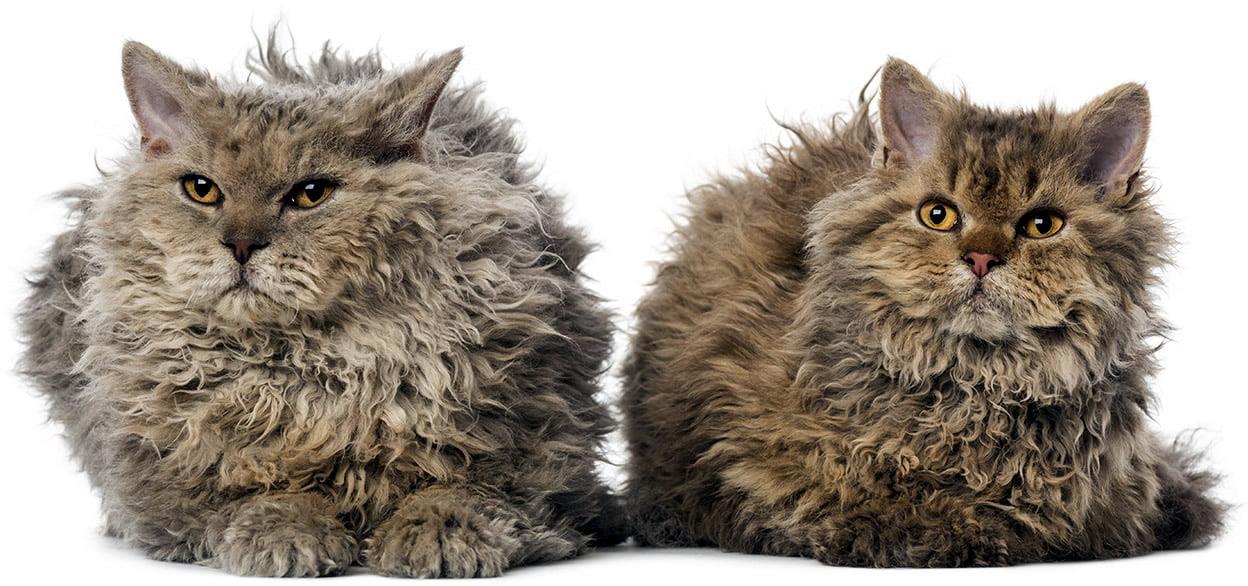
Most people end up reading about the Selkirk Rex for one simple reason: they’ve met a cat with a curly coat and want to know what living with that texture is really like—how much grooming it needs, what health checks matter, and whether the temperament suits a normal household.
The Selkirk Rex is not a “no-fuss” cat, but it is often a steady companion: plush, softly curled, and typically relaxed at home. The details that matter are practical ones—coat care (without flattening the curls), routine vet screening, and choosing a breeder who tests for inherited disease risks that can travel in from the breed’s outcross history.1, 2
- Size: Medium to large
- Adult weight: Often around 4–7 kg (varies by sex and build)
- Coat: Dense, plush, curly or wavy; shorthaired and longhaired varieties
- Colours: Wide range of colours and patterns
- Typical lifespan: Around 10–15+ years
- Temperament: Usually gentle, affectionate, playful; often described as easy-going
- Activity level: Moderate
- Grooming needs: Regular combing to prevent mats; avoid over-grooming which can reduce curl
- Key health considerations: Not “issue-free”; watch for inherited risks such as PKD and HCM in some lines
History and origin
The Selkirk Rex began in Montana (USA) in 1987, when a curly-coated kitten appeared in a litter of domestic cats. Breeding programs developed from that spontaneous mutation, and the “Rex” coat became the breed’s defining feature.2, 3
Over time, outcrossing with other breeds helped establish type and temperament. That history matters today because it can also influence which inherited health risks responsible breeders screen for.2
Physical characteristics
Selkirk Rex cats are often described as medium to large, with a solid, substantial feel under the coat. The head tends to be rounded with large round eyes and a soft expression; the body is muscular rather than fine-boned.1, 4
The coat can be short or long, but it’s the same underlying impression: dense, plush hair that sits in curls or waves. Curliness can shift with age, season, hormones and climate—one reason a kitten’s coat doesn’t always predict the adult look perfectly.2
Personality and temperament
In many homes, the Selkirk Rex settles in as a calm presence—interested in people, usually tolerant of gentle handling, and happy to join whatever’s happening without needing constant motion.1, 2
Like any cat, temperament varies by individual and upbringing. Early socialisation, predictable routines, and a household that respects a cat’s need for quiet retreat tend to bring out the best in this breed’s naturally steady style.2
Grooming and care
The Selkirk Rex coat is plush enough to tangle, especially in longer coats and around friction points (behind the ears, under the collar line, armpits, and the belly). Regular grooming prevents mats, but heavy brushing can also pull out hair and soften the curl pattern.2, 4
A practical coat routine
- Comb rather than “fluff-brush”: Use a wide-toothed comb a few times a week (more often for longhair) to lift loose hair and catch knots early.2, 4
- Go gently: Over-grooming can reduce curl and leave the coat looking flat.2
- Baths only when needed: Some Selkirks can develop a slightly greasy feel; occasional bathing may help, using a cat-appropriate shampoo.2, 4
- Don’t forget ears and nails: Regular ear checks/cleaning and nail trims are part of routine care for any breed.2
Everyday health basics (all cats, including Selkirks)
Even a well-bred Selkirk Rex still needs the same foundations as any other cat: vaccination appropriate to risk, parasite prevention (fleas and worms), regular grooming checks, and routine vet examinations to catch problems early.5, 6
Health concerns to know about
The Selkirk Rex should not be described as having “no breed-specific health issues”. While many Selkirks live healthy lives, some lines can carry inherited risks linked to the breeds used to establish the Selkirk Rex, particularly:
- Polycystic kidney disease (PKD): A known inherited condition in Persian-derived lines; responsible breeders commonly use DNA testing to reduce the chance of affected kittens.2, 7
- Hypertrophic cardiomyopathy (HCM): A heart condition seen across cats, with concern in some lines that include British Shorthair ancestry; screening approaches are best discussed with a vet and breeder (and may include cardiac ultrasound in breeding cats).2
If you’re choosing a kitten, ask what the breeder tests for, and request written results where applicable (especially for PKD). For adult cats of unknown background, your vet can advise what screening makes sense based on age and any symptoms.2, 7
Training and exercise
Selkirk Rex cats are often moderately active—more “play in bursts” than perpetual motion. Short daily play sessions, food puzzles, and a few climbing and scratching options usually suit them well, keeping muscles working and minds occupied without pushing them into overstimulation.1, 2
Training can be simple and low-pressure: many cats respond well to routine, rewards, and short sessions. Focus on useful behaviours—coming when called, calmly entering a carrier, accepting nail trims—rather than tricks for their own sake.2
Breeding and genetics (why the curls happen)
The Selkirk Rex coat is caused by a genetic variant that behaves as an incomplete dominant trait. In practical terms, cats with one copy can show a wavy/curly coat, while two copies tend to produce a tighter curl and can also be associated with differences in body type. Many breeding programs prefer heterozygous cats to maintain the more traditional, sturdy Selkirk look.3
DNA testing is available for the Selkirk Rex coat variant, which helps breeders plan matings and predict coat outcomes more reliably.3
Final thoughts
The Selkirk Rex suits people who enjoy coat care as part of the relationship: a gentle combing routine, the occasional bath, and the quiet satisfaction of keeping those curls from turning into mats. In return, many owners get a calm, affectionate cat that settles into family life without needing to dominate it.1, 2
References
- The International Cat Association (TICA) — Selkirk Rex
- Governing Council of the Cat Fancy (GCCF) — Selkirk Rex
- UC Davis Veterinary Genetics Laboratory — Selkirk Rex coat test (genetics and inheritance)
- WebMD — Selkirk Rex: characteristics and health considerations
- Agriculture Victoria — Routine health care for cats
- RSPCA Knowledgebase — What vaccinations should my cat receive?
- PetMD — Selkirk Rex health and care

Veterinary Advisor, Veterinarian London Area, United Kingdom