
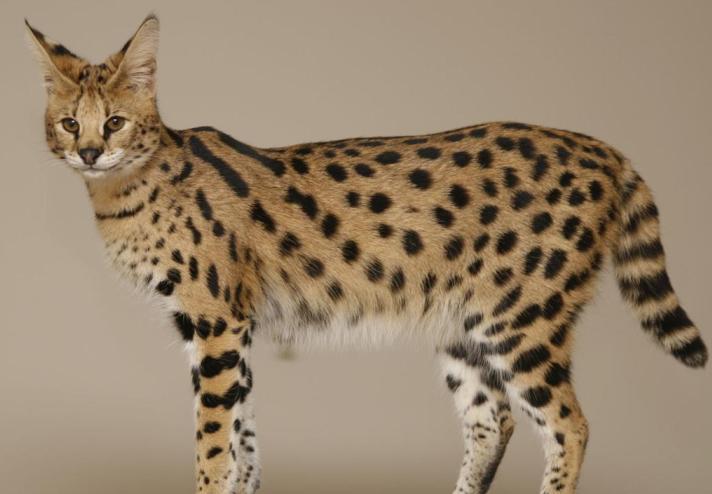
People usually start looking up Savannah cats when they’re weighing up a kitten, checking whether the breed is legal where they live, or trying to understand what “F1”, “F2” and “generation” actually mean in day-to-day life. It matters, because Savannahs can be bigger, faster, and more demanding than most companion cats, and the rules around them can be strict—especially in Australia.
Below is a grounded guide to what a Savannah cat is, where the breed came from, what living with one tends to involve, and what to check before you commit, with a clear focus on animal welfare and practical ownership.
Quick facts: Savannah cat
- Type: Domestic cat breed developed from serval–domestic cat hybrids (earlier generations may retain more wild-type traits).1
- Origin: First known Savannah kitten was born on 7 April 1986 in the United States; the breed was later developed through planned breeding programs.1
- Recognition: Accepted by The International Cat Association (TICA) for registration in 2001 and for Championship status in 2012.1
- Build: Tall, long-legged, athletic; size varies widely by generation, sex, and individual lines.3
- Coat: Usually short with bold spotting; colours and patterns vary by standard and lineage.1
- Life expectancy: Often similar to domestic cats; many sources describe a mid‑teens expectation, but individual outcomes depend on health care, genetics and lifestyle.3
What a Savannah cat actually is (and what “F1” means)
A Savannah cat traces back to a serval (Leptailurus serval) crossed with a domestic cat (Felis catus). Over generations, breeders mate Savannahs back to domestic cats or other Savannahs to produce later-generation animals, which generally behave and manage more like domestic cats while keeping the tall, spotted look people associate with the breed.1
You’ll often see “F” used as a shorthand for “filial” (generation from the serval). In simple terms:
- F1: One serval parent (first generation). Typically the most physically intense and least predictable as a household pet.
- F2, F3: Earlier-generation Savannahs with a serval grandparent or great‑grandparent.
- F4+: Later generations; often closer to typical domestic-cat management, though still generally active and athletic.
Even within the same generation label, temperament and size can vary. Breeding lines, early socialisation, and the individual cat matter as much as any letter-number code.
History and breed development
The first known Savannah kitten was born on 7 April 1986, from a domestic cat bred to an African serval in the United States. The kitten and the emerging breed were later known as “Savannah”, and the idea developed into an organised breeding program in the following years.1
TICA accepted the Savannah for registration in 2001 and later granted Championship status in 2012, which helped formalise breed standards and record-keeping.1
Physical characteristics
Seen side-on, a Savannah’s silhouette is the giveaway: long legs, a high, lean frame, and large ears set on a smaller head than you’d expect for the body. The overall effect is “wild-type” without being a wild animal in the strict sense of legal classification or day-to-day care for later generations.1
Size is variable. Some sources describe large weights for early generations, while later generations may sit closer to the upper end of ordinary domestic-cat ranges. Queensland’s biosecurity information, for example, notes that weights and shoulder height can differ substantially across generations and pedigrees.3
Temperament: what owners often notice
Savannahs are commonly described as alert, quick to learn patterns, and keen to investigate anything new. Many enjoy interactive play and will follow household routines closely. Some individuals are sociable with visitors; others are reserved, especially if poorly socialised early on.
It’s safer to think in needs rather than labels: a Savannah usually needs more climbing, more structured play, and more boredom-proofing than the average lap cat. That doesn’t make them “naughty”. It means the environment has to fit the animal.
Daily care: housing, enrichment and exercise
Savannah cats tend to do best in homes that treat the living space as a habitat: vertical territory, stable routines, and enough stimulation to keep high-energy behaviours from spilling into unwanted scratching or night-time chaos.
Helpful set-ups include:
- Multiple tall, stable climbing options (cat trees, wall shelves) and at least one quiet retreat space
- Scratch surfaces in different textures and locations (near sleeping areas and social areas)
- Puzzle feeders and “work for food” routines to extend feeding time and reduce boredom4, 5
Grooming
Most Savannahs have a short coat that’s relatively easy to maintain. A weekly brush is usually enough to lift loose hair and check skin condition. Nail trims, dental care, and parasite prevention still matter—especially for cats that spend time outdoors or in multi-pet households.
Diet and nutrition: avoid the numbers, feed the cat in front of you
The original draft’s “60–80 grams of protein per day” is too specific to be reliable across individuals. Protein needs vary with body size, life stage, activity level, and whether the cat is pregnant, growing, or managing a medical condition.
A more dependable approach is to base the diet on a complete and balanced cat food suited to life stage and health status, then adjust amounts according to body condition and veterinary advice. RSPCA guidance also emphasises that cats are obligate carnivores and that a balanced commercial cat food is the safest foundation for most households.6, 7
Practical feeding habits that often help active cats:
- Offer measured portions across the day (many cats prefer multiple smaller meals)
- Use puzzle feeders for some meals to slow eating and increase activity4, 6
- Keep fresh water available in multiple spots (especially if feeding mostly dry food)6
Health concerns: what to discuss with a vet
Any cat can develop heart disease, kidney disease, dental disease and urinary tract issues. With Savannahs, the more useful question is not “what are they prone to?” but “what screening and prevention makes sense for this cat’s age, size, and breeding history?”
Before buying a kitten, ask the breeder for:
- A clear pedigree and generation information
- Veterinary records and vaccination status
- What health screening is performed in their lines (and what is not)
Once the cat is home, routine veterinary check-ups and weight monitoring matter. With athletic cats, small weight changes can be easy to miss until they’re significant.
Training: yes, some can learn a lead, but start with behaviour foundations
Savannah cats can often be trained using reward-based methods. Some will accept harness training and learn simple cues, but it depends on early handling, the individual’s tolerance, and how safely you introduce novelty.
If you try lead training, keep it slow:
- Introduce the harness indoors first, in short sessions
- Reward calm behaviour and end sessions before frustration builds
- Prioritise safety: a startled cat can slip poorly fitted gear quickly
Legal considerations in Australia (important)
If you’re in Australia, treat legality as your first checkpoint, not an afterthought. At the national level, Australian Government guidance states that non-domestic cat hybrids (including Savannah cats) cannot be imported into Australia under environmental protection laws.8
At the state level, rules can be stricter again. Queensland, for example, lists Savannah cats as a prohibited invasive animal and states they cannot be kept in Queensland, with reporting obligations and penalties applying.3
Because laws and enforcement differ by state and territory, confirm the rules with your relevant authority before you put money down on a kitten or plan any move with the cat already in your care.8, 9
Final thoughts
A Savannah cat is built for movement: tall, alert, quick to engage with its environment. In the right home—one that can offer space, structure, and steady enrichment—they can be absorbing companions. In the wrong home, the same traits can turn into stress, escape attempts, and management problems.
Before you commit, check legality where you live, ask direct questions about the kitten’s generation and socialisation, and plan your home like you’re setting up a small ecosystem rather than buying a decorative pet.
References
- The International Cat Association (TICA) – Savannah
- TICA Savannah Breed Section – Savannah Cat History
- Queensland Government (Business Queensland) – Savannah cat (prohibited invasive animal)
- RSPCA Pet Insurance – Cat feeding behaviours
- RSPCA Pet Insurance – What should I feed my cat?
- RSPCA Knowledgebase – What should I feed my cat? (Updated 20 November 2025)
- RSPCA Knowledgebase – Do cats have special nutritional requirements?
- Australian Government (DAFF) – Cats and dogs frequently asked questions (ineligible hybrid cat breeds)
- Australian Government (DCCEEW) – Household pets: hybrid pets and the Live Import List

Veterinary Advisor, Veterinarian London Area, United Kingdom