
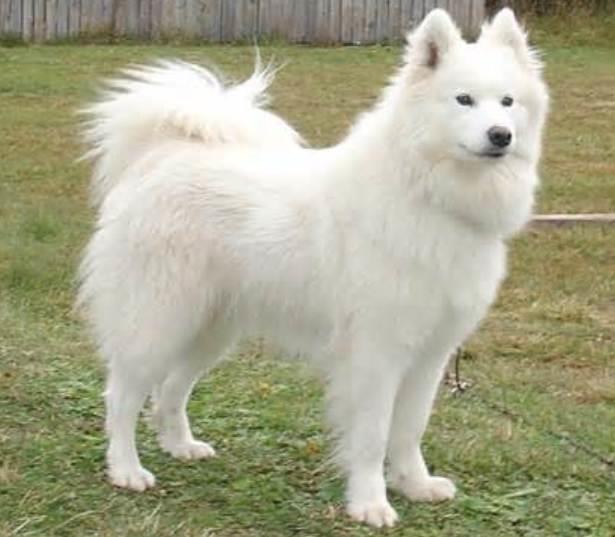
People usually look up Samoyeds when they’re weighing up a puppy, checking whether the breed will cope with their household, or trying to make sense of the coat, the noise, and the exercise demands before they commit. A Samoyed can be a steady, affectionate companion, but the same traits that make them famous—thick coat, sociable nature, bright mind—also bring very real day‑to‑day responsibilities.
Below is a clear guide to what a Samoyed is like to live with, the care they genuinely need, and the health checks worth asking about before you bring one home.
Size: Medium to large
Weight: Varies; adults are often around 16–30 kg depending on sex, build, and condition (weight should be in proportion to height rather than a fixed target)1, 2
Height: 51–56 cm (male), 46–51 cm (female)1
Coat: Thick, weather‑resistant double coat; usually white, but can be cream or white with biscuit markings1, 3
Life span: Commonly around 12–14 years (individual variation is normal)
Temperament: Intelligent, alert, generally affectionate and sociable; unprovoked nervousness or aggression is undesirable3
Trainability: Bright and responsive, but benefits from consistent, reward‑based training
Exercise needs: High; plan for daily activity plus mental work
Grooming: High; frequent brushing and seasonal “blow out” shedding
Health issues to know about: Hip dysplasia; inherited eye disease (including forms of progressive retinal atrophy); and an important inherited kidney disease seen in the breed (hereditary nephritis / Samoyed hereditary glomerulopathy)4, 5, 6
History and origin of the Samoyed
Samoyeds were developed as working dogs by the Samoyed people of Siberia. They were used for practical tasks—hauling, herding, hunting—and they lived in close quarters with people, a history that still shows in the breed’s strong preference for company and routine.7
Physical characteristics
The Samoyed’s outline is built for cold, movement, and endurance: a compact, muscular body, strong legs, and a thick tail often carried over the back when alert. The breed’s best-known feature is the dense double coat—soft undercoat for insulation, harsher outer coat to shed weather and dirt.3
In the breed standard used widely by kennel clubs, adult height is listed as 51–56 cm at the shoulder for males and 46–51 cm for females, with weight expected to match the dog’s overall size and condition rather than sit at a single number.1, 3
Temperament and personality
A well-bred, well-socialised Samoyed is typically friendly, alert, and people-focused. Many are naturally “talkative”, using a range of barks and vocalisations, especially when excited or under-stimulated. They tend to do best when they are included in daily life rather than left alone for long stretches.3
Independence can show up as stubbornness. It isn’t malice—more a working-dog habit of making their own decisions—so training works best when it is steady, clear, and rewarding, without harsh corrections.
Training and exercise needs
Samoyeds are active dogs with the engine of a worker and the curiosity of a problem-solver. Daily exercise matters, but so does giving their brains something to do. Without enough outlet, many will invent their own activities—digging, chewing, pacing, or vocalising.
- Exercise: Aim for at least an hour a day for most adults, split across walks and free movement in a secure area (adjust for age, heat, and health).
- Training: Short, regular sessions suit them. Build reliable recall and loose-lead walking early, because a confident Samoyed can pull like a small sled dog.
- Socialisation: Gentle, structured exposure to people, dogs, handling, grooming tools, and different environments while young helps prevent fearfulness later.
Grooming and coat care
The coat is not decoration. It’s insulation and weatherproofing, and it needs maintenance to stay breathable and free of mats. Regular brushing removes loose undercoat, spreads skin oils, and helps you spot grass seeds, parasites, or skin irritation early.8
- Brushing: Several times a week for many Samoyeds, and more during seasonal shedding. Check friction areas (behind ears, armpits, groin) for mats.
- Bathing: As needed, using a dog-appropriate shampoo, rinsed thoroughly. Over-bathing can dry the skin.
- Clipping/shaving: Talk with your vet or an experienced groomer before making big changes to a double coat. Double-coated breeds can have complications after clipping, including delayed regrowth (post-clipping alopecia) in plush-coated dogs.8
Common health issues (and what to ask breeders about)
No breed is “problem-free”. The practical goal is to reduce preventable risk by choosing a responsible breeder, asking for proof of screening, and keeping your dog lean and well-conditioned.
Hip dysplasia
Hip dysplasia is a developmental condition where the hip joint does not fit together as it should, which can lead to arthritis and pain. Risk is influenced by genetics and environment, including excess weight.4
Ask for: documented hip scoring/screening results for both parents, and a conversation about the breeder’s long-term results and selection practices.
Inherited eye disease (including progressive retinal atrophy)
Progressive retinal atrophy (PRA) is a group of inherited diseases where the retina degenerates over time, leading to vision loss. Different genetic forms exist across breeds, which is why appropriate testing and eye exams matter.9
Ask for: current eye examination certificates (where available) and any relevant DNA test results for known issues in the breeder’s lines.
Hereditary nephritis (Samoyed hereditary glomerulopathy)
This is an inherited kidney disease seen in Samoyeds (often described as hereditary nephritis or Samoyed hereditary glomerulopathy). It is X-linked, tends to be more severe in males, and can lead to early kidney failure.5, 6
Ask for: evidence of genetic testing where appropriate, and a clear explanation of whether the line has any known history of the disease.
Samoyed as a family pet: practical pros and cons
When a Samoyed fits well
- You want a social dog that enjoys being part of the household most of the day.
- You’re happy to exercise daily and add training as a normal routine.
- You can manage regular grooming and seasonal shedding.
When it’s likely to be hard work
- Long weekdays alone with little human contact.
- Low tolerance for barking or “talking”.
- Little time for coat maintenance (mats can become painful and lead to skin problems).
Finding a reputable breeder (or adopting)
In Australia, one of the simplest ways to protect yourself—and the dog—is to avoid buying sight unseen. Visit the property where the puppies were raised, meet the mother, and look closely at how the dogs live day to day.10
- Don’t agree to meet in a car park or accept delivery.
- Do ask for written proof of health screening and any genetic testing relevant to the breed.
- Do choose adoption through a reputable welfare organisation if that suits your situation.
Final thoughts
A Samoyed is a dog built for movement, weather, and company. If you can offer daily exercise, steady training, and the patience to keep that heavy coat clean and unmatted, you’ll usually get a bright, sociable companion who settles best when they’re included—quietly present, watching the household like a small white cloud with opinions.
References
- The Kennel Club (UK) – Samoyed breed standard
- ANKC Standard (reproduced) – Samoyed height guidance and “weight in proportion to size” note
- The Kennel Club (UK) – Samoyed characteristics and temperament
- Samoyed Club of America – Health issue: skeletal system (hip dysplasia overview)
- Samoyed Health Foundation – Hereditary nephritis (Samoyed hereditary glomerulopathy)
- Samoyed hereditary glomerulopathy (overview with primary literature links)
- Westminster Kennel Club – Samoyed breed background
- VCA Animal Hospitals – Grooming and coat care (double coats and clipping considerations)
- Merck Veterinary Manual – Progressive retinal atrophy (PRA) in dogs
- RSPCA Australia Knowledgebase – Avoid supporting puppy farms (buyer checks)

Veterinary Advisor, Veterinarian London Area, United Kingdom