
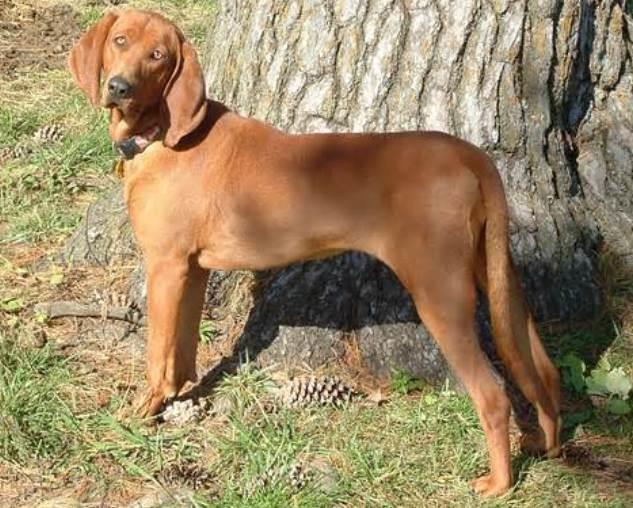
People usually start searching Redbone Coonhound details when they’re weighing up a new dog, trying to match energy levels to their household, or checking whether a “red coonhound” they’ve met is likely to suit Australian living. The practical questions come fast: how big do they get, how much exercise do they really need, and what health issues should you plan for?
The Redbone Coonhound is a scent hound developed in the United States, built for long nights on the trail and a steady, carrying voice. In a home setting, that same stamina and nose can be a joy or a challenge, depending on your routine, neighbours, and fencing.
Redbone Coonhound at a glance
- Height (at the shoulder): Males 56–69 cm; females 53–64 cm (breed standard ranges).1
- Weight: Not fixed in the UKC standard; typically proportionate to height and “medium build”. Many adults fall roughly in the 20–36 kg range depending on sex and build.1
- Coat: Short, close, glossy “hound type” coat.1
- Colour: Solid red preferred; small amounts of white on brisket/feet not objectionable (varies by standard wording).1
- Grooming: Low-maintenance coat; weekly brushing usually enough, plus routine ear care.7
- Temperament (typical): Even-tempered, active, scent-driven; can be independent outdoors and affectionate at home.6
- Life expectancy: Commonly around 10–12 years (some sources quote a wider range).5
History and origin
The Redbone Coonhound developed in the United States from foxhound-type dogs brought over by European immigrants, then shaped further for night hunting and trailing. It sits within the broader “coonhound” tradition: dogs bred to follow scent over distance and, when required, hold game at bay by “treeing”.5, 6
Modern kennel recognition varies by registry. The American Kennel Club (AKC), for example, recognised the breed in 2009, while the United Kennel Club (UKC) has long maintained a detailed breed standard used widely by coonhound fanciers.1, 6
Physical characteristics and appearance
Redbones are medium-to-large hounds with a deep chest, strong legs, and compact, “cat-like” feet built for endurance. The head is classic hound: long, low-set ears and a nose that seems to lead the body through the world.1
The coat is short and close, usually a rich red. Many dogs are a clear, solid red, though small white markings can occur (especially on the chest or feet) and are not necessarily considered a problem in some standards.1
Temperament and day-to-day personality
At home, a well-exercised Redbone is often calm and companionable. Outdoors, the breed tends to switch on quickly: nose down, scanning the air, following invisible stories laid into grass, bark and dust.6
A few traits to expect (and plan around):
- Scent focus: They may ignore you when a trail is “live”, so recall needs patient training and realistic management.6
- Vocal tendencies: Many coonhounds have a carrying voice. That can be part of the charm, but it matters in suburban Australia with close fences and noise-sensitive neighbours.
- Social style: Typically friendly with people and often good with other dogs, especially with early socialisation. Smaller pets may trigger chase behaviour in some individuals, so introductions and management are important.6
Training and exercise needs
This is a working hound with fuel in the tank. The exact amount of exercise varies by age and individual, but most Redbones do best with daily activity plus something to occupy the mind and nose.6
Useful, realistic outlets include:
- brisk walks with structured sniffing time (sniffing is not “wasted” exercise for a scent hound)
- trail-style games (treat trails in the garden, scent work classes, hide-and-seek)
- training that rewards focus around distractions, built up slowly
Whatever the breed, daily exercise is a baseline commitment. If you can’t reliably offer at least one decent walk most days, it’s worth reconsidering high-energy types and looking for an adult dog whose needs are already clear.8
Health concerns and lifespan
Redbone Coonhounds are often described as generally robust, but like many medium-to-large dogs they can be affected by hip dysplasia. Hip dysplasia is a developmental problem of the hip joint that can lead to arthritis; signs can include stiffness, pain after exercise, reduced range of motion, or a “bunny-hopping” gait. Diagnosis is typically via veterinary examination and radiographs.2
Long, pendulous ears can also create the warm, low-airflow conditions that make ear problems more likely, particularly if a dog swims often or lives in humid conditions. Regular ear checks and sensible cleaning (guided by your vet) help reduce trouble.7
Life expectancy is commonly cited around 10–12 years, though individual longevity depends on genetics, weight management, fitness, and veterinary care.5
Grooming and care
The coat is straightforward: a weekly brush to lift loose hair and dust is usually enough. Because the coat is short, it won’t hide much—ticks, grass seeds, and minor scrapes are easier to spot if you do a quick hands-on check after bush walks.7
Basic care staples for this breed include:
- Ears: check regularly; keep clean and dry as advised by your vet7
- Nails: trim as needed (active dogs may still need help, especially on softer ground)
- Weight: keep lean—extra kilograms amplify joint wear, especially if hip dysplasia is present or developing2
Redbone Coonhound as a working dog
In the field, the Redbone is valued for scenting ability and stamina—built to follow a trail over distance, often in challenging terrain, and to “tree” game. That same toolkit can translate well into structured activities like tracking-style games and scent work, which can be more satisfying than endless ball throwing for many hounds.6
Redbone Coonhound as a family pet: compatibility and considerations
A Redbone can live happily as a family dog, but the fit is best when the household enjoys routine, outdoor time, and training that’s consistent rather than forceful. They’re often affectionate, but they’re not typically a “set and forget” breed—boredom finds its own outlets, and they’re good at following their nose into trouble if fences and gates are casual.
Before committing, it helps to be honest about:
- Noise tolerance: coonhounds can be vocal, especially if under-exercised or stimulated by scents and movement over the fence
- Containment: secure fencing matters; scent hounds can roam when an interesting trail appears
- Other pets: manage introductions carefully if you have cats, rabbits, or poultry—individual prey drive varies, but the instinct is real in many lines6
Final thoughts
The Redbone Coonhound is a clean-lined, red-coated athlete with a serious nose and a steady engine. In the right home—one that expects daily movement, values scent-based enrichment, and trains with patience—it can be a warm, companionable dog. In the wrong setup, the same natural gifts can become noise complaints, fence-climbing, and long, wandering afternoons.
References
- United Kennel Club (UKC) — Breed Standards: Redbone Coonhound
- Merck Veterinary Manual (Pet Owner Version) — Hip Dysplasia
- Merck Veterinary Manual (Professional Version) — Hip Dysplasia in Dogs
- Purina — Redbone Coonhound breed overview
- Pet Health Network — Redbone Coonhound
- WebMD — The Redbone Coonhound: What to Know
- VCA Animal Hospitals — Ear infections in dogs (otitis externa)
- RSPCA Pet Insurance Australia — Considerations when choosing a dog (exercise requirements)

Veterinary Advisor, Veterinarian London Area, United Kingdom