
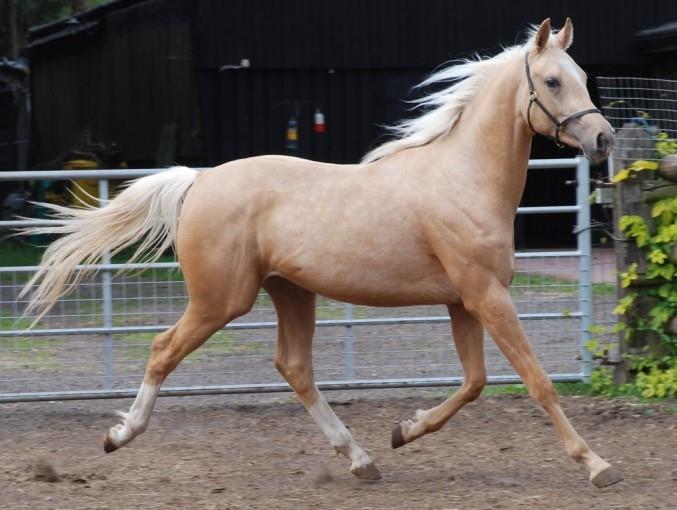
People usually start looking up the Quarab when they’re checking whether a horse is “really” a Quarab, working out what that label means on paperwork, or deciding if this kind of cross will suit the riding they actually do. The details matter: registration rules are specific, and the same horse can look more “Arabian” or more “stock horse” depending on its breeding.
A Quarab is not an ancient Middle Eastern breed, and it isn’t a Barb cross. It’s a modern, purpose-bred type that blends Arabian influence with American stock-horse bloodlines (Quarter Horse and, in some registries, Paint). Below is a clear, practical profile: where the type came from, what it tends to look like, what it’s commonly used for, and how registration is handled in Australia and overseas.
What a Quarab horse is (in plain terms)
A Quarab is a part-Arabian horse bred exclusively from Arabian and stock-horse lines—most commonly Arabian × American Quarter Horse, and in some systems also Arabian × American Paint Horse, or a mix of all three.1, 2
Because the ingredients can be blended in different proportions, Quarabs don’t come in one fixed “look”. Some are compact and heavily muscled like a stock horse; others carry more of the lighter, longer Arabian outline.1, 3
Origins and history
The Quarab developed in the United States, emerging from deliberate Arabian–stock horse crossings that became common enough to inspire dedicated registries. A Quarab registry was formed in 1984, and the International Quarab Horse Association (IQHA) was established in 1999 and is widely cited as the ongoing breed association internationally.1
In Australia, “Quarab” is also used as a registry category within the Arabian Horse Society of Australia (AHSA), with defined blood-percentage rules and parentage requirements.2
Conformation and typical size
Most Quarabs sit in a practical middle ground: handy to handle, strong through the hindquarter, and often with a more refined head than a typical stock horse. Depending on the breeding ratio, you may see:
- a short-to-moderate back and a deep girth
- well-muscled shoulders and hindquarters (stock-horse influence)
- a more arched neck, finer muzzle, broader forehead and larger nostrils (Arabian influence)
Height is commonly around 14–16 hands (about 142–163 cm).3
Weight varies widely with type and condition. If you need a realistic estimate, treat “900–1200 lb” (about 410–545 kg) as a broad ballpark rather than a standard—many individuals will sit outside it, especially at the lighter, more Arabian-leaning end.
Colour and markings
Coat colours and patterns depend on the foundation breeds used. Solid colours are common, and stock-horse patterns can appear where Paint breeding is part of the pedigree (in systems that allow it).1, 3
Temperament and way of going
Quarabs are often described as trainable, forward and attentive, with enough stamina for long days and enough power for short, sharp work. As with any cross, the individual matters more than the label: handling, early education, and the particular family lines will shape what you actually feel under saddle.
Common uses (where Quarabs tend to fit)
The Quarab’s appeal is its range. These horses are commonly seen in both Western and English disciplines, as well as general pleasure riding.1, 3
- Trail and pleasure riding: sure-footed, sensible types are often chosen for long, steady kilometres.3
- Endurance and distance work: Arabian influence can show up as efficient movement and recovery, especially in the more “Pleasure/Arabian-leaning” type.1
- Ranch and stock work: stock-horse build and quick acceleration can suit mustering-style tasks where applicable and trained appropriately.1
- Dressage, jumping and all-round competition: some individuals excel, particularly where athleticism and rideability meet good basic training.1, 3
Polo is possible for the right individual, but it isn’t a defining or especially common “breed use” in the way it is for purpose-bred polo ponies.
Breeding and registration (what to check)
Australia: AHSA Quarab rules
In Australia, the Arabian Horse Society of Australia defines a Quarab as derived exclusively from Arabian and Quarter Horse breeding, Arabian and Paint breeding, or a blend of Arabian, Quarter Horse and Paint. The Arabian blood proportion must be at least 12.5%, and the mature height must be at least 14hh, with additional parent-registry requirements (Arabian, Quarter Horse and Paint horses must be registered with recognised stud books).2
International: IQHA (common requirements cited)
Internationally, the IQHA is frequently referenced as a dedicated Quarab registry. A commonly cited requirement is that a horse must have at least 1/8 Arabian blood and at least 1/8 stock-horse blood (Quarter/Paint), with breeding limited to the founding breeds (Arabian, Quarter Horse and Paint) under the registry’s standards.1
A quick checklist before you buy or breed
- Pedigree and papers: confirm the horse’s parentage and that the parents are registered in the relevant recognised registries for their breed.2, 3
- Blood percentage: check the Arabian percentage if you are aiming for AHSA Quarab registration (minimum 12.5% in the AHSA rules).2
- Mature height expectation: AHSA specifies a minimum mature height of 14hh for Quarabs in its register.2
- Match type to job: the more stock-horse-leaning individuals often suit quick, powerful work; the more Arabian-leaning type often suits distance and lighter feel—though there are exceptions in every direction.1, 3
Training and handling
Quarabs typically do best with quiet, consistent handling and clear boundaries. Keep sessions short enough to stay thoughtful, not rushed. Reward the try. If the horse is reactive, treat it as information—often a sign to slow down, simplify the question, and let the horse settle before you add pressure or speed.
Sound basics matter more than discipline-specific tricks: straightness, calm transitions, and a body that can carry itself without bracing. The cross can give you athletic potential, but good training decides whether that potential becomes a safe, useful riding horse.
References
- Quarab (breed overview, history and registry notes) – Wikipedia
- Registry (including Quarab definition and requirements) – Arabian Horse Society of Australia
- Quarab Horses – Oklahoma State University, Breeds of Livestock
- International Registration Application (example of registration documentation requirements) – American Quarter Horse Association
- Registration (registry services information) – Arabian Horse Association
- Quarab (overview and registry information) – Associazione Italiana Cavallo Quarab (AICQA)
- American Quarter Horse Association (background on the Quarter Horse registry) – Wikipedia
- IQHA blood-percentage requirement summary (1/8 Arabian and 1/8 stock horse cited) – Wikipedia (Quarab)

Veterinary Advisor, Veterinarian London Area, United Kingdom