
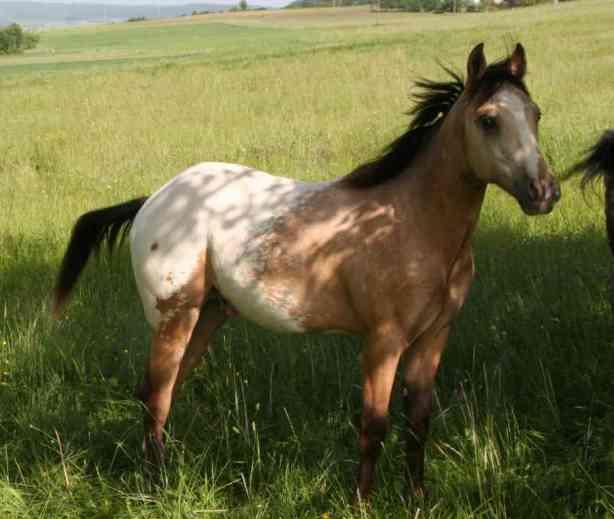
People usually look up the Pony of the Americas when they’re weighing up a child’s next mount, trying to identify a spotted “little horse” at the agistment paddock, or checking what makes a POA different from an Appaloosa or a stocky pony cross.
The practical questions come quickly: how big do they get, what are they like to handle, what can they do, and what tends to go wrong—especially around weight and sore feet. The notes below stick to what the breed registry asks for, what owners commonly use them for, and the everyday care points that matter in Australian conditions.
At a glance
- Origin: Developed in the United States; the breed registry began in 1954 in Iowa.1, 2
- Height: Registry height is commonly given as 46–56 inches (about 11.2–14 hands).1, 2
- Type: A pony-sized horse with Appaloosa-style “leopard complex” patterning as a defining feature.2, 3
- Typical uses: Children’s riding pony, performance and pony club activities, trail riding; also harness/driving in many circles.2
- Common management watch-outs: Like many easy-keeping ponies, they can be prone to weight gain, which increases laminitis risk if diet and pasture aren’t managed.7, 8
What makes a Pony of the Americas (POA) a POA?
A Pony of the Americas is best thought of as a small, handy “stock-horse-shaped” pony with Appaloosa colouring. The registry was built around a specific look: a compact, athletic riding pony for young riders, with the refinement of Arabian influence, the muscling of a Quarter Horse type, and unmistakable Appaloosa patterning.1, 2
Bloodlines can be mixed (the registry has been described as “open”), but entry depends on meeting the physical criteria—especially height and colour—rather than being a closed, purebred population in the strictest sense.2
History: a breed that began with one spotted colt
The POA story starts in Mason City, Iowa, in 1954. A colt later named Black Hand—an Arabian/Appaloosa/Shetland cross—became the foundation animal, and the Pony of the Americas Club was formed the same year to register and develop similar ponies.1, 2
Early height limits were tighter and later expanded, with the modern upper limit commonly cited at 56 inches. Over time, Shetland influence became less prominent as breeders selected for that “small horse” silhouette while keeping the Appaloosa look.1, 2
Physical characteristics
Height and build
Most POAs sit in that in-between space: bigger than many children’s ponies, smaller than a full-sized horse. Breed sources commonly describe a mature height range around 46–56 inches (about 11.2–14 hands).1, 2
The build is usually sturdy and athletic rather than fine-boned—short-coupled enough to feel secure for smaller riders, but with a forward, workmanlike way of going when fit and well trained.2
Coat and markings (the Appaloosa “leopard complex” look)
Appaloosa-type patterning is central to the POA identity. You’ll see blanket patterns, leopard spotting, snowcap rumps, and the characteristic Appaloosa “extras” such as mottled skin and white sclera around the eye in many individuals.2, 3
Temperament: what owners usually notice
The breed is widely promoted as family-friendly: sensible, trainable, and suited to youth riding programs. Individual temperament still comes down to handling and education, but POAs are generally selected for steady minds and willingness under saddle and in hand.2, 4
They also tend to be socially oriented and alert—often quick to learn patterns, for better or worse. Quiet consistency in routines matters more than force.
Common uses: riding, pony club and harness
POAs are commonly used as children’s mounts and all-rounders. They’re often seen doing:
- pony club and riding school work
- showing (in-hand and ridden)
- trail riding and general pleasure riding
- harness/driving, depending on build and training2
They’re small enough to be manageable, but many have enough strength and engine to step into more technical work—jumping grids, barrel patterns, or introductory dressage—when the rider is balanced and the pony is correctly conditioned.
Care and training: the points that matter day to day
Start with the basics, and keep it plain
POAs usually do best with calm repetition: good leading manners, standing tied, feet handled, and a steady response to pressure-and-release. Because many are bright and food-motivated, short sessions with clear boundaries tend to land better than long drills.
Weight management is not optional
Like many pony types, POAs can be “good doers”. Excess condition is not just a cosmetic issue; obesity is associated with insulin dysregulation, which increases the risk of laminitis.8
In Australian paddock life, the usual trouble spots are lush improved pasture (especially during high-risk growth periods), too much hard feed for the workload, and underestimating how efficiently ponies can graze.7
Practical laminitis risk reduction (especially for easy keepers)
- Monitor condition regularly (photos help; so does a weigh tape) and act early, before cresty neck and fat pads settle in.
- Control pasture intake during risky periods; consider smaller yards, track systems, or limited turnout where appropriate.7
- Base the diet on fibre (suitable hay/roughage) and keep non-structural carbohydrate intake in mind for animals prone to laminitis.8
- Keep feet on a schedule with a farrier/trimmer; small changes in balance matter in smaller hooves.
- Don’t “work through” sore feet; if laminitis is suspected, treat it as urgent and get veterinary help.
Health concerns and breed-specific issues
The earlier draft overreached here. POAs are not widely recognised as a breed with routine, breed-specific genetic conditions like “hydrocephalus” as a typical headline problem. The more reliable, repeatable risk in real stables is management-related: weight gain, insulin dysregulation, and laminitis in easy keepers if pasture and feed aren’t matched to workload.7, 8
Rules and regulations in Australia: what’s actually required
There isn’t a general Australian rule that makes it illegal to own a Pony of the Americas without a permit. Horse ownership requirements are usually about land use, welfare, transport, and (for some movements) biosecurity—not a blanket permit tied to this specific breed.
If you’re importing a horse, that’s different: import conditions and quarantine apply and change over time. For example, the US Department of Agriculture outlines specific import requirements for horses arriving from Australia, including quarantine and testing.9
Famous POAs and “world records”
The earlier examples (such as “Silver Streak”, “Chocolate Chip”, and claims of “world records on the track”) aren’t reliably documented in reputable breed or sporting sources, so they’ve been removed.
If you want to include notable individuals, the cleanest approach is to draw from official POAC hall-of-fame pages, sanctioned show records, or verifiable registry publications—names, years, titles, and the organising body that awarded them.
Future outlook
The POA remains a practical niche: a spotted, medium-sized youth mount with enough scope for a wide spread of disciplines. Its long-term health as a “breed” depends on careful selection for soundness and temperament, and on keeping the registry’s defining features—useful size, good conformation, and genuine Appaloosa patterning—without drifting into extremes.2, 4
References
- Pony of the Americas Club (POAC) – POA History
- Wikipedia – Pony of the Americas (overview and history summary)
- Encyclopaedia Britannica – Pony of the Americas
- Pony of the Americas Club (POAC) – Official breed organisation homepage
- Oklahoma State University – Breeds of Livestock: Pony of the Americas
- Pony of the Americas Club (POAC) – Registration
- Pony Club NSW – Laminitis (risk factors and pasture management)
- Geor RJ (2009) – Dietary management of obesity and insulin resistance: countering risk for laminitis (review)
- USDA APHIS – Import Horses from Australia (requirements and quarantine)

Veterinary Advisor, Veterinarian London Area, United Kingdom