
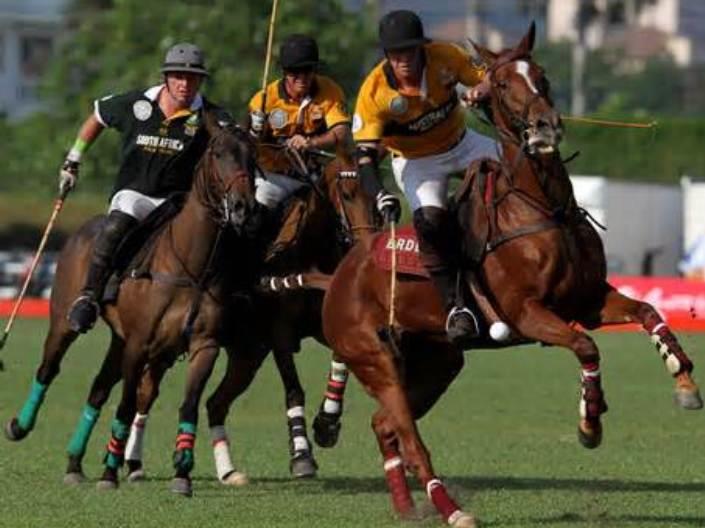
Most people search for polo when they’re trying to decode what they’re watching: how long a match runs, why players suddenly change direction, what counts as a foul, and why the horses swap so often. Get the basics wrong and the whole thing looks like chaos; get them right and the game starts to read like a moving map.
Below is a clear, practical overview of where polo comes from, how it’s played today, and what equipment and match formats you’re likely to see in Australia and internationally—anchored in current rule guidance where it matters most.1, 2
The history of polo: from Persian courts to the modern rulebook
Polo is widely accepted to have roots in ancient Iran (Persia), where mounted ball games (often referred to as chovgan) were played as courtly sport and as training for skilled horsemanship and cavalry manoeuvres.8, 9
In the 1800s, British officers encountered and adapted forms of the game in India—particularly in the north-east—and from there polo was organised into clubs and codified rules that spread through the UK and beyond.10
How polo works (the parts spectators usually miss)
The aim
Two teams try to score by striking a small ball with a long-handled mallet and sending it between the opponent’s goal posts. After each goal, teams change ends—one of the simple devices that keeps wind and ground conditions from favouring one side all match.2
Teams and positions
On a full-sized grass field, polo is played with four riders per team.1 Players wear numbers 1 to 4, with roles that tend to settle into patterns:
- No. 1: mostly attacking pressure near goal
- No. 2: supports attack, marks opponents, disrupts play
- No. 3: often the main playmaker (commonly the strongest all-round rider)
- No. 4 (“Back”): last line of defence near goal
These aren’t rigid job titles. As the ball turns and the “line of the ball” shifts, players rotate in and out of attack and defence in seconds.7
Chukkas (periods) and match length
Matches are divided into periods called chukkas. Many club matches run 4 to 6 chukkas, and the full version of the rules allows up to 8, depending on level and competition format.1
Chukka timing is not always “exactly seven minutes” in practice. Under common rules, a bell sounds at 7 minutes, play continues until the ball goes out or the umpire stops play, or for up to another 30 seconds before a second bell ends the chukka.1
In Australia, chukka timing can vary by grade under Australian Polo Federation (APF) updates (for example, higher-goal polo using a 6½-minute first bell with a 7-minute maximum, while some lower-goal polo allows up to 7½ minutes). Always check the competition conditions for the day if you need the exact timing for a particular match or tournament.3, 4
The core safety rule: “right of way” (why fouls happen)
Most polo rules are built around one idea: preventing dangerous angles and collisions when horses are moving at speed. The “right of way” is generally tied to the line the ball is travelling on; the player with the best claim to that line is protected, and others must not cross it in a way that creates danger.3
This is why some challenges that look fair from the sideline are penalised: it’s not just about who touched the ball—it’s about whether the approach creates risk to horses and riders.3
Equipment you actually need (and what’s non-negotiable)
Mallets
Polo mallets are traditionally made with a cane shaft and a wooden head, and players choose length to suit their height, riding style, and the pony they’re playing. The practical test is simple: you must be able to reach the ball cleanly from the saddle without over-reaching or collapsing your position.
Horses (often called “polo ponies”)
Despite the nickname, polo horses are usually full-sized horses chosen for agility, responsiveness, and repeated acceleration and deceleration. Players typically change horses between chukkas to keep each mount fresh and safe, especially as speed and contact increase.2
Protective gear (helmets in Australia)
In Australia, helmet requirements are not casual suggestions. The APF has published updated helmet rules that become effective from 1 March 2026, including specified safety standards and compliance expectations for match play.5
Even before those changes take effect, the APF has long required helmet use and has progressively tightened specifications (including harness requirements) as part of player welfare and safety updates.6
Types of polo you’ll see: grass, arena, and snow
Grass polo (outdoor)
This is the classic format: four riders per side on a large field. It’s the version most people mean when they say “polo”, and it’s the basis for many established rule structures and handicaps.1
Arena polo
Arena polo is played in an enclosed space and commonly uses boards to keep the ball in play. Team sizes are often smaller than outdoor polo, and the game reads differently: tighter angles, quicker rebounds, and more frequent contests along the boards.1
Snow polo
Snow polo is played on snow or ice surfaces, usually as a special event format with conditions and equipment adapted to the footing and visibility. The spectacle is obvious; the horsemanship underneath it is still the point.
Handicaps: why some matches look uneven (and aren’t)
Polo uses a handicap system to rate players and balance teams. In Australia, handicaps run from -2 to 10 goals, and team handicaps are added from the four players on the field.2, 11
In handicap matches, the higher-handicapped team may “give” goals to the other team before the first throw-in, so that the contest is decided by play rather than by experience alone.2
Notable names (with a reality check)
Modern polo has produced genuine champions whose records are measured in top-level titles and sustained high handicaps—Argentina’s Adolfo Cambiaso is frequently cited among the most accomplished players of the professional era. Royal and celebrity participation has also helped keep polo visible, though it’s worth separating fame from competitive record when you’re looking for “the best”.
Why people play polo
Polo is demanding in a particular way: it asks you to ride well, see space early, and make clean decisions without losing respect for speed and weight. Fitness matters, but so does steadiness—hands that stay quiet, legs that guide rather than fight, and judgement that keeps everyone safe.
It’s also unavoidably social. Horses need care, transport, and time; players need teammates, opponents, umpires, and clubs. The sport tends to gather communities that are practical, observant, and a little dust-stained by the end of the day.
Where to watch or try polo in Australia
If you want to see polo up close, local club fixtures are often the best viewing: you can stand near the sideline (at a safe distance), watch how players set up for throw-ins and penalties, and learn the flow without the noise of a major event. If you want to try it, look for clubs that offer intro days or beginner lessons using experienced school horses and supervised practice chukkas.
References
- Hurlingham Polo Association (HPA) – Polo rules overview
- Polo International (Australia) – Art of Polo (basic rules, timing, handicaps)
- Australian Polo Federation – Polo rule changes (July 2023)
- Australian Polo Federation – Polo rule changes (November 2023)
- Australian Polo Federation – Helmet rules update (effective 1 March 2026)
- Australian Polo Federation – Player welfare review and rule changes (2018)
- Cowdray Park Polo Club – Guide to polo (positions and match format)
- UNESCO Intangible Cultural Heritage – programme overview (context for listed traditions)
- Chovgan (chowgan/chogan) – background and UNESCO listings summary
- Museum of Polo and Hall of Fame – History of polo (modern game development)
- NSW Polo Association – Handicap list notice and handicap range (-2 to 10)

Veterinary Advisor, Veterinarian London Area, United Kingdom