
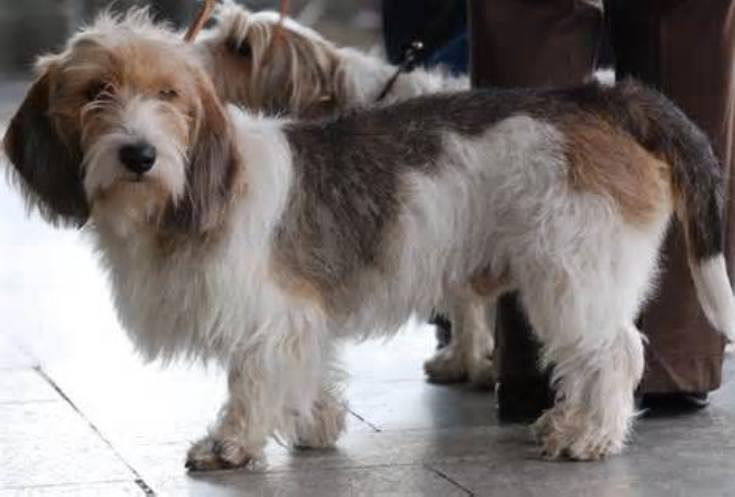
People usually start reading about the Petit Basset Griffon Vendéen when they’re weighing up a very specific kind of dog: small enough for day-to-day living, but still a true hound with a nose that can pull them off course in seconds. The decision matters because this breed’s charm comes bundled with independence, noise, and a steady appetite for activity.
Below is a clear, practical snapshot of what a PBGV is like to live with in Australia: size, temperament, training, exercise, grooming, and the health checks worth asking about before you commit.
Height: 34–38 cm at the withers (about 13½–15 in)1
Weight: Commonly around 11–18 kg (25–40 lb)2
Coat: Rough/harsh with a thick undercoat (not silky or woolly)1
Colour: White with lemon, orange, sable, grizzle or black markings; tricolour also seen1
Temperament: Lively, companionable, independent-minded; can be vocal and scent-driven3
Training: Best with calm consistency and rewards; patience helps with the hound streak3
Grooming: Weekly brushing; occasional tidying/hand-stripping to keep the coat harsh1
Exercise: Daily walks plus sniffing and problem-solving activities; secure fencing and lead manners matter3
Life expectancy: Often around the mid-teens; studies and breed sources commonly place the average around 14 years4
History and origin
The Petit Basset Griffon Vendéen (PBGV) comes from the Vendée region of France, developed as a small, rough-coated scent hound for working through thick cover while trailing game such as rabbits and hares.5
That working background still shows up in everyday life: the nose goes first, the legs follow, and the brain often stays busy even when the house is quiet.
What they look like (and why it matters)
A PBGV is low to the ground, slightly longer than tall, with a weather-resistant coat that looks a bit tousled even when well cared for. The ears are long and drop close to the head—useful in the field, but also a reason owners need to stay on top of ear hygiene.1
Size is tightly defined in breed standards: 34–38 cm at the withers, with only a small tolerance.1 If you’re comparing breeds for housing or travel, that range is the reliable anchor.
Temperament: the “small hound” in the lounge room
PBGVs are typically sociable with their people and lively around the home, but they’re not built to be ornamental. They were bred to work at a distance, make decisions on the move, and follow scent even when the world is noisy and thorny.
Common traits owners notice:
- Independence: they can be affectionate yet stubborn about changing course mid-sniff.3
- Vocalising: many are talkative; excitement and alert barking are common in hounds.3
- Curiosity and prey drive: secure fences and lead reliability aren’t optional—this is a scent hound, not a decorative terrier with short legs.3
Training: keeping it steady, not forceful
PBGVs respond best to consistent routines and rewards, with short sessions that feel like a game. Harsh corrections tend to backfire with independent breeds; you often get better results by teaching a strong recall on a long line, rewarding check-ins, and practising calm lead walking away from high-scent areas.3
Early socialisation helps, especially for a dog that may greet the world loudly and with confidence.
Exercise and enrichment needs
Daily movement matters, but so does daily thinking. A PBGV that only walks heel-to-knee can still be under-stimulated, because scent work is the engine that keeps the breed steady.
Good outlets include:
- brisk walks with time allowed for sniffing
- tracking or scent games in the yard
- training sessions that practise recall, “leave it”, and settling on a mat
- secure, fenced play (or a long line) rather than off-lead roaming in open areas3
Grooming and coat care
The coat should feel harsh, not silky. Weekly brushing helps prevent tangles in the furnishings (beard, eyebrows, legs), and occasional tidying can keep the outline clean while still looking natural—breed standards explicitly discourage over-stylised trimming.1
Because the ears are long and folded, check them regularly for wax, grass seeds, and moisture build-up, especially after bush walks or wet weather.
Health: what to watch for and what to ask breeders
PBGVs are generally robust, but like many breeds they have known inherited risks. Eye disease is one of the key ones: primary open-angle glaucoma (POAG) has a DNA test available, and eye screening is commonly recommended in kennel club health schemes.6
Other issues reported in the breed include ear infections and epilepsy, and some lines may have joint or back-related concerns (as can happen in longer-bodied, shorter-legged dogs).6
When you’re assessing a breeder, ask for written proof (not verbal assurances) of any relevant tests and screening, and ask what the results mean for puppies—not just whether the parents were “tested”.6
Choosing a puppy or a rescue dog in Australia
Start by deciding whether you truly need a puppy. Adult dogs can be a better match for some homes, and adopting through a reputable rehoming organisation lets you see the dog’s settled temperament more clearly.7
If you do buy a puppy, avoid “buying blind”. In Australia, animal welfare groups consistently advise meeting the puppy in person, seeing where it was raised, and (where possible) meeting the mother. This reduces the risk of supporting puppy farming and helps you judge health and behaviour before money changes hands.8
In NSW, check the Breeder Identification Number (BIN) where applicable and verify details through the NSW Pet Registry, and be cautious of sellers who won’t let you visit or who push for deposits before you’ve met the dog.9
Frequently asked questions
What size is a Petit Basset Griffon Vendéen?
Breed standards place them at 34–38 cm at the withers (about 13½–15 inches).1
Do PBGVs shed much?
They’re not a “wash-and-wear” coat. Regular brushing reduces loose hair and matting, and keeping the harsh texture often involves occasional hand-stripping or tidy-ups rather than heavy clipping.1
Are they easy to train?
They’re intelligent, but many have a strong hound independence. Calm, reward-based training and a lot of recall practice are usually more effective than trying to out-stubborn them.3
How long do they live?
Many sources place the breed’s average around 14 years, with individual dogs living longer or shorter depending on genetics and care.4
Final thoughts
The Petit Basset Griffon Vendéen suits people who like a dog with opinions: compact, scruffy, bright-eyed, and often noisy, with a nose that keeps working long after the walk is over. If you can provide daily exercise, patient training, and a secure environment, the PBGV can be a warm companion—still very much a French hunting hound, just living on the rug instead of in the brambles.
References
- Petit Basset Griffon Vendéen breed standard (The Kennel Club standard – reposted by Petit Basset Griffon Vendéen Club of America)
- American Kennel Club (AKC) – Breed weight chart (includes Petit Basset Griffon Vendéen 25–40 lb)
- American Kennel Club (AKC) – Petit Basset Griffon Vendéen breed information
- Scientific Reports (2024) – Longevity of companion dog breeds (McMillan et al.)
- FCI Standard No. 67 – Petit Basset Griffon Vendéen (French standard, FCI approved – via PBGV Club of America)
- Purina UK – Basset Griffon Vendéen (Petit): health notes and recommended tests (including POAG DNA test and eye screening)
- ABC News (Australia) – How to tell if a puppy is from a reputable/ethical breeder
- RSPCA Knowledgebase – How to avoid supporting puppy farms
- NSW Government – Buying a pet (tips, BIN/registry checks and scam precautions)

Veterinary Advisor, Veterinarian London Area, United Kingdom