
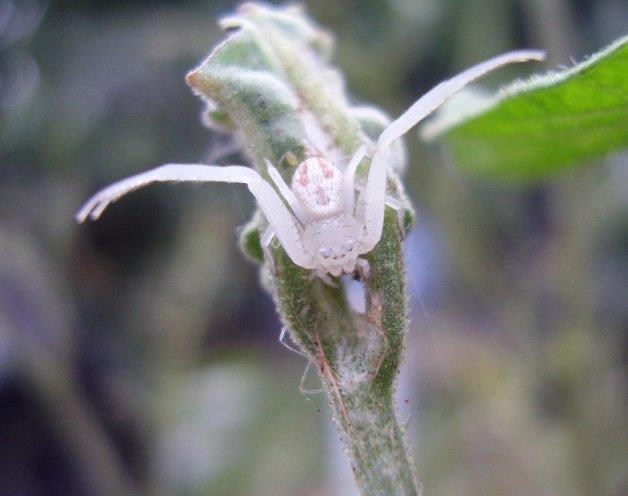
People usually start searching for “pet crab spiders” after finding one on a flower, in leaf litter, or tucked under bark and wondering if it can be kept safely at home. The next questions come quickly: what species is it, what does it eat, and what conditions will keep it alive without turning the enclosure into a mouldy mess.
Crab spiders (family Thomisidae) are sit-and-wait hunters with a talent for camouflage and a very different rhythm from web-building house spiders. They can be kept short-term for observation, but they’re delicate, easily stressed, and better treated as wildlife first and pets second.1, 2
Crab spiders: what you’re actually looking at
“Crab spider” usually means a thomisid: a spider with the front two pairs of legs longer and stronger, angled forward in a crab-like stance. Many species don’t use a capture web; they blend in and ambush passing insects instead.1, 2
In Australia you’ll often see them on native flowers (sometimes called flower spiders), where their colour and posture help them disappear into petals and leaves. Some species can shift colour slowly over days to better match their background.1, 2
Important mix-up: peacock spiders are not crab spiders. Peacock spiders are jumping spiders (family Salticidae) and have different care needs and behaviour. If you’ve been sold a “peacock crab spider”, the label is wrong.2
Is a crab spider a good pet?
Crab spiders can be rewarding to observe because they stay still for long periods, then strike with sudden speed when prey wanders close. But they’re not handleable, and they don’t tend to “settle in” the way some hardy invertebrate pets do. Their best quality as a “pet” is that they tolerate quiet, minimal-interference keeping—if the setup is right.2
They’re generally not considered dangerous in the way funnel-webs are, but any spider can bite if pressed against skin, and reactions vary between people. Treat them as hands-off animals.3, 4
Choosing a species (and choosing ethically)
Australia has many crab spider species, from bright flower-dwellers to bark-camouflaged forms. Identification to species can be difficult from a quick glance, and care advice online often mixes families and regions. If you can’t identify it confidently, plan husbandry around what you can observe: where it was found (flower, foliage, bark, leaf litter) and whether it prefers open perches or tight cover.1, 2
If you’ve collected a wild spider, keep the goal modest: short-term observation, then release back where it was found (when safe to do so). Wild adults may not feed readily in captivity, and females may already be carrying eggs.1
Setting up an enclosure: simple, secure, and dry-leaning
Crab spiders don’t need a large enclosure, but they do need a secure one. A small, well-ventilated container is often safer than a big tank because it’s easier to control airflow, moisture, and prey escape.
- Ventilation: prioritise airflow. Stale, wet enclosures are a common cause of trouble (mould, mites, stressed spiders).
- Furnishings: add a few slender twigs, bark pieces, or dried leaves so the spider can perch and tuck itself away. Many thomisids rest hidden during the night or under petals/leaves when not hunting.1
- Substrate: keep it thin and tidy (paper towel or a light layer of coco fibre/leaf litter). Avoid waterlogged substrates.
- Water: skip deep dishes. Use light misting on one side of the enclosure and let droplets form for drinking, then allow it to dry. This reduces drowning risk for small spiders and keeps humidity from creeping up.
Many crab spiders are comfortable at typical indoor temperatures. Avoid placing the enclosure in direct sun, where a small container can overheat quickly.
Feeding: live prey, not fruit
Crab spiders are predators. They’re best fed live, appropriately sized insects (think smaller than the spider’s body length). Common options include small crickets, flies, and other soft-bodied insects that won’t injure the spider.2
Avoid leaving uneaten prey roaming in the enclosure for long periods. Some feeder insects will nibble at a spider during moulting or when it is inactive.
Frequency varies with age and temperature, but crab spiders often feed less often than people expect. Overfeeding tends to create more problems than it solves: leftover prey, stress, and poor enclosure hygiene.
Handling: mostly don’t
Handling is where most “pet spider” accidents happen—drops, crushed legs, or a spider bolting somewhere inconvenient. Crab spiders rely on camouflage and sudden movement; they can launch quickly when startled.2
If you must move one, use a clear container and a stiff piece of card to guide it (the jar-and-card method), rather than fingers.4
Moulting and common problems in captivity
Moulting (shedding the old skin)
Moulting is a quiet, vulnerable time. A crab spider may stop feeding and sit motionless. Don’t poke, reposition, or “help” it out of the shed skin. The safest approach is simple: stable conditions, good airflow, and no live prey left wandering in the enclosure.
Dehydration and humidity mistakes
Dehydration can happen in very dry indoor air, but constant high humidity is a more common captive mistake for many small spiders. Aim for access to occasional water droplets and then let the enclosure dry again, rather than keeping everything damp all the time.
When to worry
- the spider can’t climb or keeps slipping on smooth surfaces
- persistent curling and weakness despite access to water droplets
- mould, mites, or a sour smell in the enclosure
- failed moult (stuck legs/abdomen) or repeated falls
Breeding in captivity: possible, but not casual
Captive breeding isn’t a beginner project. Crab spider courtship and mating can be risky, and females may eat males. Egg sacs are typically guarded, and disturbing the female often ends badly for the brood.2
If you end up with spiderlings, they need tiny prey (like fruit flies) and careful separation as they grow to reduce losses from cannibalism.
Safety note: bites and first aid in Australia
Most Australian spider bites cause local pain and irritation, but some spiders can cause serious illness. If you suspect a bite from a funnel-web or mouse spider, treat it as an emergency and use pressure-immobilisation bandaging while you seek urgent medical care. For redback bites, pressure immobilisation is not recommended; cold packs and medical advice are the usual approach.3, 4, 5
If you’re unsure what spider was involved, or symptoms are escalating, get medical help.
References
- Australian Museum — Flower spiders (Family Thomisidae)
- Encyclopaedia Britannica — Crab spider (Family Thomisidae)
- Australian Museum — Spider bites and venoms (including pressure bandages guidance)
- healthdirect (Australian Government funded) — Spider bites: symptoms and first aid
- Queensland Government — Bites and stings (spider bite first aid notes)
- Australian Red Cross — First aid for spider bite
- Western Australian Museum — Prey capture behaviour of Diaea sp. (Thomisidae)
- Australian Museum (Records) — Machado & Teixeira (2025) on Australian crab spider taxonomy (Stephanopinae)

Veterinary Advisor, Veterinarian London Area, United Kingdom