
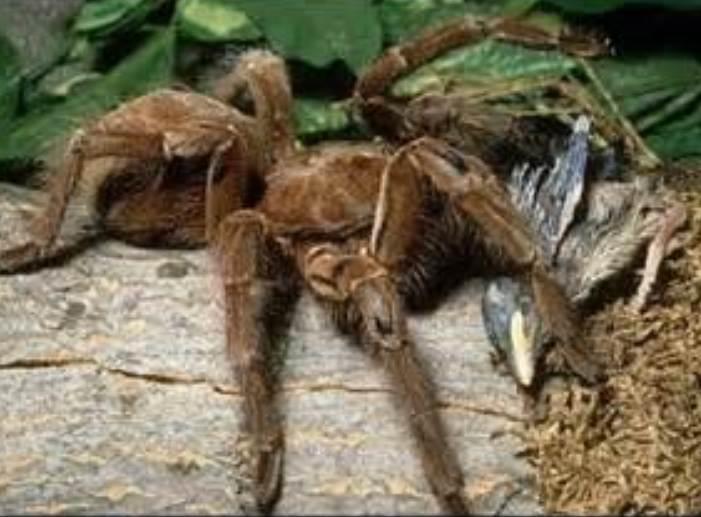
People usually end up here after spotting a big, hairy “bird-eating” spider in the house or garden, or after hearing that a pet bird has snapped one up. The immediate questions are practical: is it dangerous, what species is it likely to be, and what should you do next.
Australia does have large tarantulas (often called whistling spiders), but most of the online lore about them “hunting birds” is exaggerated or muddled. The clearer picture is quieter: a mostly ground-dwelling ambush hunter that eats insects and other small animals, is best admired at a distance, and is regulated in parts of Australia if kept in captivity.1, 2
First, a quick correction: “pet bird eating spider” is a misnomer
The spider described in the draft jumps between different species and even different continents. In Australia, the big “bird-eating spider” people mean is usually an Australian tarantula (family Theraphosidae), sometimes sold as Selenocosmia crassipes in the pet trade, though identifications are often wrong and some captive spiders may be undescribed species.1
The Brazilian tarantula name in the draft (Pterinopelma sazimai) does not belong in an Australian-focused article about local “bird-eating” spiders, and the claim that it “mainly eats small birds” is not a safe generalisation for tarantulas as a group.
What Australian “bird-eating” spiders actually are
Australian tarantulas are large, robust, hairy spiders that live mostly on the ground and shelter in burrows. Many are nocturnal, spending the day tucked away and becoming active after dark when the air cools and prey is moving.1
They’re often called whistling, barking, or hissing spiders because some species can make an audible sound when threatened, using specialised bristles (stridulation). It’s a warning display, not a sign they are “looking for a fight”.1
Size and appearance
Size varies by species, but these are among Australia’s largest spiders. They’re typically heavy-bodied with thick legs, and they can look startlingly big when found wandering at night—especially adult males, which are more likely to roam.2
Habitat and where you might find them
Australian tarantulas occur across multiple states and habitats, from woodland and forest edges to drier country. They’re often encountered in gardens and around sheds where there’s cover, leaf litter, and insects to hunt.1
If you’re in Queensland, the state notes that species diversity is still poorly known in places, and that removing large adults can affect local populations—one reason wild collection is treated seriously.2
Diet and feeding behaviour: mostly invertebrates, sometimes small vertebrates
The “bird-eater” label comes from occasional observations of tarantulas taking very small vertebrates. In practice, their day-to-day diet is more often insects and other invertebrates, with small vertebrates taken opportunistically when the chance is close and manageable.3
They do not build a classic “orb web” to catch prey. Instead, they hunt from the ground, often from the mouth of a burrow, relying on touch and vibration. Silk is used for lining retreats, sensing the world, and stabilising surfaces—quiet engineering rather than a flying net.1
If a pet bird eats a spider: what matters (and what to watch)
Many pet birds will snatch moving insects and spiders if given the chance. The risk depends on the spider species, the bird’s size, and what part of the spider was eaten.
- Venom and bite risk: the bigger danger is usually to the handler, not the bird. Australian tarantula bites can be painful, and handling is strongly discouraged; seek medical attention if symptoms persist.1
- Irritating hairs: tarantulas have defensive hairs that can irritate eyes and mucous membranes. In animals, exposure can cause significant eye and skin irritation and needs prompt veterinary attention if the eye is involved.4
- Choking/trauma: large spiders are bulky and can be a physical hazard for smaller birds (legs and fangs can snag).
If your bird has eaten a spider and then shows breathing difficulty, repeated vomiting, swelling, or eye irritation, treat it as urgent and contact an avian vet or a poisons advice service. If safe to do so, note what the spider looked like (don’t try to catch it with bare hands).
Keeping Australian tarantulas as pets: care, commitment, and why “low-maintenance” can mislead
Australian tarantulas can be long-lived. Queensland’s guidance notes lifespans in the range of 10–20 years, which is closer to a long commitment than a novelty pet.2
They are also largely sedentary, spending long periods motionless, then moving with sudden speed when startled or feeding. That combination—stillness followed by startling motion—often catches new keepers off guard, and it’s why secure enclosures and careful husbandry matter.2
Handling and safety
Australian tarantulas are not usually aggressive, but bites can be painful and may cause systemic symptoms such as nausea and vomiting in some cases. The Australian Museum advises keepers not to handle them and to be particularly careful when cleaning enclosures.1
Legal considerations in Australia (especially Queensland)
Rules vary by state and territory, and they change over time, so it’s worth checking your local wildlife authority before buying or moving any native spider.
In Queensland, native tarantulas (family Theraphosidae) are regulated under the native animal keeping framework, rather than being “exempt” like many other invertebrates. Queensland’s species and class listings specifically call out tarantulas as regulated animals.5
Queensland also advises only buying native wildlife from licensed sellers, because animals purchased unlawfully can be seized.6
Final thoughts
Australia’s “bird-eating” spiders are better understood as patient, ground-dwelling tarantulas that mostly take insects and other small prey, occasionally surprising people with what they can overpower when circumstances are right. They’re not a toy pet, not a bird hunter by default, and not something to handle.
If you keep pet birds, the safest approach is simple: limit unsupervised access to places where large spiders shelter, and treat any spider-eating incident as a reason to watch closely for irritation or distress and to ring an avian vet if signs appear.
References
- Australian Museum – Australian tarantulas
- Queensland Government – Australian tarantulas (family Theraphosidae)
- Encyclopedia of Life – Australian tarantula articles (diet and taxonomy notes)
- Merck Veterinary Manual – Spider and scorpion bites in animals (tarantula hairs and irritation)
- Queensland Government – Exempt, prohibited and species class listings (tarantulas regulated)
- Queensland Government – Keeping native animals (buying from licensed sellers)
- Queensland Government – Licences to keep, use or display native animals
- Queensland Parks and forests – Native animal keeping licence (permit overview)
- Australian Museum – Spider facts (tarantulas in Australia; general bite context)

Veterinary Advisor, Veterinarian London Area, United Kingdom