
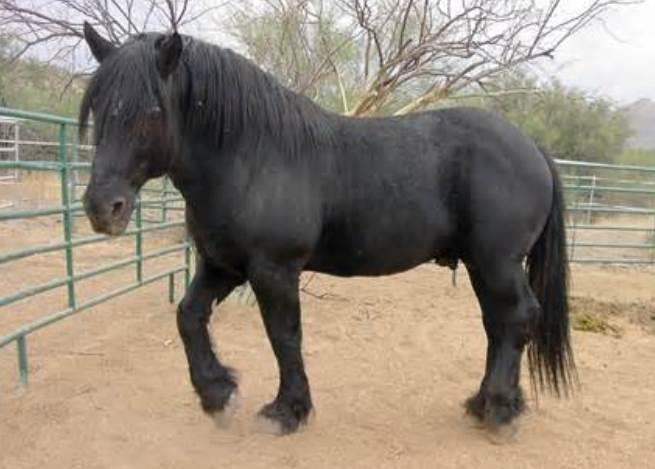
People usually end up searching for Percherons when they’re weighing up a big, strong horse for farm work, carriage driving, forestry, or a steady mount—and they want to know what’s normal for the breed: size, colour, temperament, and what day-to-day care really looks like.
A Percheron’s weight and power are its gift and its complication. Feeding and handling that much horse takes planning, and small mistakes (too much grain, not enough forage, missed hoof care) scale up quickly. What follows is a clear, grounded look at where Percherons came from, how they’re built, what they’re used for, and the practical care that keeps them sound.
Breed name: Percheron Horse
Country of origin: France (Perche region)1
Height at the shoulder (typical): about 16–17 hands (registry standards vary by country; some individuals fall outside this)1, 4
Weight (typical): about 860–950 kg (1,900–2,100 lb); heavier individuals occur1
Coat colour: most commonly grey or black (other colours may be accepted in some registries)1, 3
Temperament: generally mild and willing; calm with good handling1
Common uses: draft work, driving, farm and forestry work; also ridden work in some settings1
Lifespan: often into the 20s with good care (varies with workload, health, and management)5
Diet (everyday): forage-first (pasture/hay), with concentrates added only when needed for condition/work6, 7
Distinctive features: heavy, muscular build; energetic, ground-covering movement for a draft horse1
History and origin
The Percheron comes from the Perche region of France. Over time it developed into a heavy horse suited to pulling and carrying, shaped by shifting needs—coach work, farm power, and later the demands of large-scale agriculture.1
In the 1800s, Percherons were exported widely, including to North America, where they became a major farm and hauling breed before mechanisation reduced the need for horse-drawn power.1
Physical characteristics and appearance
A Percheron is built like a moving block of weathered stone: deep through the chest, strongly muscled over the shoulders and hindquarters, and usually more “clean-legged” than some other draft breeds (often with little or no feathering). The head tends to be tidy for the size, with a straight profile.1
Most are grey or black. Depending on the registry, other colours may be accepted, but if you’re looking at a horse described as “typical Percheron”, grey and black are the usual picture people mean.1, 3
Temperament: what they’re like to handle
Percherons are widely described as steady and mild in disposition, with enough energy to work all day when fit. Good behaviour still depends on handling—size does not replace training, and a polite 900 kg horse is far safer than an anxious one.1
Common uses in agriculture, driving, and modern work
Percherons were bred for pulling power, and they still turn up where controlled strength matters:
- Farm and property work: pulling implements in small-scale or low-impact setups.
- Forestry: in some contexts, horses are used to extract timber with less soil disturbance than heavy machinery.
- Carriage and wagon work: public events, weddings, demonstrations, and private driving.
- Ridden work: some are used under saddle, including in English disciplines, when trained and conditioned appropriately.1
Training: steady, early, and consistent
Percherons tend to respond well to calm, consistent handling. Training is usually most successful when it starts early and stays simple: clear cues, repetition, and enough breaks that the horse doesn’t get mentally or physically bogged down.
Because they’re strong and can learn to lean on pressure, groundwork that rewards light responses matters. A draft horse that yields softly at the shoulder and poll is easier to harness, safer to lead, and kinder to its own body over years of work.
Care and husbandry
Feeding: forage first, then adjust
Draft horses can look like they should live on a mountain of grain, but most do best on a forage-based diet with concentrates added only when workload, age, or body condition calls for it.
As a rule of thumb, horses can consume around 1.5–2% of bodyweight per day as dry feed, and many feeding guides emphasise adequate forage intake (often expressed as 1.5–2% of bodyweight on a dry-matter basis). Pasture counts too, but it’s harder to measure—so owners often use hay as the “known quantity”.6, 7
For Percherons in particular, the practical watch-outs are:
- Unwanted weight gain: easy to miss under a big frame; track condition score and crest fat.
- Sudden diet changes: large meals and abrupt shifts can increase the risk of digestive upset.
- Feed quality: dusty or mouldy hay can aggravate respiratory issues; store hay dry and off the ground.
Water
Big horses drink a lot. RSPCA guidance notes that an average 500 kg horse may drink roughly 30–50 litres per day, more in heat or work. A Percheron can easily exceed that depending on size and conditions, so clean, palatable water access is non-negotiable.8
Hooves, legs, and joints
Weight magnifies wear. Keep up with regular farrier visits, watch for uneven hoof growth, and pay attention to footing—hard, rutted ground and repetitive tight turns can be harder on heavy bodies than people expect.
Parasite control (worming): don’t guess
In Australia, parasite management is increasingly framed around targeted control—using faecal egg counts, paddock hygiene, and avoiding under-dosing (which can encourage resistance). Even if you follow a set program from a vet, it helps to understand the logic: treat the horse in front of you, not just the calendar.9
Breeding and genetics: what “type” can mean
Percheron “type” varies between countries and breeding lines—some are taller, lighter-moving coach types; others are broader, heavier farm types. Registries set different standards for height, colour, and overall build, so when you’re assessing a horse, compare it to the relevant registry and the job you want it to do, not a single universal template.1, 4
Challenges facing the breed today
The biggest pressure on Percherons isn’t a flaw in the horse. It’s a change in the world around it: fewer working roles, fewer owners with the space and budget for a large draft horse, and rising costs for feed and farriery.
Where Percherons thrive is in well-managed, purposeful homes—people who want the work, understand the scale, and keep the basics (forage, feet, teeth, water, shelter) steady through the seasons.
Future prospects: where Percherons still fit
Percherons remain relevant wherever controlled strength is valued: demonstrations of traditional farm skills, low-impact forestry in suitable settings, carriage and event driving, and quiet recreational riding for riders who like a substantial horse and have the facilities to match. Their usefulness hasn’t vanished; it has simply narrowed into niches where the horse still makes practical sense.2
Final thoughts
A Percheron is not just “a bigger horse”. It’s a different scale of daily management—more water, more forage, more hoof, more momentum. Handled well, they’re steady, versatile workers with a long history behind them and plenty of modern purpose left.1
References
- Encyclopaedia Britannica – Percheron
- The Livestock Conservancy – Percheron Horse
- American Museum of Natural History (Ology) – Percheron
- Percheron Horse Association of America – About
- PetMD – Percheron (health and lifespan overview)
- Agriculture Victoria – Feed requirements of horses
- MSD Veterinary Manual – Nutritional requirements of horses and other equids
- RSPCA WA – Horse welfare (water and shelter)
- NSW Department of Education – Horses: health (worm control and faecal egg counts)

Veterinary Advisor, Veterinarian London Area, United Kingdom