
People usually start searching for pale-mandibled aracaris as pets when they’ve seen one online or in an aviary and want to know two things fast: are they suitable to live with, and is it even legal to keep one in Australia. The answers hinge less on “cuteness” and more on paperwork, space, noise tolerance, and a diet that can quietly harm them if it’s wrong.
The pale-mandibled (pale-billed) aracari is a toucan relative from the forests of western South America, built for fruit, movement, and constant social contact.1, 2 In captivity, the biggest welfare risk is husbandry—especially iron overload (iron storage disease)—so decisions need to be made with a vet’s guidance, not just a cage size chart.7, 8
Quick facts (at a glance)
- Species: Pale-mandibled (pale-billed) aracari (Pteroglossus erythropygius)1
- Adult size: commonly around 40–43 cm (varies by source and how tail length is measured)2
- Wild range: southern Panama through western Colombia and Ecuador to north-western Peru1
- Wild diet (broadly): mostly fruit, plus insects and small animal prey7
- Key captive risk: iron storage disease (hemochromatosis/hemosiderosis) if fed the wrong foods or supplements7, 8
Meet the pale-mandibled aracari
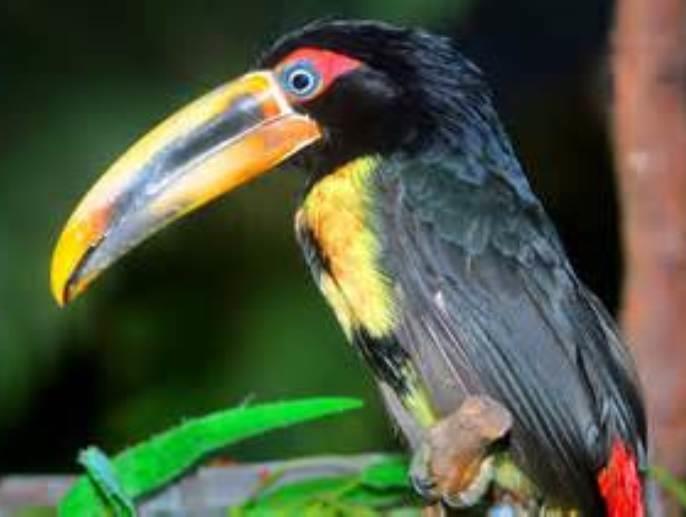
The pale-mandibled aracari is a ramphastid (toucan family) with a long, pale bill marked by darker patterning, a black head, and a yellow chest often broken by a dark patch and banding.2 In the wild, it lives along forest edges and tall, fruiting trees, moving with purpose from canopy to canopy, pausing to feed, then flowing on again with short, direct flights.1
It’s often described as “social”, and that’s accurate in the practical sense: many toucans and aracaris are not solitary birds, and their day is stitched together by contact calls, shared roosting, and group movement between feeding spots.7 That social wiring matters in captivity, because boredom and isolation are common precursors to behavioural problems.
Temperament and behaviour in captivity
Aracaris are active, alert, and quick to investigate changes in their environment. They can learn routines—moving to a perch, accepting a target, stepping onto a hand-held perch—especially when training is steady and low-pressure. Keep expectations realistic: they are not parrots, and “talking” or clear mimicry is not a dependable trait to buy for.
Noise is usually best described as frequent rather than deafening. A bird that calls to locate flock members in a rainforest will still call to locate its people and bird-mates in a home. That can be manageable in a detached house and difficult in an apartment with thin walls.
Apartment living: what tends to go wrong
The idea that aracaris are “perfect for apartment dwellers” is often overstated. Even when a bird’s call is not ear-splitting, the pattern can be persistent: dawn activity, contact calling when people leave the room, and bursts of vocalising during excitement or feeding. That’s where neighbour complaints begin.
Space is the other pressure point. Toucans and aracaris do poorly when movement is rationed to a couple of hops. They need room for short flights, long climbs, and a layout that encourages natural movement between feeding, bathing, and resting areas.6
Legal considerations in Australia (read this first)
In Australia, exotic birds are tightly regulated through both biosecurity and environmental law. If you’re thinking about acquiring an aracari, you need to confirm:
- How the bird is entering Australia (if at all): the Australian Government Department of Agriculture, Fisheries and Forestry (DAFF) sets import conditions and directs prospective importers to the EPBC Act requirements and the Live Import List process.4
- Whether the species is eligible for live import: DAFF notes that if a species is not on the Live Import List, it cannot be imported unless the list is amended.4
- What your state/territory requires for keeping or trading: licensing rules vary, and your local wildlife authority is the only safe source for what is permitted where you live.
Do not assume that “captive-bred” automatically means “legal to keep”. Paperwork matters, and the consequences for illegal import or possession can be severe.
Housing and environment
Think in aviary terms, not “cage” terms. A pale-mandibled aracari needs:
- Length to move: space for short flights and frequent climbing, not just vertical height.
- Complex perching: multiple natural branches of varied diameter to protect feet and encourage movement.
- Bathing options: a stable, shallow bath pan or dish they can enter safely.
- Security and calm: predictable routines, shelter from cold drafts and overheating, and protection from predators if housed outdoors.
They are cavity nesters in the wild, and if you ever plan breeding (where legal and appropriate), the enclosure needs suitable nest hollows and careful management.6
Diet and nutrition (the part that most often decides their health)
Ramphastids are primarily fruit-eaters, but “fruit-only” is not a safe captive diet.7 The standout issue is iron storage disease: toucans and their relatives are recognised as susceptible, and diets that are too high in iron—or diets that increase iron absorption—can cause progressive liver damage.7, 8
What a sensible baseline looks like
Veterinary references commonly recommend:
- A low-iron formulated diet as the foundation (professional guidance often cites <100 ppm iron for suitable pellets), with fruit offered daily as part of the overall ration.7
- Fruit variety rather than a single “favourite” fruit, so the bird doesn’t self-select into an unbalanced pattern.
- Fresh, accessible water in a container large enough to drink from comfortably (long bills can make narrow drinkers awkward).7
Foods and supplements to be cautious with
Iron problems don’t always announce themselves early. Prevention is the humane approach. General guidance includes avoiding iron-fortified foods and being cautious with foods high in vitamin C/citric acid that may increase iron uptake, particularly citrus and some acidic fruits offered in excess.7, 8
Do not add vitamin or mineral supplements “just in case”. Supplementation should be vet-directed, with the full diet taken into account.
Training and socialisation
Training is less about tricks and more about cooperation: stepping onto a perch, calmly moving between spaces, allowing a visual health check, and accepting transport. Keep sessions short, repeatable, and quiet. Consistency matters more than intensity.
Because these birds are socially oriented, the daily schedule must include interaction and enrichment. Where people are away for long stretches, a compatible bird companion (where legal and appropriately matched) may reduce isolation stress—but it also adds complexity and cost.
Health concerns and veterinary care
Plan for an avian veterinarian before you buy the bird. With toucans and aracaris, prevention is tightly linked to diet management and early detection of liver and nutritional issues.
Iron storage disease (ISD)
ISD (often discussed as hemochromatosis/hemosiderosis in birds) is widely recognised in toucans and related species, and is associated with inappropriate captive diets and husbandry, leading to iron accumulation and liver disease.6, 7, 8 Your vet may recommend baseline bloodwork, periodic monitoring, and a diet plan tailored to the bird’s history and current feeding habits.
Zoonotic disease awareness
Any bird can carry infections that matter to humans, including chlamydiosis (often called psittacosis). If you’re acquiring a new bird, quarantine, veterinary screening, and good hygiene are standard precautions—especially in households with children, older people, pregnant people, or anyone immunocompromised.
Cost and long-term commitment
The purchase price is only the opening figure. A realistic budget includes a large aviary setup, ongoing fresh produce, specialist pellets, enrichment items that need regular replacement, and avian veterinary care (including diagnostics if diet-related illness is suspected). Many aracaris can live for years in good care, so this is a long arrangement, not a short experiment.
Final thoughts
A pale-mandibled aracari can be a striking, engaging bird in experienced hands, but it is not a “low-maintenance” apartment pet. The species’ needs are specific: space to move, frequent social contact, and a carefully controlled, low-iron diet backed by avian veterinary advice.6, 7 If those pieces don’t fit your home and schedule, the kindest decision is often to admire them in well-run collections, rather than trying to make a rainforest bird adapt to a small, quiet room.
References
- Pale-mandibled aracari (Pteroglossus erythropygius) – overview and distribution
- Peru Aves: Pale-mandibled Araçari – identification and size
- Featherbase: Pteroglossus erythropygius – range (IUCN-based country allocation)
- Australian Government DAFF: Importing your pet bird – environment legislation and Live Import List notes
- Australian Government DAFF: Importing zoo animals – overview of approvals for exotic species
- Association of Avian Veterinarians: Special considerations for housing toucans
- Merck Veterinary Manual (Professional): Nutrition in toucans and hornbills
- Merck Veterinary Manual (Bird Owners): Nutritional disorders of pet birds – iron storage disease
- IVIS (Clinical Avian Medicine): Nutritional considerations – iron storage disease discussion

Veterinary Advisor, Veterinarian London Area, United Kingdom