
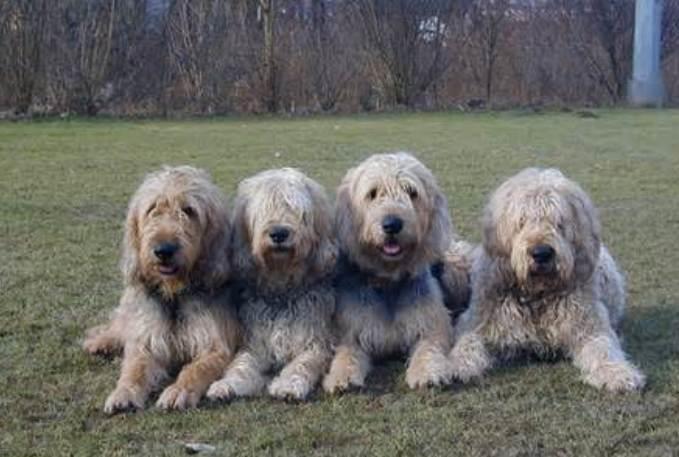
People usually end up searching “Otterhound” when they’ve spotted one (or a breeder has one available) and need a quick reality check: size, coat, temperament, exercise needs, and the health risks that come with a big, deep-chested hound.
The Otterhound is rare, powerful, and built for long, wet days outdoors. It can be an affectionate companion, but it isn’t a low-maintenance family pet. The details below focus on what matters day to day: how big they get, what they’re like to live with, what they need, and what can go wrong.
Otterhound at a glance
- Breed type: Large scent hound developed in Britain for hunting in water and on land1, 2
- Height (approx.): Dogs 69 cm at the withers; bitches 61 cm1, 2
- Weight (typical guide): Often quoted around 36–52 kg (80–115 lb), with individuals outside that range3, 4
- Coat: Rough, double coat with a woolly undercoat; designed to cope with cold water and weather1, 2
- Colours: Many recognised hound colours; not “anything goes” under some breed standards1, 2
- Temperament: Amiable and even-tempered; bred to work steadily and follow scent for long periods1, 2
- Lifespan: Often reported around 10–13 years (varies with genetics, care, and luck)6
History and origins
The Otterhound is an old British scenthound, developed to trail and work in water as well as on land. Its hallmark features—rough double coat, large feet, and a powerful nose—reflect that job.1, 2
You’ll sometimes see confident claims about exact founding dates or specific crosses (for example, “created in the 12th century by mixing Bloodhounds with Terriers”). The surviving records don’t support that level of precision. What is clear is that the breed’s form follows function: a hound designed for long hours, cold water, and scent work.1, 2
Physical characteristics and appearance
Up close, an Otterhound looks like it has been assembled for endurance. The body is substantial and strongly boned. The head is imposing and covered with rough hair, often forming a natural moustache and beard. Movement should be free and long-striding, the sort that can be kept up for miles.1, 2
Coat and shedding
The coat is double: a harsher outer coat over a softer, woollier undercoat. This isn’t decorative. It’s protection—against water, cold, and rough scrub.1, 2
Expect the practical consequences: damp dog smell after swims, debris carried in from the garden, and a beard that collects water and food unless you stay on top of it.
Colour
Otterhounds come in a wide range of hound colours. However, some breed standards do specify which colours are acceptable and which are not, so “any colour or combination” can be an oversimplification depending on which standard you’re reading.1, 2
Temperament: what they’re like to live with
The Otterhound is typically described as amiable and even-tempered. Many are sociable with familiar people and enjoy being part of household life, but they also have the steady independence common to scenthounds: once a smell catches, the world narrows to a trail.1, 2
This doesn’t mean they’re “naughty”. It means management matters. A secure yard, a lead near roads, and training that acknowledges scent-drive will do more than trying to out-stern a dog that was bred to make its own decisions in the field.
With children and other animals
Individual temperament varies. Many Otterhounds are gentle in the home, but their size and enthusiasm can bowl over small children without malice. Supervision, calm introductions, and teaching children how to handle a large dog safely are still essential.
With other pets, early socialisation helps. Their original work involved hunting, so it’s sensible to assume a strong interest in wildlife and small animals until proven otherwise.
Training and exercise requirements
Otterhounds are active, capable dogs that do best with daily exercise and something to think about. Their fitness needs aren’t only about burning energy; they’re about giving the nose a job and the body room to move.6
What “enough exercise” often looks like
- One long walk plus a second shorter outing, most days
- Off-lead time only in securely fenced areas (scent can override recall)
- Scent games (scatter-feeding, tracking, hidden treats) to satisfy the working brain
Training style that tends to work
Keep it calm and consistent, with rewards that matter to the dog (food, sniffing time, a toy). Short sessions help. Harsh handling usually backfires with scenthounds; you get resistance rather than reliability.
Health concerns to know about
No breed is “guaranteed healthy”, and giant or large breeds come with predictable vulnerabilities. With Otterhounds, two issues are worth understanding early: orthopaedic disease (including hip dysplasia) and gastric dilatation-volvulus (GDV, often called bloat).6, 7
Hip dysplasia
Hip dysplasia is a developmental condition affecting the hip joint. It can lead to pain, lameness, and arthritis over time. Ask breeders for hip scoring (or comparable screening) and discuss what the results mean with your vet.6
GDV (bloat): the emergency every large-dog owner should recognise
GDV is when the stomach fills with gas and then twists, trapping contents and cutting off blood flow. It is an emergency measured in hours, not days. Large and deep-chested dogs are at higher risk.7, 8
- Signs that warrant urgent veterinary care: unproductive retching, sudden abdominal swelling, restlessness, drooling, weakness, rapid deterioration7
- Risk is influenced by multiple factors (including size, chest shape, feeding patterns, and family history), so talk to your vet about practical prevention and whether preventative gastropexy is worth discussing for your dog.7
Ear problems
Otterhounds have long, hanging ears and a lifestyle that often includes water, mud, and vegetation. That combination can predispose some dogs to ear inflammation and infection. Regular checks (and drying after swims) are simple habits that can prevent bigger problems.
Grooming and everyday care
The Otterhound’s coat is meant to be functional and natural-looking. Under breed standards, it should not be sculpted into a stylised trim; routine care is about preventing mats, removing debris, and keeping the skin healthy.1, 2
A practical grooming routine
- Brush and comb a few times a week, focusing on friction points (behind ears, armpits, groin, around the collar)
- Check ears routinely, and dry thoroughly after swimming
- Trim nails before they get long enough to change gait
- Clean the beard as needed (water and food can linger)
Rescue and adoption notes (Australia-focused)
Because the breed is uncommon, Otterhounds don’t appear often in general shelters. When they do need rehoming, it’s frequently through breed networks or hound-focused rescues.
If you’re pursuing adoption, ask direct questions about:
- How the dog behaves around other dogs and small animals
- Recall reliability when following scent
- Grooming tolerance (handling, ears, feet)
- Any history of orthopaedic problems or digestive emergencies
Famous Otterhounds in pop culture and history
Otterhounds are sometimes claimed to appear in specific books and films, but many of these mentions don’t hold up when checked carefully. The breed’s real “fame” is quieter: a vulnerable, distinctive working hound recognised by major kennel clubs, kept going by small communities of breeders and owners.1, 2
Is an Otterhound a good fit?
An Otterhound tends to suit households that genuinely enjoy big dogs: plenty of space, time for daily exercise, tolerance for mud and wet coat, and the patience to train a nose-led hound without turning everything into a contest.
If what you need is a tidy, easily recalled dog that fits neatly into short walks and a clean lounge room, another breed will usually make life simpler.
References
- The Kennel Club (UK) – Otterhound breed standard
- Dogs Victoria – Otterhound breed standard
- American Kennel Club (AKC) – Breed weight chart (Otterhound)
- United Kennel Club (UKC) – Otterhound breed standard
- Otterhound Club of America – Official site
- WebMD – Otterhound health overview (lifespan, hip dysplasia, GDV)
- Cornell University College of Veterinary Medicine – GDV (bloat) overview and risk factors
- American Veterinary Medical Association (AVMA) – Bloat in dogs

Veterinary Advisor, Veterinarian London Area, United Kingdom