
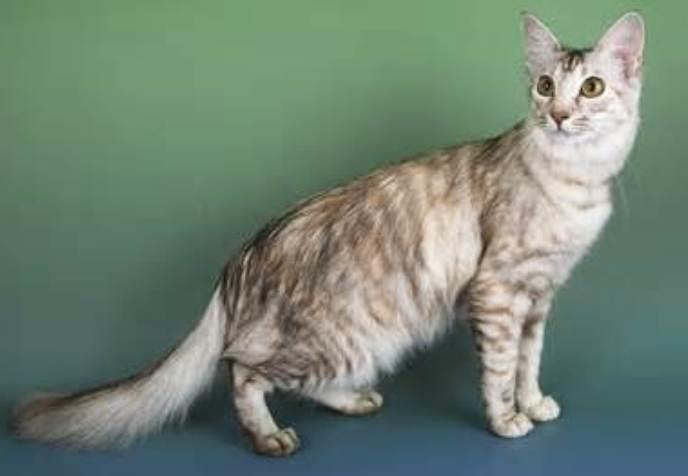
People usually look up the Oriental Longhair when they’re deciding whether this slender, silky-coated cat will fit their home—or when they’ve already brought one home and want a clear guide to coat care, activity needs, and what “normal” looks like for the breed.
The small details matter: a coat that tangles easily changes your daily routine, and a highly interactive cat can become restless if their world is too quiet. The notes below stay close to what major cat registries describe, then turn that into practical care you can actually use.
Oriental Longhair at a glance
- Size: Medium
- Weight: Often around 2.5–5.5 kg (varies by sex and individual)3
- Coat: Semi-long, fine and silky; tends to lie close to the body with a plume-like tail2
- Colours and patterns: Very wide range (depends on registry rules)1, 2
- Temperament: Commonly described as active, social, intelligent and vocal1, 2, 3
- Lifespan: Many live into their teens; individuals may live longer with good care3
History and origin
The Oriental Longhair sits within the Siamese/Oriental family of cats. In the UK, the “Oriental” types were developed from the 1950s onwards, building on Siamese ancestry and later introducing other breeds to expand colours and patterns.2
Different registries handle the name slightly differently. Some treat the longhaired form as a division within a single Oriental breed, while others recognise a separate Oriental Longhair breed within the Siamese breed group.1, 3
Physical characteristics and appearance
This is a long, tapering silhouette: a fine-boned, athletic cat with a wedge-shaped head, large ears, and long legs. The overall look is “sleek”, even when the coat is longer, because the fur is typically light and close-lying rather than dense and heavy.1, 2
The coat is usually described as semi-long and silky, draping along the body with a plume tail. Some individuals may carry more feathering than others, and coat volume can change with seasons and indoor heating.2
Personality and temperament
Oriental Longhairs are commonly described as people-focused cats that stay interested in what’s happening around them. They tend to be quick learners, keen climbers, and persistent explorers, especially in a home with shelves, window perches and tall cat trees.1, 3
Many are also notably vocal. Not every individual “talks” constantly, but the breed group is widely known for communication through sound, body language, and proximity—following you from room to room, supervising chores, and showing up the moment a cupboard opens.1, 2
Grooming and everyday care
A fine, semi-long coat can mat in high-friction spots (behind the ears, under the collar line, in the armpits, and around the hindquarters). Regular brushing also helps reduce swallowed hair, which can contribute to hairballs.6
A simple grooming routine
- Brush little and often: a few minutes most days is usually easier than long, occasional sessions.6
- Check ears and eyes weekly: look for unusual discharge, smell, redness, or persistent irritation, and get veterinary advice if you’re unsure.6
- Trim nail tips as needed: especially for indoor cats who don’t naturally wear them down; provide scratching posts and climbing towers.6
If the coat becomes tightly matted, avoid cutting mats out with scissors. Veterinary clinics can clip severe matting safely, sometimes with sedation if needed.6
Health: what to watch for (and what to be sceptical about)
The claim that Oriental Longhairs have “no breed-specific health issues” is too absolute. Any pedigree population can have inherited risks, and the safest approach is to assume there are possible breed-linked issues and manage them through responsible breeding and routine veterinary care.1, 2
Two everyday health themes matter for almost every cat, including Orientals:
- Weight gain: extra weight increases the risk of a range of health problems and can sneak up before it looks obvious. Ask your vet about a healthy weight and a body condition score check.7
- Hairballs and gut upsets: long coats can mean more swallowed hair. Brushing helps, and ongoing vomiting or constipation needs veterinary advice rather than guesswork.6
Also, the Oriental Longhair is not a flat-faced (brachycephalic) breed. Respiratory problems linked to very short noses are more associated with flat-faced breeds such as Persians, not the Siamese/Oriental type.9, 10
Training and exercise
This breed group is often described as energetic and highly interactive. A bored Oriental Longhair will usually invent their own entertainment—often up high, and often in the middle of whatever you’re doing.3
What tends to work well
- Short play sessions, repeated: wand toys, chasing games, and puzzle feeders suit their quick, investigative style.
- Vertical space: tall cat trees, wall shelves, and stable window perches give safe climbing outlets.
- Positive reinforcement: many individuals respond well to reward-based training (touch targets, “come”, harness familiarity), especially when started young.3
Breeding, registration, and choosing a kitten
Because “Oriental Longhair” can be treated differently across registries, start by asking a breeder which registry they’re registered with and what that registry recognises. Then ask to see health history, not just a pedigree name.1, 2
Practical checks that protect both you and the cat:
- Microchip details: confirm the kitten is microchipped before transfer, and that the ownership details are correctly updated. Requirements vary by jurisdiction (for example, NSW and WA set specific microchipping rules and timelines).4, 5
- Temperament match: meet at least one parent where possible. Look for confident curiosity rather than fearfulness.
- Coat condition: a clean, tangle-free coat in the litter is often a sign of good routine care and handling.
Final thoughts
The Oriental Longhair is a cat built for movement and closeness: a slim, long-lined climber with a soft, draping coat and a strong tendency to stay involved in household life.1, 2
If you can offer daily interaction, vertical space, and steady coat care, you’ll usually see the best of the breed—bright attention, athletic play, and a companion that keeps gentle watch over the ordinary moments.
References
- Cat Fanciers’ Association (CFA) – Oriental (includes longhair and shorthair divisions)
- Governing Council of the Cat Fancy (GCCF) – Oriental breed information (includes Oriental Longhair)
- The International Cat Association (TICA) – Oriental (Siamese Breed Group overview and care notes)
- NSW Office of Local Government – Microchipping requirements
- Western Australia DLGSC – Microchipping requirements
- RSPCA Pet Insurance (Australia) – Grooming your cat (brushing, nails, ears, matting and hairballs)
- Animal Medical Center – Obesity in cats (health risks and body condition scoring)
- RSPCA Pet Insurance (Australia) – Essential cat care information (general health checks)
- PetMD – Brachycephalic airway syndrome in cats (overview and symptoms)
- PetMD – Flat-faced cats: health considerations and BOAS context

Veterinary Advisor, Veterinarian London Area, United Kingdom