
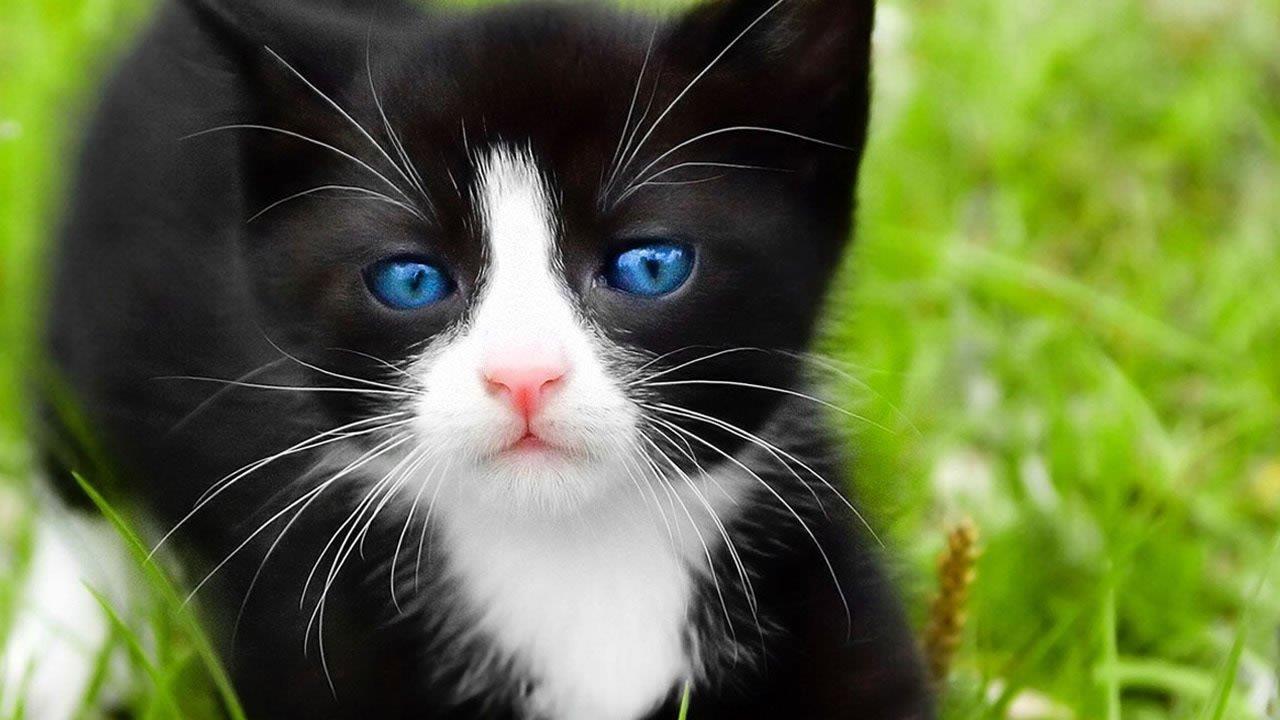
People usually land on “Ojos Azules cat” pages for one of two reasons: they’ve seen a cat with unexpectedly deep blue eyes (sometimes in a dark coat), or they’re trying to check whether a breeder’s claim is real. With this breed, the fine print matters, because the classic Ojos Azules line was always rare, and its signature gene was linked to severe defects when inherited in a particular way.
Below is the clearest, safest way to understand what the Ojos Azules was, why it’s so difficult to find as a true “breed”, what the blue eyes do (and don’t) mean, and how to care for any blue-eyed cat without chasing myths.
Quick facts (and what needs correcting)
- Origin: United States (first identified in New Mexico in the 1980s).1
- Coat: Shorthaired and a semi-longhaired variety were described.1
- Colours: Reported in many coat colours; the blue-eye trait was unusual because it could appear without the common “white” or “point” patterns that usually produce blue eyes.1
- Eye colour: Blue or odd-eyed (one blue, one another colour) linked to a “dominant blue eye” mutation in this line.1
- Health: Not “none specific”. The underlying gene was reported to be lethal when homozygous, with severe congenital defects and stillbirths, which is a key reason breeding largely stopped.1
- Morab horse: There is no established biological relationship. “Ojos Azules” is Spanish for “blue eyes”; it’s used as a descriptive label in multiple contexts, not a cross-species link.
What “Ojos Azules” actually refers to
Ojos Azules (“blue eyes”) was a name given to a very small, historically documented line of cats in the United States, notable for deep blue eyes that could appear in cats without the usual colourpoint pattern (as in Siamese-type cats) or the all-white coat that often accompanies blue eyes in domestic cats.1
In plain terms: the eyes were the headline feature, not a distinctive “look” like folded ears or a bobtail. Most descriptions place the cats close to an ordinary domestic type in overall shape, with the eyes doing the heavy lifting for identification.1
History and origin
The origin story most consistently repeated in breed summaries traces back to New Mexico in the 1980s, beginning with a blue-eyed tortoiseshell cat often named Cornflower (reported as discovered in 1984). The blue-eye trait appeared to pass on in a way consistent with a dominant mutation, which led to an attempt to establish a breed line.1
The line remained extremely rare. One widely cited figure is that only about ten were known by 1992.1
Recognition status (why this breed is hard to “buy”)
Even at the height of interest, Ojos Azules was never a common, widely established pedigree cat. Some registries recorded it only in limited categories (for example, as “registration only” in TICA), reflecting how the line existed on paper while not being broadly shown or advanced like more stable breeds.2
In practice, if someone claims they have an “Ojos Azules kitten” today, treat it as a claim that needs proof of documented lineage and registry paperwork, not as something you can confirm from photos of blue eyes alone.
Appearance: what you can and can’t use to identify one
The Ojos Azules name is tied to blue (or odd) eyes appearing across a wide range of coat colours. That combination is unusual, but it is not a perfect fingerprint—blue eyes can arise through other genetic routes, especially in colourpoint cats and some white cats.1
Some accounts describe a white tail tip as a common marker in this line, but visual markers are not reliable enough to confirm breed identity without pedigree documentation.1
Temperament: what’s realistic to say
Because the historic population was tiny, there isn’t a strong evidence base for a single, predictable “breed temperament”. If a cat is advertised as Ojos Azules, assume its personality will be shaped more by individual temperament, early handling, and environment than by a stable breed profile.
What is safe to say: most domestic cats thrive with routine, gentle handling, and enough enrichment to express normal hunting and climbing behaviours.
Health: the part that matters most
The blue-eye gene and severe congenital defects
The defining concern in Ojos Azules discussions is genetic viability. Reports of the classic Ojos Azules mutation describe severe defects and stillbirths when kittens inherit the mutation from both parents (homozygous inheritance), while carriers with only one copy could appear normal.1
This is why responsible breeding claims around “true Ojos Azules” should immediately raise questions about genetic management, outcrossing practices, and transparency. If those answers are vague, walk away.
Deafness: correct the myth, then keep the useful warning
Blue eyes by themselves do not mean a cat will be deaf. The well-known deafness risk is strongest in white cats, particularly those with blue eyes, because of pigmentation-linked inner ear development—not because “blue eyes” are inherently a hearing problem in every cat.3, 4
If you have a white cat with blue eyes (or you’re considering adopting one), ask your vet about a BAER hearing test if hearing status matters for safety and management.3
Care: what’s genuinely different (and what isn’t)
Grooming
For a short, smooth coat, grooming is usually light: a weekly brush is often enough to lift loose hair and keep the coat tidy. For longer coats, brushing needs increase to prevent tangles, especially around friction points (collar area, behind the legs).
Exercise and enrichment
Think less in terms of “exercise needs” and more in terms of habitat. Cats do best with a small landscape of their own: vertical perches, scratchable surfaces, hiding spots, and short bursts of play that mimic stalking and pouncing.
Diet
Feed to body condition rather than a label. Choose a complete and balanced cat food appropriate to life stage, watch weight drift early, and make fresh water easy to access. If a cat has any diagnosed condition, let the vet guide diet changes.
A practical checklist: is a cat really “Ojos Azules”?
- Ask for paperwork (pedigree and registry details), not anecdotes.
- Be sceptical of photo-based certainty. Blue eyes can occur in other cats for other reasons.1
- Ask direct health questions about congenital defects in the line and how breeding pairs are selected to reduce risk.
- Prioritise the individual cat’s wellbeing over a rare name—especially with lines known for serious genetic complications.1
Final thoughts
The Ojos Azules sits in an odd corner of cat history: a striking, rare blue-eye mutation, briefly organised into a named line, then largely abandoned because the genetics carried unacceptable risks. The useful takeaway isn’t to hunt the label. It’s to recognise how easily “rare breed” claims can outrun the reality, and to choose cats—and breeders—where health, documentation, and day-to-day care are treated with quiet seriousness.1, 2
References
- Ojos Azules (overview, history, and genetics)
- The International Cat Association (TICA) – overview including “registration only” category listing Ojos Azules
- Cornell University College of Veterinary Medicine: White cats, blue eyes, and deafness (Q&A)
- Merck Veterinary Manual (Professional): Deafness in animals (pigment-associated deafness; BAER testing)
- GCCF (UK): Unrecognised breeds (how recognition affects showing/registration)
- ABC Science (Dr Karl): White cats, blue eyes, and deafness (background explainer)
- Congenital sensorineural deafness in cats (overview and association with white coat/blue eyes)
- Merck Veterinary Manual: Commonly reported congenital and inherited defects in cats (includes deafness association with white fur/blue eyes)

Veterinary Advisor, Veterinarian London Area, United Kingdom